

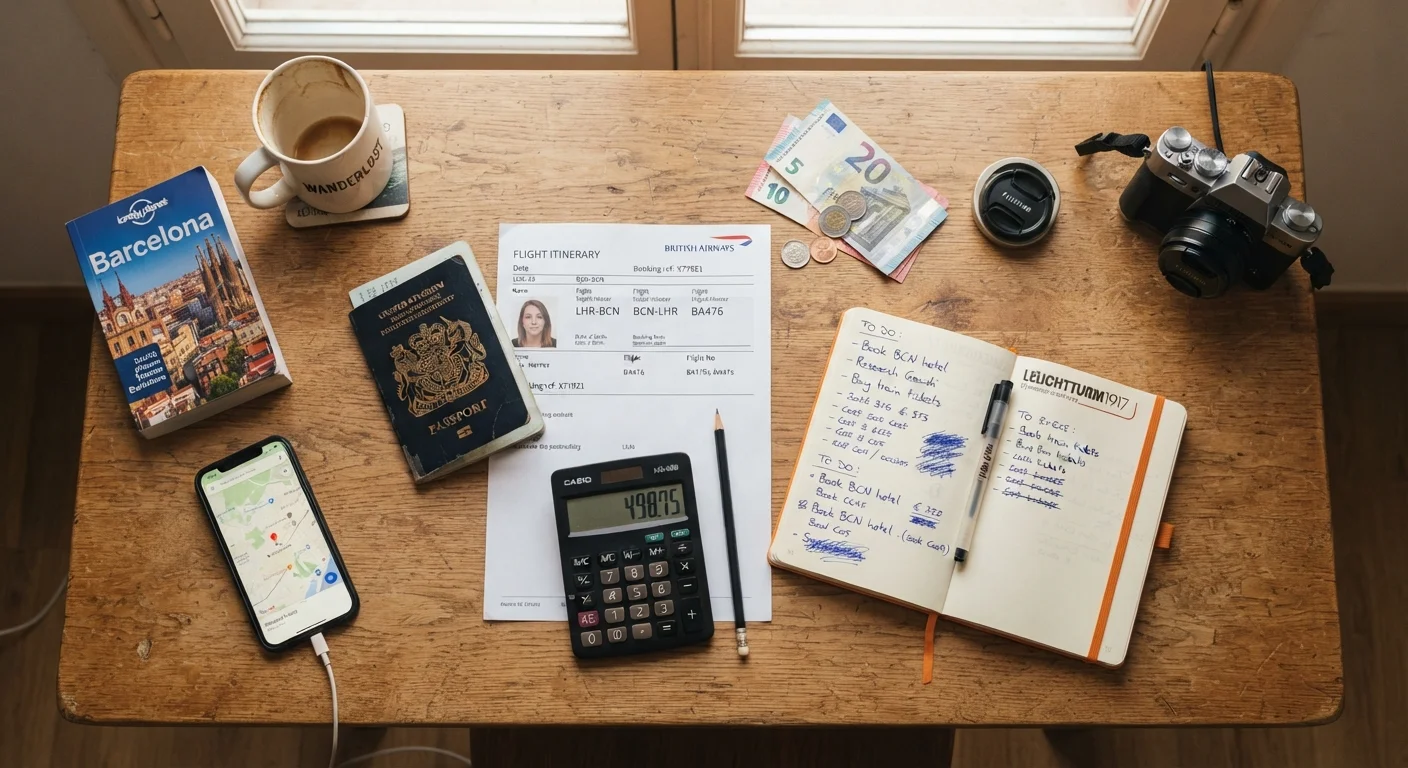
The Gap Between What You Budget and What You Spend
Most travelers don't overpay out of carelessness - they overpay because travel pricing is deliberately structured to obscure the real cost. Advertised rates strip out fees, booking windows are surrounded by conflicting advice, and the most visible numbers are rarely the most important ones.
Understanding where these gaps typically open up is the first step toward closing them. The mistakes below aren't rare - they're the patterns that quietly drain travel budgets across trip types and experience levels. For a broader look at the trade-offs involved in cost-conscious planning, see our guide on traveling with a tight budget.
Booking flights based on the headline fare without calculating total cost.
Why it happens: Low base fares stand out in search results, and the add-on fees - bags, seat selection, change penalties - aren't always visible until checkout or after booking.
Booking too far in advance - or waiting too long - for flights and accommodations.
Why it happens: Most travelers assume earlier is always better, or conversely hold out for last-minute deals that rarely materialize for popular routes and dates.
Ignoring shoulder season as a travel window.
Why it happens: Most travelers default to peak season - school breaks, summer, major holidays - because those windows feel obvious and safe, without realizing they carry a significant price premium.
Choosing accommodations based on nightly rate alone.
Why it happens: The per-night price is the most visible figure, so it naturally anchors the decision - but location, resort fees, and included amenities can shift the true comparison significantly.
Skipping travel insurance and absorbing preventable financial losses.
Why it happens: Insurance feels like an optional add-on when nothing seems likely to go wrong, and the upfront cost is easy to skip when trying to minimize pre-trip spending.
Failing to account for currency exchange costs and card fees.
Why it happens: International travelers often focus on transportation and lodging costs while overlooking transaction fees, ATM charges, and poor exchange rates that accumulate throughout a trip.
How Smarter Planning Changes What You Pay
The mistakes above share a common thread: they're all addressable with a modest investment in research before you book. That research doesn't need to be exhaustive - it needs to be focused on the right variables.
Base Fares Rarely Tell the Full Story
Airlines regularly advertise fares that exclude checked bags, seat selection, and flight change fees. Before committing to any booking, add up every mandatory and likely add-on to compare true costs across options. Our guide on the real cost of a cheap flight walks through exactly how to do this.
Start by calculating total trip costs, not just component prices. Add fees, local transport, and likely incidentals to your initial budget. Then look at your travel window - even shifting a trip by one or two weeks can move it from peak into shoulder season pricing.
Dynamic Currency Conversion Is Almost Always Costly
When paying by card abroad, merchants and ATMs may offer to charge you in U.S. dollars instead of the local currency - a service called dynamic currency conversion (DCC). This typically uses an unfavorable exchange rate that benefits the vendor. Always choose to pay in the local currency and let your card handle the conversion.
Rewards programs are another underused tool. Points and miles accumulated on everyday spending can offset real travel costs, but the mechanics aren't always obvious. Our breakdown of how travel rewards programs actually work explains where most people leave value behind.
Finally, use our pre-trip checklist before finalizing any booking. A structured review of fees, insurance, and currency considerations takes under an hour and can surface costs you'd otherwise absorb on arrival.
~1 in 3
Travelers who report going over their trip budget
Consumer surveys on travel spending consistently find that a significant share of travelers exceed their planned budget, often due to fees and costs they didn't anticipate.
$50+
Daily resort fees at some US hotels
Mandatory resort or destination fees - separate from the advertised nightly rate - can add substantial cost to hotel stays, particularly at resort properties.