
Why Food Costs Spiral - and How to Regain Control
Food is one of the most variable line items in any travel budget. Unlike flights or accommodation, it compounds daily - three meals, snacks, and drinks, multiplied across every day of the trip. A traveler who budgets $40 a day for food but consistently spends $60 will overshoot by hundreds of dollars on a two-week trip without ever noticing a single "big" splurge.
Most overspending happens by default: eating wherever is convenient, choosing restaurants facing a famous square, or grabbing bottled water at tourist-zone prices. The fix isn't deprivation - it's intention. Understanding where the markups hide lets you redirect that money toward meals that genuinely stand out. For a broader look at how food fits into your overall spending plan, see how to build a realistic travel budget from scratch.
~30%
Of travel budgets spent on food and drink
Industry travel spending analyses consistently place food and beverage among the top three trip expenses for leisure travelers, often representing roughly 30% of total trip spend.
2-4×
Tourist-zone restaurant price premium
Travel consumer research and destination cost comparisons frequently show restaurants in high-traffic tourist areas charge two to four times more than equivalent eateries a short distance away.
Proven Practices for Eating Well on a Travel Budget
The strategies below aren't about settling for less - they're about spending where it counts and cutting where it doesn't. Each one is practical, adaptable across destinations, and used consistently by experienced travelers.
Eat where working locals eat, not where tourists congregate.
Restaurants adjacent to major attractions routinely charge a location premium - sometimes double the price for identical food served two streets away. Locals eating on a lunch break are price-sensitive by necessity, making their go-to spots a reliable indicator of value.
Make lunch your main meal of the day.
In many countries, the lunch service offers the same kitchen, the same quality, and a significantly reduced price - often in the form of a fixed-price menu (called a "prix fixe," "menú del día," or "dagschotel" depending on the region). Dinner menus at the same restaurants typically carry higher markups.
Use local markets and supermarkets strategically for at least one meal a day.
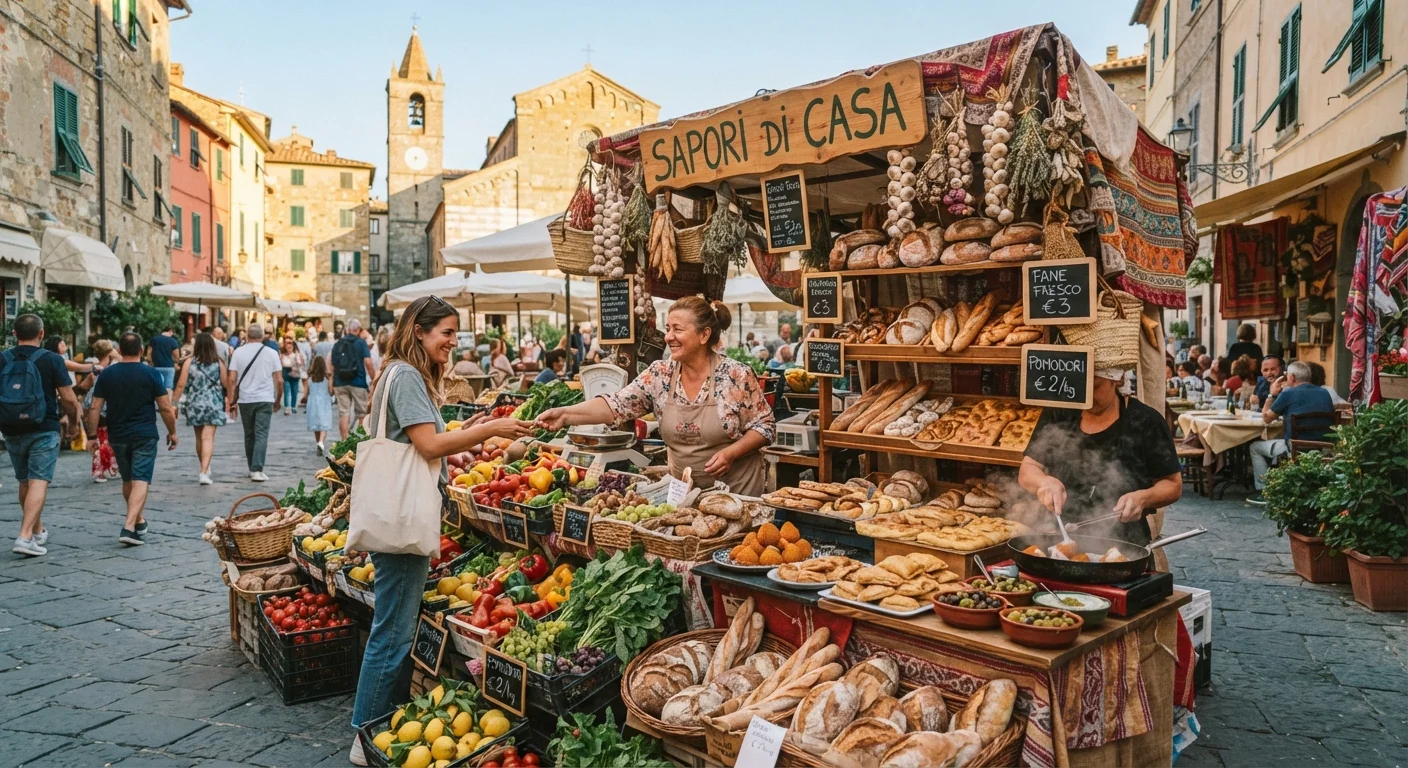
Markets offer fresh, often regionally specific ingredients that double as a cultural experience. Supermarkets provide affordable staples - bread, cheese, fruit, yogurt - for breakfasts and snacks that would cost three to four times as much at a café.
Prioritize street food and casual food stalls over sit-down restaurants.
In many destinations, street food is the culinary backbone of local life - deeply authentic, high in turnover (meaning fresher ingredients), and priced for everyday consumption. Skipping it in favor of "safer" sit-down dining means paying more for a less representative experience.
Research the local food culture and tipping norms before you arrive.
Understanding how meals are structured in a given country - whether service is included, whether tipping is expected, what constitutes a full meal versus a snack - prevents accidental overspending and ordering missteps. In countries where tipping is not customary, adding 20% out of habit is simply money left behind.
Track food spending daily, even loosely.
A rough daily tally - even just a mental note of morning, midday, and evening spending - catches drift before it becomes a problem. Travelers who track nothing tend to discover overspending only at the end of a trip, when it's too late to adjust.
Quick Wins You Can Act on Today
Before your trip even begins, several moves can meaningfully lower your daily food spend. These actions take minutes and pay off at every meal.
Combine Budget Eating with Nutritional Balance
Eating affordably doesn't mean eating poorly. Markets and street stalls are often rich in fresh vegetables, legumes, and whole grains that form the backbone of balanced eating. For practical guidance on maintaining good nutrition when spending is constrained, our healthy eating on a budget guide offers transferable strategies.
Food Safety: The Hidden Cost of Getting It Wrong
Eating affordably abroad and eating safely are not in conflict - but they do require awareness. Street food cooked to order in front of you is often safer than a buffet that's been sitting out. High turnover at a stall is a good sign; slow-moving food in warm conditions is not. Avoiding tap water in regions with unreliable water treatment, and opting for bottled or filtered water, is standard precaution in many destinations.
Getting sick abroad means lost travel days, potential medical costs, and a trip that's harder to recover from financially and physically. Our guide on food safety abroad covers how to assess risk at street stalls and unfamiliar kitchens so you can eat adventurously without putting your health at stake. If you do need medical attention, knowing what to expect from local healthcare systems in advance makes an already stressful situation far more manageable - see medical care abroad for country-by-country context.
International Travel Introduces New Food Variables
Crossing a border changes the food landscape significantly - currency fluctuations, unfamiliar labeling, and different food safety standards all affect how you eat and spend. Our piece on domestic vs. international budget travel explains which budget principles travel universally and which need recalibrating when you go abroad.
This article provides general travel and budgeting information only. It is not medical or nutritional advice. Consult a qualified healthcare professional regarding any dietary needs or health concerns before and during travel.