
What a Budget Actually Is (and Isn't)
A budget is simply a written plan for how you intend to use your money during a set period - usually one month. That's it. It is not a punishment, a sign that you are struggling, or a vow to stop enjoying life. Think of it as a map: it doesn't restrict where you can go, it just helps you get there without getting lost.
Many people put off budgeting because they believe common myths - that it only matters when money is scarce, or that it means giving up everything fun. If those ideas sound familiar, our article on budget myths that stop people from starting addresses them directly.
Reframe What a Budget Means
Instead of thinking 'I have to budget,' try 'I get to decide where my money goes.' This small mental shift makes budgeting feel empowering rather than limiting. People who frame budgeting as a choice rather than a constraint tend to stick with it longer.
At its core, a budget answers one question: Where should each dollar go before I spend it? That proactive mindset is what separates people who feel in control of their finances from those who feel controlled by them.
Understanding Your Income
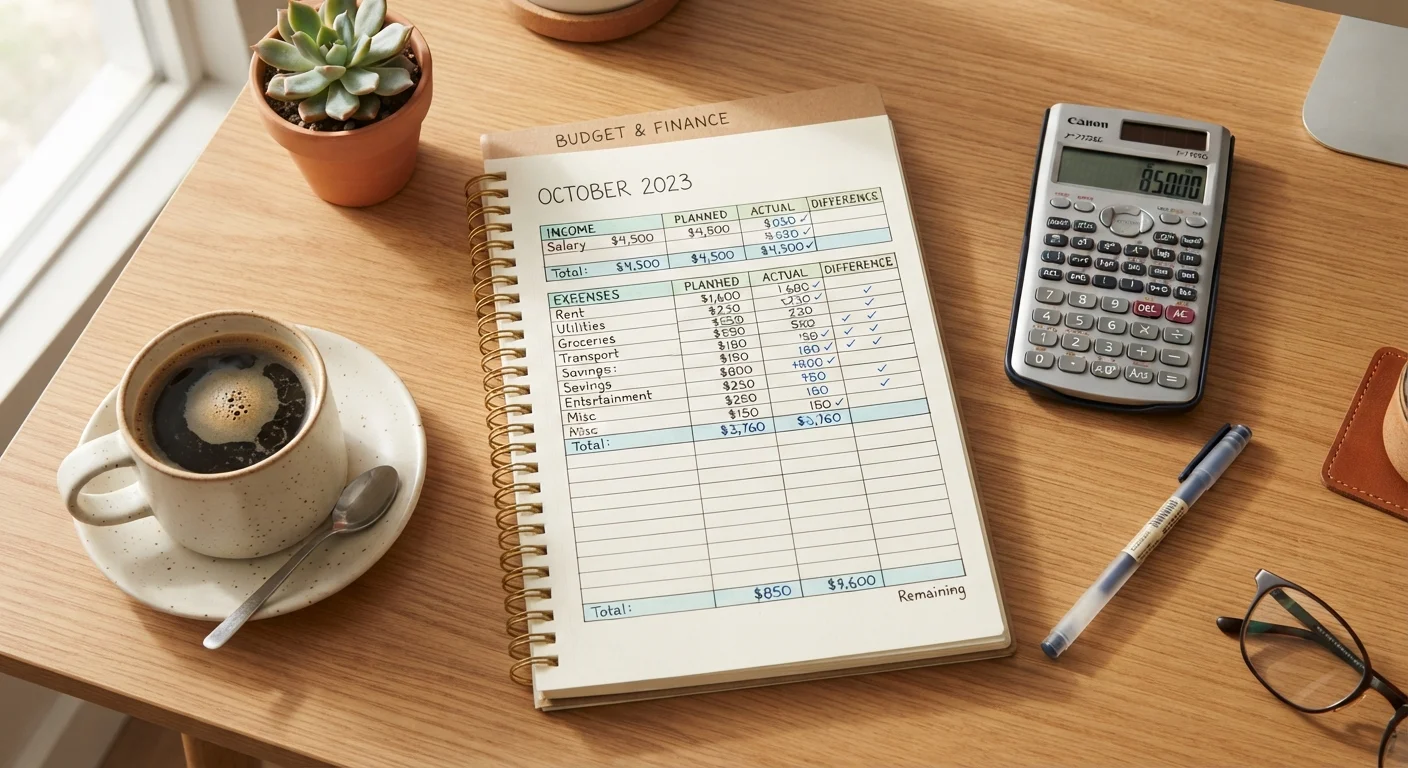
Before you can allocate money, you need to know exactly how much is coming in. This means working with your net income - the amount deposited into your account after taxes, Social Security contributions, and any other payroll deductions. Using your gross (pre-tax) figure will cause your budget to fall short every single month.
If you are salaried, this number is predictable. If you freelance, work hourly, or earn tips, calculate an average from your last three to six months of bank statements and use that as your planning baseline. Always plan conservatively - it is better to have money left over than to run short.
Net income
The amount of money you actually receive after taxes and deductions are removed from your paycheck. This is the figure your budget must be based on.
Gross income
Your total earnings before any taxes or deductions are taken out. It is always higher than net income and should not be used as your budgeting baseline.
Fixed expense
A recurring cost that remains the same amount each month, such as rent, a car loan payment, or an insurance premium.
Variable expense
A spending category whose amount changes from month to month - groceries, dining, gas, and entertainment are common examples.
Emergency fund
A dedicated pool of savings set aside to cover unexpected costs - like a medical bill or car repair - without disrupting your regular budget or going into debt.
Zero-based budget
A budgeting method where you assign every dollar of income a specific purpose so that income minus all allocations equals zero at the end of the month.
For a practical walkthrough on calculating your take-home pay and setting up income categories, see our guide on building your first monthly budget.
Fixed vs. Variable Expenses
Once you know your income, map out your expenses in two categories:
- Fixed expenses are costs that stay the same every month - rent or mortgage, car payments, insurance premiums, and subscription services. These are predictable and usually non-negotiable in the short term.
- Variable expenses change month to month - groceries, dining out, gas, clothing, and entertainment. These are where most of your budget flexibility lives.
A third, often overlooked category is irregular expenses: costs that don't appear monthly but are entirely predictable annually - car registration, holiday gifts, annual insurance premiums. Divide each by 12 and set aside that amount monthly so the expense never catches you off guard.
Don't Budget From Memory
Most people significantly underestimate how much they spend on dining out, subscriptions, and impulse purchases when relying on memory alone. Always anchor your budget in real transaction data from your bank and credit card statements. Even one month of actual data reveals patterns no estimate can match.
Review three months of bank and credit card statements to build your expense list. Memory alone underestimates spending - studies in behavioral economics consistently show people recall far less discretionary spending than their statements reveal.
Where Savings Fit In
The most important habit shift in budgeting is treating savings as an expense, not a leftover. If you wait to save whatever remains after spending, most months there will be nothing left. Instead, assign savings a line item - right alongside rent and groceries - and move that amount to a separate account at the start of each pay period.
A widely cited starting point is saving at least 20% of take-home pay, though even starting with 5% is meaningful progress. Build toward an emergency fund covering three to six months of essential expenses before focusing on longer-term goals. For broader strategies on growing what you save, explore our saving and growing resource hub.
Debt repayment belongs in this same category of intentional, scheduled spending. If you carry credit card balances or loans, those payments should appear as fixed line items. Our overview of understanding debt from scratch explains how interest works and where to start tackling it.
Choosing a Budgeting Framework
A framework gives your budget structure. The most commonly used approaches include:
- 50/30/20
- Allocate roughly 50% of net income to needs, 30% to wants, and 20% to savings and debt repayment. Simple and widely applicable for steady incomes.
- Zero-based budgeting
- Every dollar is assigned a job until income minus all allocations equals zero. Requires more detail but leaves nothing unaccounted for.
- Pay-yourself-first
- Savings are transferred automatically on payday before any discretionary spending happens. Especially effective for people who struggle to save consistently.
- Envelope method
- Cash - or digital equivalents - is divided into spending categories at the start of the month. When an envelope is empty, spending in that category stops.
No framework is universally superior. The right one is the one you will maintain. For a deeper comparison, see popular budgeting frameworks compared.
Your Next Steps
Understanding these foundations puts you ahead of most first-time budgeters. Here is how to move from concept to action:
- Pull three months of bank and credit card statements to establish your real spending baseline.
- Calculate your average monthly net income.
- List every expense, categorize each as fixed, variable, or irregular, and add a savings line item.
- Choose one framework and apply it to next month's income.
- Review your budget at the end of the month, adjust, and repeat.
For a guided, step-by-step setup process, use our monthly budget setup checklist to make sure nothing is missed. And if you want the full picture - from your first paycheck to long-term financial goals - our comprehensive resource personal budgeting: the full picture covers everything in one place.
This article is for general informational and educational purposes only and does not constitute personalized financial advice. Please consult a qualified financial professional for guidance specific to your situation.