
Why a Written Budget Changes Financial Behavior
Most people have a rough mental model of their spending - but research consistently shows that tracking expenses in writing, even briefly, leads to measurably different financial decisions. A written budget creates accountability: when categories are explicit and limited, impulse purchases require a conscious trade-off rather than a vague feeling of guilt. For those new to this process, this foundational overview of personal budgeting explains core concepts before you work through the numbers.
A monthly budget also answers a question many households cannot: "Where does the money actually go?" Unexpected expenses feel less destabilising when you have already allocated a buffer. And for longer-term goals - an emergency fund, a vacation, a home down payment - a monthly budget is the mechanism that turns intention into action. If you are also planning a trip, note that building a travel budget follows similar principles but with its own unique cost categories.
What you will need
What You'll Need Before You Start
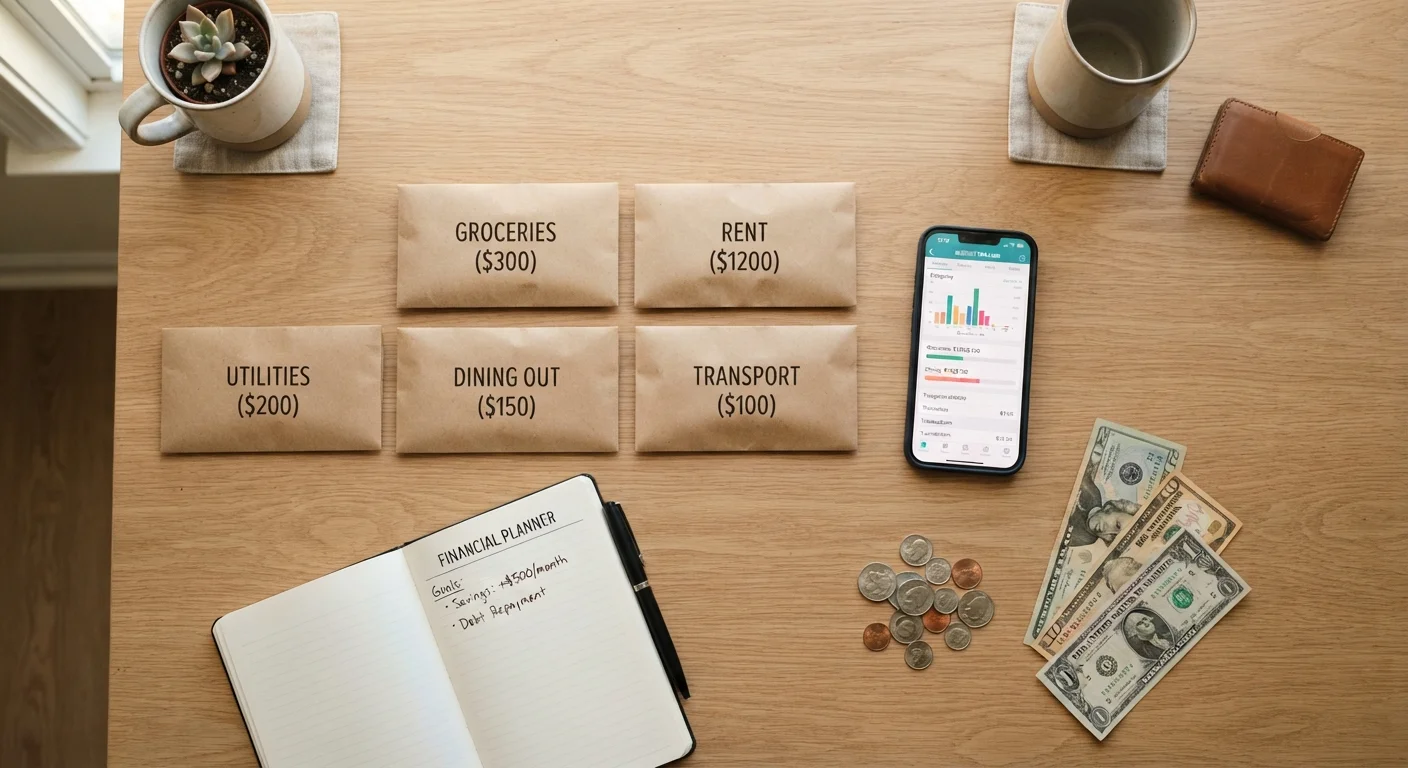
Gathering the right inputs before sitting down to build your budget saves frustration and produces more accurate numbers. You don't need special software - a legal pad works - but the raw materials listed below are essential. If you prefer a structured starting point, the monthly budget setup checklist walks through verification steps in an organized sequence.
Bank or credit card statements
Reveal actual spending patterns across all categories over the past 1-3 months.
Pay stubs
Confirm your exact net monthly income after all deductions.
Spreadsheet (e.g., Google Sheets or Excel)
Organise income and expense rows so totals calculate automatically.
Budgeting app
Automates transaction categorisation and tracks spending against budget limits in real time.
Calculator
Useful for manual arithmetic if working on paper.
Step-by-Step: Building Your First Monthly Budget
Work through the following steps in order. Each one builds on the last, so resist the temptation to skip ahead. If you have a partner or spouse who shares household finances, complete this exercise together - a budget that only one person understands rarely holds.
Calculate your true monthly take-home income
Add up every source of net income you receive each month - your primary paycheck after taxes and deductions, any side income, freelance payments, or regular transfers. If you're paid bi-weekly, multiply one paycheck by 26, then divide by 12 to get a monthly figure. Use only money you can reliably count on; bonuses and irregular windfalls should not anchor your baseline budget.
List every fixed expense
Fixed expenses are costs that stay the same each month regardless of your behavior - rent or mortgage, car payment, insurance premiums, loan minimums, and subscription services. Write down each one with its exact dollar amount and due date. These are non-negotiable outflows that your budget must cover first.
Estimate your variable expenses
Variable expenses fluctuate monthly - groceries, gas, utilities, dining out, clothing, and entertainment. Pull 2-3 months of bank and credit card statements and calculate an average for each category. This average becomes your monthly estimate. Most people underestimate this figure until they see the actual data in black and white.
Apply a budgeting framework to allocate remaining funds
Once fixed and variable expenses are mapped, assign a framework to guide how the remaining money is distributed. A widely used starting point is the 50/30/20 rule: allocate roughly 50% of take-home pay to needs (housing, food, utilities, transport), 30% to wants (dining out, hobbies, streaming), and 20% to savings and debt repayment beyond minimums. Adjust these percentages to fit your actual cost of living - housing costs in many US metro areas may push "needs" above 50%, and that is okay as long as savings remain protected.
Balance the budget - income must meet or exceed outgoings
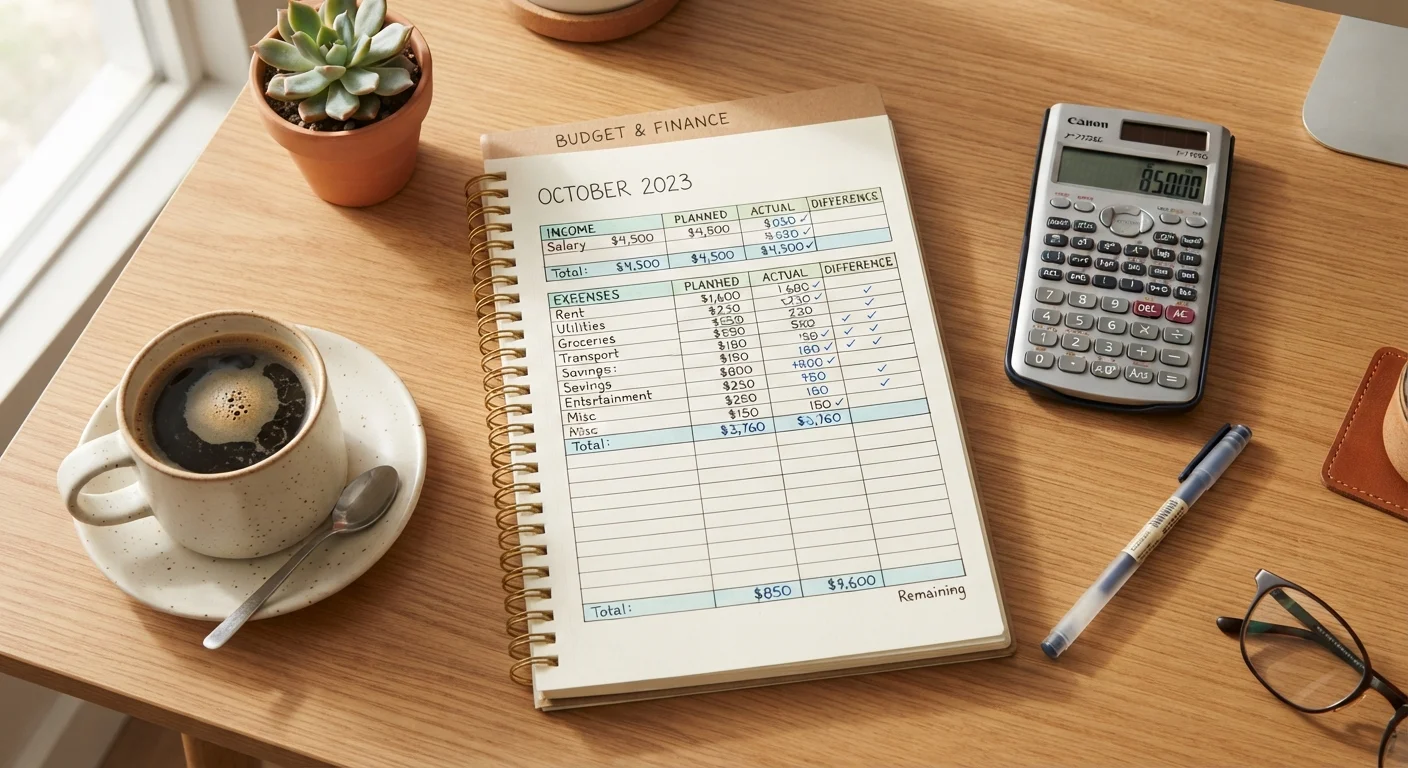
Subtract total monthly expenses (fixed + variable + savings target) from your net monthly income. If the result is zero or positive, your budget balances. If it is negative, you are spending more than you earn. Identify the categories with the most flexibility - typically dining, entertainment, and subscriptions - and reduce them incrementally until the gap closes. Avoid cutting savings entirely; even a reduced savings contribution keeps the habit alive.
Record your budget and set a monthly review date
Write down your finalized budget - either in a spreadsheet, a dedicated app, or on paper - so it exists as a reference document. Schedule a 15-30 minute review at the end of each month to compare what you planned against what you actually spent. Small adjustments each month keep the budget realistic and prevent the gradual drift that causes most budgets to fail.
Don't Budget Around Gross Pay
Using your pre-tax salary instead of your actual take-home pay is one of the most common first-budget mistakes. Taxes, health insurance premiums, and retirement contributions come out before you ever see the money. Always budget from the net amount deposited into your bank account.
Automate Savings Before You Spend
Many people find it easier to save consistently when the transfer happens automatically on payday - before discretionary spending begins. Even a small recurring transfer to a separate savings account builds the habit. Once saving feels routine, you can gradually increase the amount.
After the First Month: Adjusting and Sustaining
Your first budget is a draft, not a decree. Most people find that their initial estimates for variable expenses - especially groceries and dining - are off by 10-20%. That's normal. After your first monthly review, revise the figures to match reality and recheck the balance. Over 2-3 months, the numbers stabilise and the process becomes quick.
Sustainable budgeting is less about perfection and more about consistent attention. The routines and mindsets that help people maintain this discipline over the long term are explored in habits that keep a budget working long-term. Once your monthly budget is stable, the logical next step is channeling your savings toward specific goals - the saving and growing hub covers practical approaches for building and growing those funds over time.
If your income fluctuates - for example, if you freelance or work gig jobs - a standard monthly budget needs some modification. Budgeting strategies for irregular income addresses how to build a workable plan when your paycheck changes from month to month.
This Is General Financial Education
The guidance in this article is for informational purposes only and does not constitute personalized financial, tax, or legal advice. Every household's situation is different. For decisions specific to your circumstances, consult a licensed financial professional.
This article is for general informational purposes only and does not constitute personalized financial, tax, or investment advice. Consult a qualified financial professional for guidance specific to your situation.