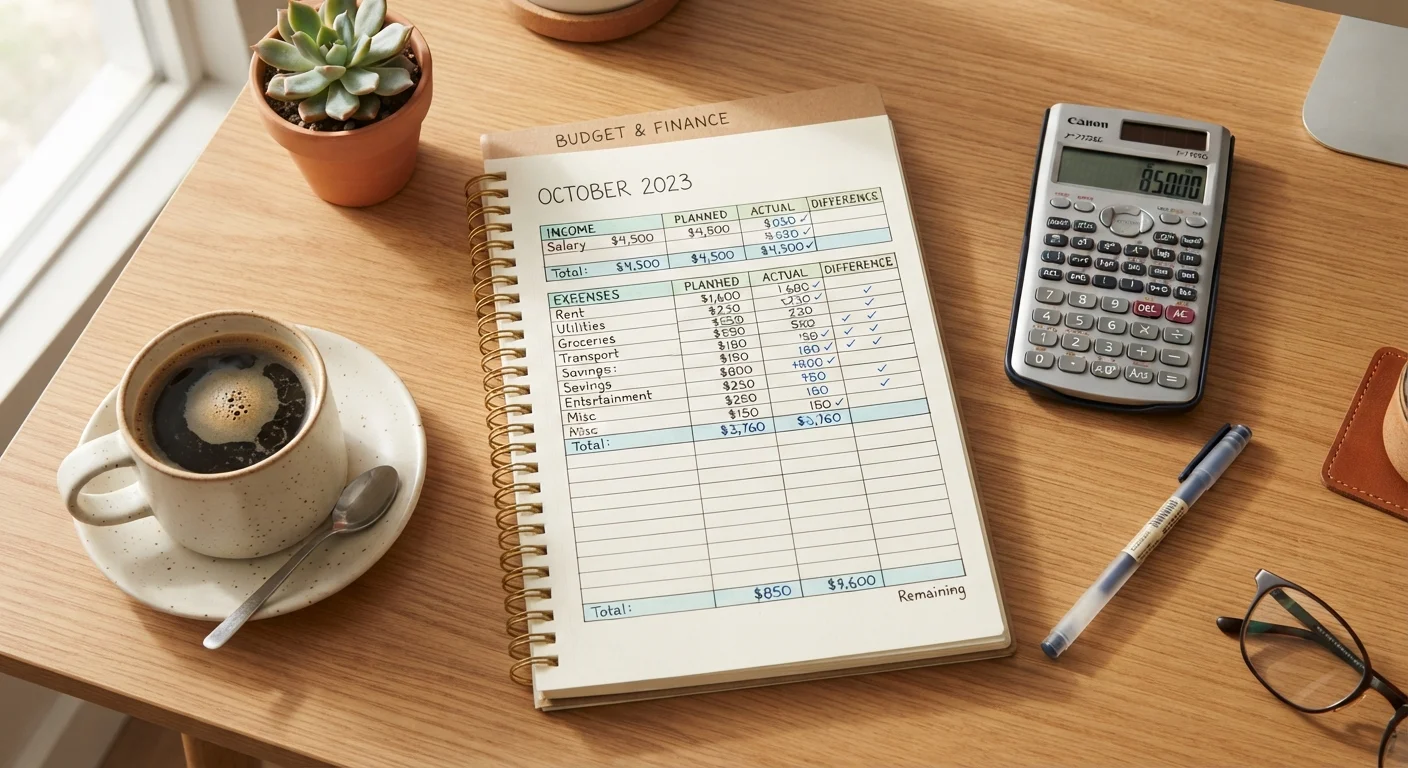


Why a Checklist Approach Works for Budgeting
Setting up a monthly budget can feel overwhelming - especially if you've tried before and drifted away from it. A checklist removes the guesswork. Instead of staring at a blank page, you move through a defined sequence of steps, each building on the last, until your budget is complete and ready to use.
This checklist is designed for two situations: people building a budget for the first time, and people resetting a budget that has gone off track. If you've never built a budget before, consider pairing this with our beginner's guide to personal budgeting, which explains the foundational concepts in plain language before you start filling in numbers.
Work through the checklist in order. Each group of tasks is designed to be completed in one sitting, though you may need to gather documents beforehand.
Bank and credit card statements (last 2-3 months)
Used to verify actual spending in each expense category and catch forgotten fixed charges.
Pay stubs or direct deposit records
Used to confirm your real after-tax take-home income before allocating any money.
Spreadsheet or budgeting worksheet
Used to record income, list expenses, and run the balance check to ensure your budget adds up.
Budgeting app or digital tool
Optional digital alternative to a spreadsheet for tracking spending throughout the month.
Calendar or reminder app
Used to schedule your monthly review and mid-month check-in so the budget stays active.
The Monthly Budget Setup Checklist
Use the checklist below to build or reset your monthly budget. Items marked must are non-negotiable - skip them and your budget will have blind spots. Items marked should are strongly recommended for anyone serious about making a budget stick. Nice-to-have items are enhancements worth adding once the basics are in place.
Income Verification
Fixed Expenses
Variable Expenses
Savings Targets
Balance Check
Tracking & Review Setup
Don't Overlook Irregular and Annual Bills
One of the most common reasons budgets fail is that people only plan for monthly bills - and then get blindsided by car registration, a dentist visit, or an annual subscription renewal. List every bill you pay at any frequency, divide the annual total by 12, and set aside that monthly amount in a dedicated 'irregular expenses' category. For a full breakdown of overlooked costs, see our article on hidden costs that derail even careful budgets.
For a deeper walkthrough of the mechanical steps - calculating take-home pay and aligning expenses to income - see our guide to building your first monthly budget. If you're curious how different budgeting frameworks compare, our breakdown of the 50/30/20 rule vs. zero-based budgeting can help you choose the right structure for your lifestyle.
What to Do After You've Checked Every Box
Completing this checklist gives you a functioning budget - but a budget is only valuable if you return to it. Schedule a 15-minute monthly review at a fixed time each month: the first Sunday, the day after payday, whatever you'll actually keep. During that review, compare what you planned to spend against what you actually spent, then adjust the following month's numbers accordingly.
Your First Budget Will Not Be Perfect
Most people underestimate at least two or three spending categories in their first month. This is normal and expected - it doesn't mean budgeting isn't working. Treat your first month as a data-gathering exercise, not a pass/fail test. Use real spending data to adjust your numbers in month two, and expect the budget to stabilise and feel natural by month three.
Watch for categories that consistently run over budget. That's usually a signal that the original estimate was unrealistic, not that you're failing. Adjust the number to reflect reality, then look for an offset elsewhere in your budget.
For guidance on building the review habit itself, see habits that keep a budget working long-term. And if you want to zoom out and assess your broader financial picture once a year, our annual financial health check is a useful companion resource.
This article is for general informational and educational purposes only and does not constitute personalised financial, investment, tax, or legal advice. Consult a qualified financial professional before making decisions specific to your own financial situation.