
Why 'Good Enough' Budgets Still Fall Short
You track your rent, utilities, groceries, and car payment. You avoid impulse purchases and review your spending each month. And yet, somehow, there's still a shortfall. Sound familiar?
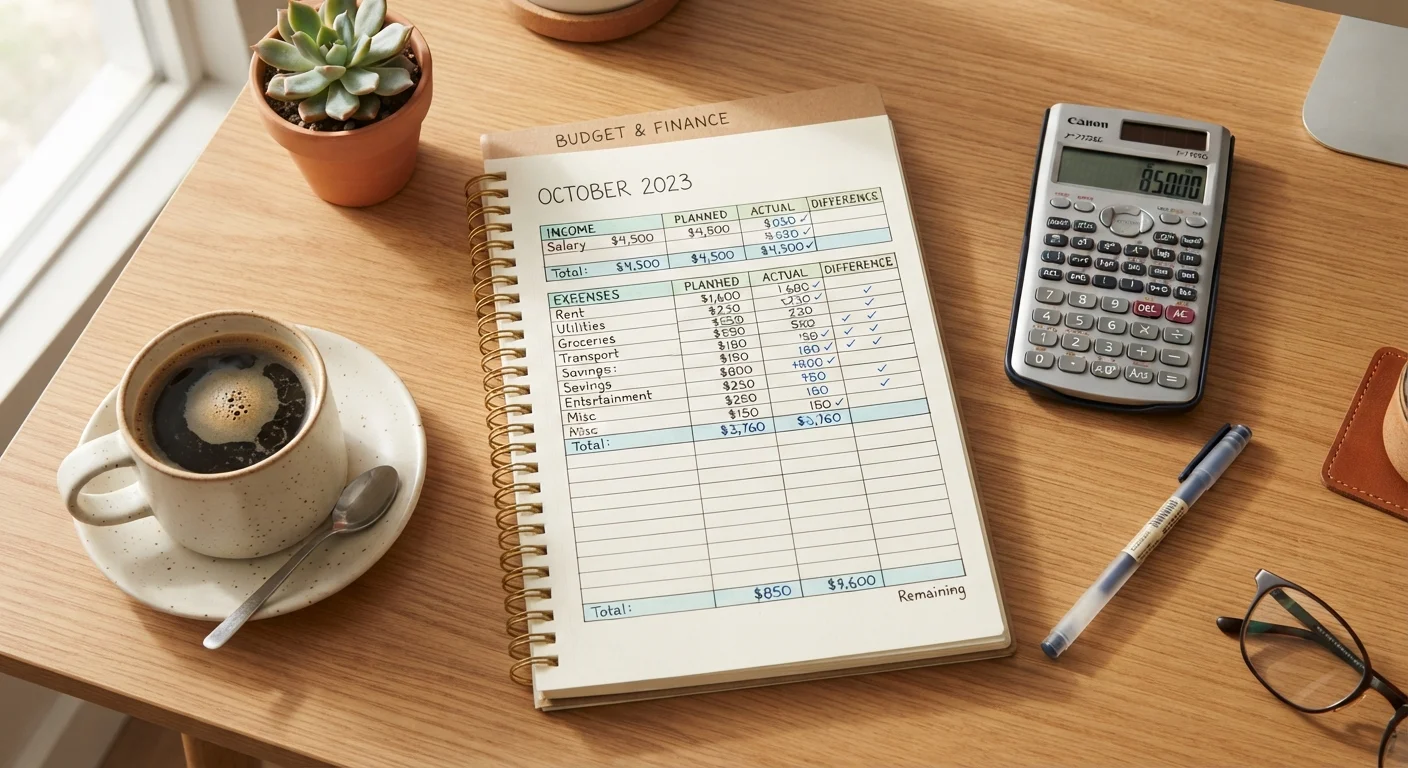
The most common reason careful budgets fail isn't overspending on obvious categories - it's the costs that only appear once or twice a year, creep in gradually, or simply never make it onto a budget spreadsheet. These gaps are structural, not behavioral. No amount of discipline closes a hole that was never identified.
Understanding how fixed and variable expenses behave differently is a useful starting point, but the real blind spots lie beyond that basic framework. The list below covers the most common categories people miss - and how to account for each one.
Annual and Semi-Annual Bills
Car insurance, homeowner's or renter's insurance, life insurance premiums, property taxes (if not escrowed), and vehicle registration fees are all bills most people pay once or twice a year - and forget to budget for monthly. When they arrive, the money often comes from savings or credit, neither of which was the plan.
The fix is straightforward: list every bill you pay less than monthly, note its annual total, and divide by 12. Add that figure as a monthly budget line called something like "Annual Bills Reserve."
Bills paid once a year still cost money every month - they just don't show up until it's too late.
Subscription Creep
Streaming services, software tools, gym memberships, meal kit deliveries, news sites, cloud storage, and app subscriptions each feel small individually. A $9.99 charge here and a $14.99 charge there rarely trigger concern. But research consistently shows that most households significantly underestimate their total monthly subscription spend - often by $100 or more.
A quarterly subscription audit - reviewing every recurring charge on your bank and credit card statements - is one of the highest-return budgeting habits you can develop. Cancel anything you haven't actively used in 60 days.
Most households underestimate their subscription spending by $100 or more each month.
Vehicle Maintenance and Repairs
Budgets almost universally include the car payment and fuel. They rarely include tires, oil changes, brake replacements, registration fees, or the unplanned repair that arrives without warning. AAA estimates that vehicle ownership costs beyond the car payment can run several thousand dollars annually depending on the vehicle's age and mileage.
A dedicated vehicle maintenance fund - even $50 to $75 per month - absorbs most routine costs and softens the blow of larger repairs. Pair this with a basic maintenance schedule so costs are predictable, not surprising.
Vehicle costs beyond the car payment can add thousands of dollars annually that most budgets never capture.
Medical and Dental Out-of-Pocket Costs
Even with insurance, copays, deductibles, prescription costs, dental cleanings, vision exams, and eyewear add up. These costs are easy to ignore during budget planning because they feel unpredictable - but they aren't entirely. Most people have a reasonably consistent pattern of healthcare usage from year to year.
Review last year's explanation of benefits (EOB) statements from your insurer to estimate a realistic annual out-of-pocket figure, then divide by 12. If you have access to a Health Savings Account (HSA) or Flexible Spending Account (FSA), those accounts offer a tax-advantaged way to set aside these funds.
[note_callout]Reviewing last year's EOB statements gives you a realistic baseline for annual healthcare out-of-pocket costs.
Home Maintenance and Repairs
A common rule of thumb in personal finance holds that homeowners should budget roughly 1% to 2% of their home's value annually for maintenance and repairs - covering things like HVAC servicing, appliance replacements, roof repairs, and plumbing issues. On a $300,000 home, that's $3,000 to $6,000 per year. Renters aren't exempt either: moving costs, security deposits, and add-on rental costs like parking and pet fees frequently exceed initial estimates.
Whether you own or rent, a home maintenance reserve prevents these costs from derailing other financial goals.
Homeowners should budget 1-2% of their home's value annually for maintenance - a figure most household budgets omit entirely.
Lifestyle Creep
Lifestyle creep - also called lifestyle inflation - describes the gradual increase in spending that often follows income growth. A raise leads to a nicer apartment, more frequent dining out, upgraded travel, and a growing wardrobe. Each individual upgrade seems reasonable. Collectively, they absorb income that could have expanded financial security.
The antidote isn't austerity; it's intentionality. Before any income increase, decide in advance what percentage will go toward savings and investments, and what portion can fund upgraded lifestyle choices. This prevents the default from being "spend it all." For more on the behavioral side of this pattern, see why budgets fail in the second month.
Lifestyle creep is gradual by design - small upgrades feel justified individually but collectively consume entire raises.
Gifts, Celebrations, and Social Obligations
Birthdays, weddings, holidays, baby showers, graduation gifts, and group dinners involve real spending that most budgets treat as surprises. In practice, these events are almost entirely predictable: the calendar tells you when most of them are coming. The average American household spends hundreds of dollars annually on holiday gifts alone, according to various consumer surveys.
Create a "gifts and events" budget line that reflects your actual social calendar, not an idealized version of it. Funding it monthly through the year prevents a single holiday season or wedding cycle from destabilizing your finances.
Gifts and social events are predictable on the calendar - they should be predictable in your budget too.
Turning Awareness Into a Sturdier Budget
Identifying hidden costs is only half the work. The other half is building a system that catches them before they become emergencies. The most effective approach is the sinking fund method: divide each irregular annual cost by 12 and set aside that amount monthly in a dedicated savings account or budget line. A $600 car insurance renewal becomes $50 per month - manageable rather than jarring.
Build Your Sinking Fund in a Separate Account
Keeping irregular expense reserves in the same checking account as day-to-day spending makes it too easy to accidentally spend them. Consider opening a dedicated savings account - or using a savings account with sub-account or "bucket" features - so irregular reserves stay clearly separated. Even a simple labeled savings account labeled "Annual Bills" or "Car Maintenance" creates a useful mental and practical barrier.
Once your budget accounts for irregular and overlooked expenses, it becomes a genuinely reliable tool rather than an optimistic estimate. For a structured way to build that foundation, the monthly budget setup checklist walks through income verification, expense mapping, and review habits step by step. And if you want to keep the momentum going, habits that keep a budget working long-term offers the behavioral layer that makes any system stick.
This article is for general informational and educational purposes only and does not constitute personalized financial advice. Consider consulting a licensed financial professional for guidance specific to your situation.