
Why Credit Myths Persist - and Why They Matter
Credit scores shape some of the most consequential financial decisions in everyday life - whether you qualify for a mortgage, what interest rate you pay on a car loan, and sometimes even whether a landlord approves your rental application. Yet a surprising number of Americans operate on misinformation about how scores actually work.
These myths aren't harmless. Acting on them can mean paying more in interest, accidentally damaging the score you're trying to protect, or missing simple steps that would improve it. For a solid foundation on how scores are built, see our Credit Scores Explained guide. Below, we address the most common misconceptions directly.
Myth
Checking your credit score will lower it.
Fact
Checking your own score is a "soft inquiry" and has zero effect on your credit score.
There are two kinds of credit inquiries. A hard inquiry occurs when a lender pulls your credit as part of a loan or credit card application - this can temporarily lower your score by a few points. A soft inquiry occurs when you check your own score, when a lender pre-screens you for an offer, or when an employer runs a background check. Soft inquiries do not affect your score at all. Avoiding your own score out of fear is counterproductive; monitoring it regularly helps you catch errors and track progress.
Myth
You need to carry a balance on your credit card to build credit.
Fact
Carrying a balance does nothing to improve your score - it only costs you interest charges.
This is one of the most expensive myths in personal finance. What matters to your score is that you use your credit card and pay on time - not that you leave a balance unpaid. In fact, high balances raise your credit utilization ratio, which can hurt your score. The financially optimal approach is to pay your statement balance in full each month: you demonstrate responsible use, keep utilization low, and pay no interest. There is no scoring benefit to revolving a balance.
Myth
Closing old credit card accounts you no longer use will help your score.
Fact
Closing old accounts typically lowers your score by reducing your available credit and potentially shortening your credit history.
When you close a credit card, two things can happen. First, your total available credit decreases, which raises your utilization ratio if you carry any balances. Second, if the closed account was one of your older accounts, it may eventually shorten your average credit age as it ages off your report. Both effects tend to lower scores. If a card has no annual fee, leaving it open and occasionally using it for a small purchase (then paying it off) is usually the better strategy. For a fuller picture of what your report actually contains, see our plain-language credit report walkthrough.
Myth
Your income and bank account balances affect your credit score.
Fact
Income, savings, and net worth are not part of any major credit scoring model.
Credit scores are calculated exclusively from information in your credit report - your borrowing and repayment behavior. Income, employment status, bank balances, and assets do not appear on credit reports and therefore have no direct effect on your score. A high earner who consistently pays late will have a lower score than a moderate earner with a spotless payment history. Lenders may separately consider income when deciding how much credit to extend, but that is a different step from scoring your creditworthiness.
Myth
A bad credit score is permanent.
Fact
Credit scores are dynamic and can improve significantly over time with consistent positive behavior.
Negative items do have staying power - a missed payment can remain on your report for seven years, and a bankruptcy for up to ten - but their impact on your score diminishes as time passes and positive information accumulates. People who establish consistent on-time payments, reduce balances, and avoid new derogatory marks often see meaningful score improvements within 12 to 24 months, even after serious setbacks. Your score today is a snapshot, not a permanent verdict. The long-haul credit habits guide outlines the behaviors that make the biggest difference over time.
Myth
You only have one credit score.
Fact
There are multiple credit scoring models, and your score can vary across bureaus and model versions.
FICO alone has dozens of scoring versions, and VantageScore is another widely used model. Each major credit bureau - Equifax, Experian, and TransUnion - may also hold slightly different information, because not all lenders report to all three. As a result, the score a mortgage lender sees may differ from the score displayed on a free monitoring app. Understanding this helps explain why your score appears to fluctuate between platforms. For a deeper look at the relationship between your report and your score, see Your Credit Report and Your Credit Score Are Not the Same Thing.
What Actually Moves the Needle on Your Score
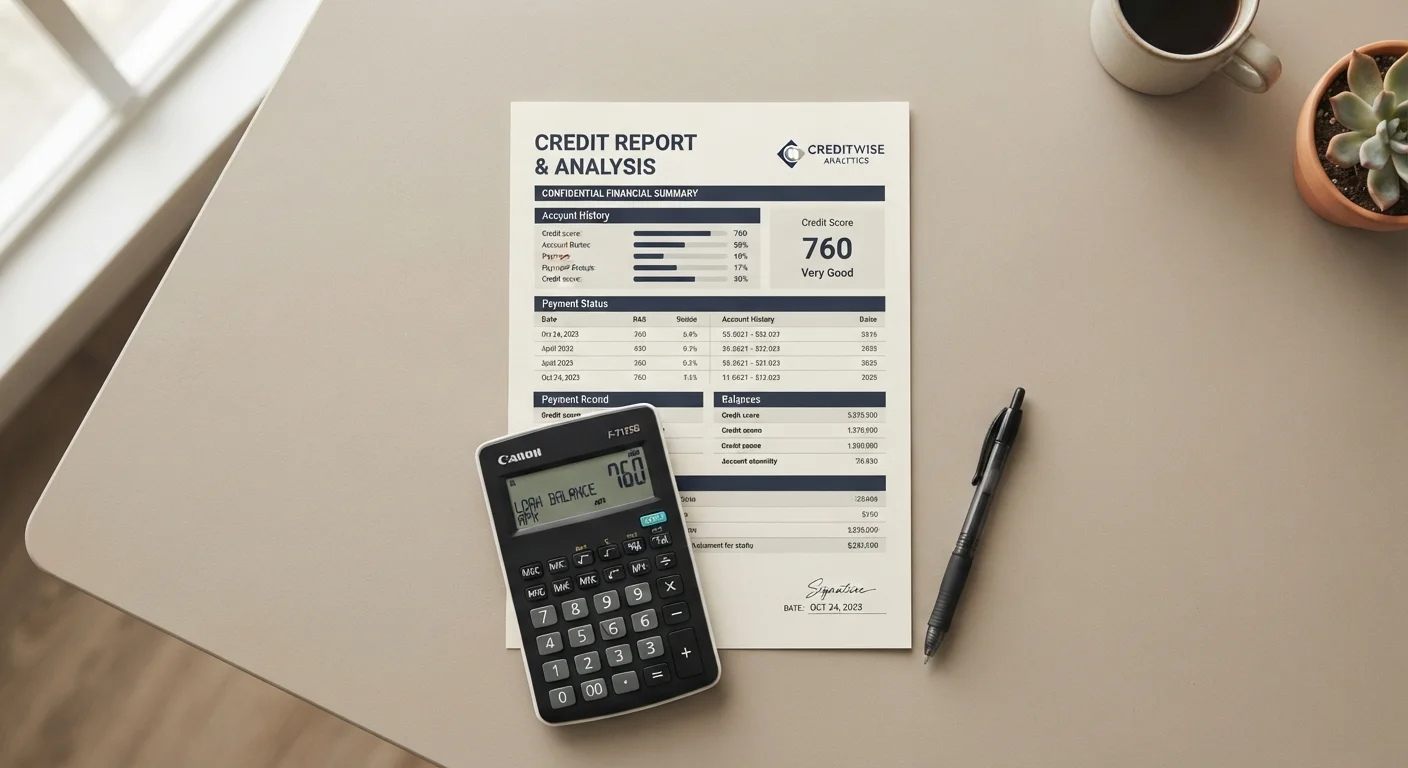
Once the myths are cleared away, the actual drivers of your score become much more actionable. The two biggest factors in the widely used FICO scoring model are payment history (roughly 35% of your score) and credit utilization - meaning how much of your available credit you're using (roughly 30%). Together they account for nearly two-thirds of your score.
Consistently paying on time and keeping balances low relative to your credit limits are the most reliable levers you have. Length of credit history, the mix of account types, and recent applications for new credit account for the remaining weight. None of those factors include your income, your net worth, or how often you check your own score.
Rate Shopping Has Limits - Apply Wisely
When you apply for a mortgage, auto loan, or student loan, multiple applications within a short window (typically 14 to 45 days, depending on the scoring model) are usually counted as a single inquiry for scoring purposes. This lets you shop lenders without compounding score damage. However, applying for multiple credit cards in a short period does not receive the same treatment - each application is counted separately.
If you want to understand the specific patterns that quietly erode scores over time, this breakdown of damaging habits is worth reading alongside this article. And for anyone rebuilding after a setback, a step-by-step recovery approach can help map a realistic path forward.
This article is for general informational and educational purposes only and does not constitute personalized financial or credit advice. For guidance tailored to your situation, consult a licensed financial professional.