

Why the Distinction Matters
Walk into most gyms or scroll through fitness content online and you'll see "flexibility" and "mobility" used interchangeably. They're not the same thing - and confusing them can lead to training that misses the point entirely.
Understanding the difference helps you identify what your movement actually needs. Someone who can touch their toes in a seated stretch (flexible hamstrings) may still struggle to hinge properly during a deadlift (inadequate hip mobility). The muscle can lengthen passively, but the joint lacks active, controlled access to that range. That gap is the distinction in a nutshell.
A Note on Hypermobility
Some individuals have joints that move beyond typical ranges due to connective tissue differences - a pattern known as hypermobility. For these individuals, the priority often shifts from gaining range to building stability and control within existing range. If you suspect hypermobility, a physical therapist or sports medicine professional is the right starting point.
This matters practically because the training strategies are different. Passive stretching alone won't reliably solve a mobility limitation - it also requires loading and reinforcing the new range of motion through active movement.
Flexibility: Passive Length in a Muscle
Flexibility describes how far a muscle or muscle group can be elongated when an external force acts on it - gravity, a strap, a partner's hands, or another body part. Think of the classic standing hamstring stretch: your body weight assists the stretch while the muscle is relatively passive.
High flexibility means a muscle is capable of achieving a long length. That's genuinely useful - tight muscles can restrict movement and contribute to discomfort. But flexibility measured in a static, passive context doesn't tell you whether your nervous system and surrounding muscles can actually control movement through that same range.
~80%
Adults with at least one joint mobility limitation
Research published in physical therapy literature suggests a substantial majority of adults have measurable active range-of-motion restrictions in at least one major joint, often without awareness.
2-4 weeks
Typical timeframe to see passive flexibility gains
Studies on stretching interventions generally report measurable passive range-of-motion improvements within 2-4 weeks of consistent practice, though active mobility gains may take longer.
Mobility: Active Control Through a Range of Motion
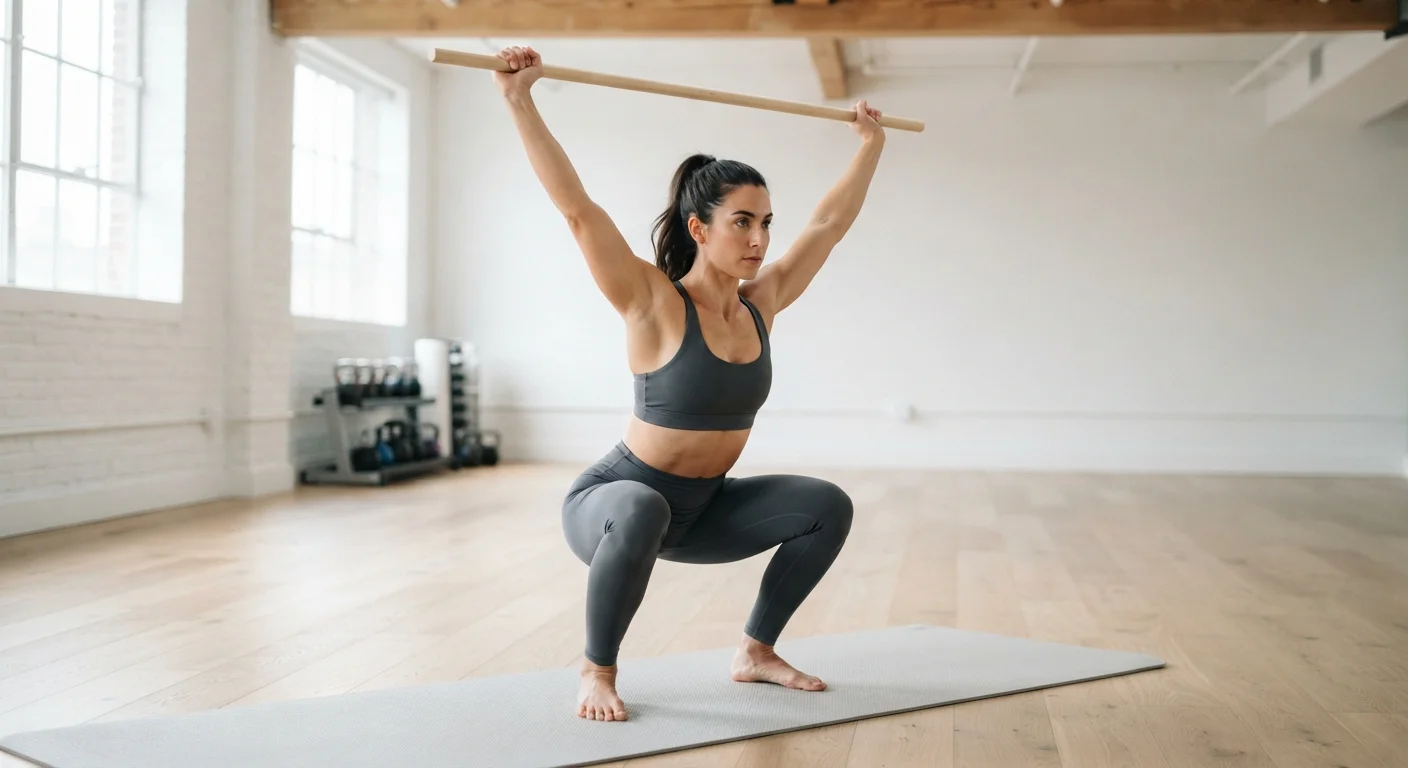
Mobility is the joint's ability to move through its full range under its own muscular power. A mobile hip joint, for example, can flex, extend, rotate, and abduct - not just when someone pushes it there, but when you initiate and control the movement yourself.
Mobility training typically combines elements of flexibility work with strength and coordination. Common approaches include controlled articular rotations (CARs), active stretching where you resist the end range, and functional movement patterns that load the joint through its full arc. The goal is to build usable range, not just theoretical range.
This is why mobility work tends to translate more directly into real-world movement quality - squatting, climbing stairs, reaching overhead - compared to passive stretching alone. For practical ways to build these habits into daily life, see movement habits that support an active life.
Start With Active Range Exploration
A simple way to begin building mobility is to move a joint slowly through its full active range - as far as you can take it under your own control - and pause at the end range for a few seconds. This practice, sometimes called a controlled articular rotation (CAR), helps your nervous system map and reinforce usable range. Even in a small space, these movements require no equipment. Effective movement in limited space is entirely achievable with this kind of approach.
How the Two Work Together
Flexibility and mobility aren't competing priorities - they're complementary. Adequate flexibility gives a joint the raw material (tissue length) to work with, while mobility training teaches the body to access and control that range actively.
A useful mental model: flexibility is the potential range; mobility is the accessible, controlled portion of it. Most people's accessible range is smaller than their potential range. The goal of movement training is to close that gap.
As movement needs evolve throughout adulthood, the balance between flexibility and mobility work often shifts. Exercise priorities change across decades of adult life, and mobility tends to become increasingly important as connective tissue adapts more slowly with age.
This article is for general informational and educational purposes only and is not a substitute for professional medical or fitness advice. Consult a qualified healthcare or movement professional before starting any new exercise program or addressing specific physical limitations.