
Why a Nutrition-Focused Shopping Strategy Matters
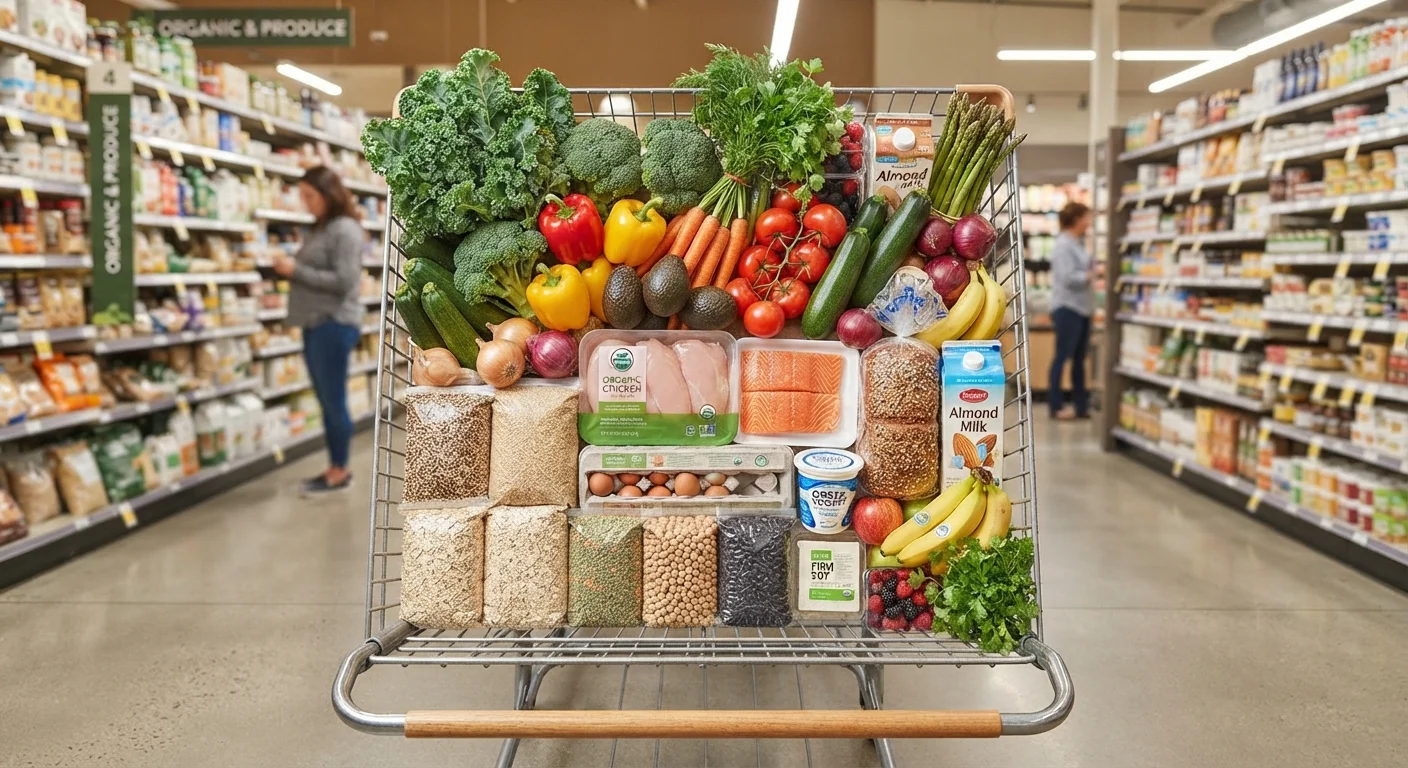
What ends up in your cart almost always ends up on your plate. Research consistently shows that the food environment at home - what's accessible and convenient - shapes eating patterns more than willpower alone. A deliberate grocery shopping approach is one of the most practical steps you can take toward everyday nutritious eating.
This checklist walks you through every stage: preparing before you leave home, navigating the store with intention, and decoding the labels that matter most. Whether you're new to thinking about food choices or refining an existing habit, use it as a reusable reference. If you're just starting out, our beginner's guide to healthier eating covers the foundational concepts worth knowing first.
Before You Leave Home
In the Produce Section
Proteins and Dairy
Grains and Pantry Staples
Reading Labels in the Aisles
Tools You'll Want Before You Head to the Store
A few simple resources make the checklist far easier to execute consistently. None of them require special equipment - just a bit of upfront organization.
Weekly meal plan template
Anchors your grocery list to actual meals, reducing both food waste and unplanned purchases.
Grocery list (paper or app)
Keeps you focused and organized by store section, cutting down on browsing near less nutritious displays.
Nutrition Facts label reference card
A quick cheat sheet for daily value benchmarks (sodium, fiber, added sugar) to reference while reading labels in the aisle.
Reusable shopping bags
Practical for transport and helpful for mentally pre-allocating space for produce versus packaged goods.
Reading Labels Without the Confusion
Packaged food labels can feel overwhelming, but two sections carry most of the useful information: the Nutrition Facts panel and the ingredient list. On the Nutrition Facts panel, pay attention to serving size first - all other numbers hinge on it. Then scan sodium, added sugars, fiber, and protein relative to your daily context.
The ingredient list is ordered by weight, so whatever appears first is present in the largest amount. A product whose first three ingredients are whole foods (oats, lentils, tomatoes) is structurally different from one leading with refined flour or sweeteners. For a deeper look at where sugar hides under unexpected names, see our guide on understanding added sugar on labels.
Don't Rely on Front-of-Package Claims
Terms like "natural," "multigrain," "low-fat," and "made with whole grains" are loosely regulated and don't guarantee a product is nutritionally strong overall. A "low-fat" label, for example, sometimes coincides with higher added sugar to compensate for flavor. Always verify by checking the full Nutrition Facts panel and ingredient list on the back of the package.
Front-of-package claims like "natural," "multigrain," or "light" have limited regulatory definitions and can be misleading. Always flip to the back panel for the objective data.
This article is for general informational and educational purposes only and is not a substitute for personalized advice from a qualified healthcare professional or registered dietitian.