

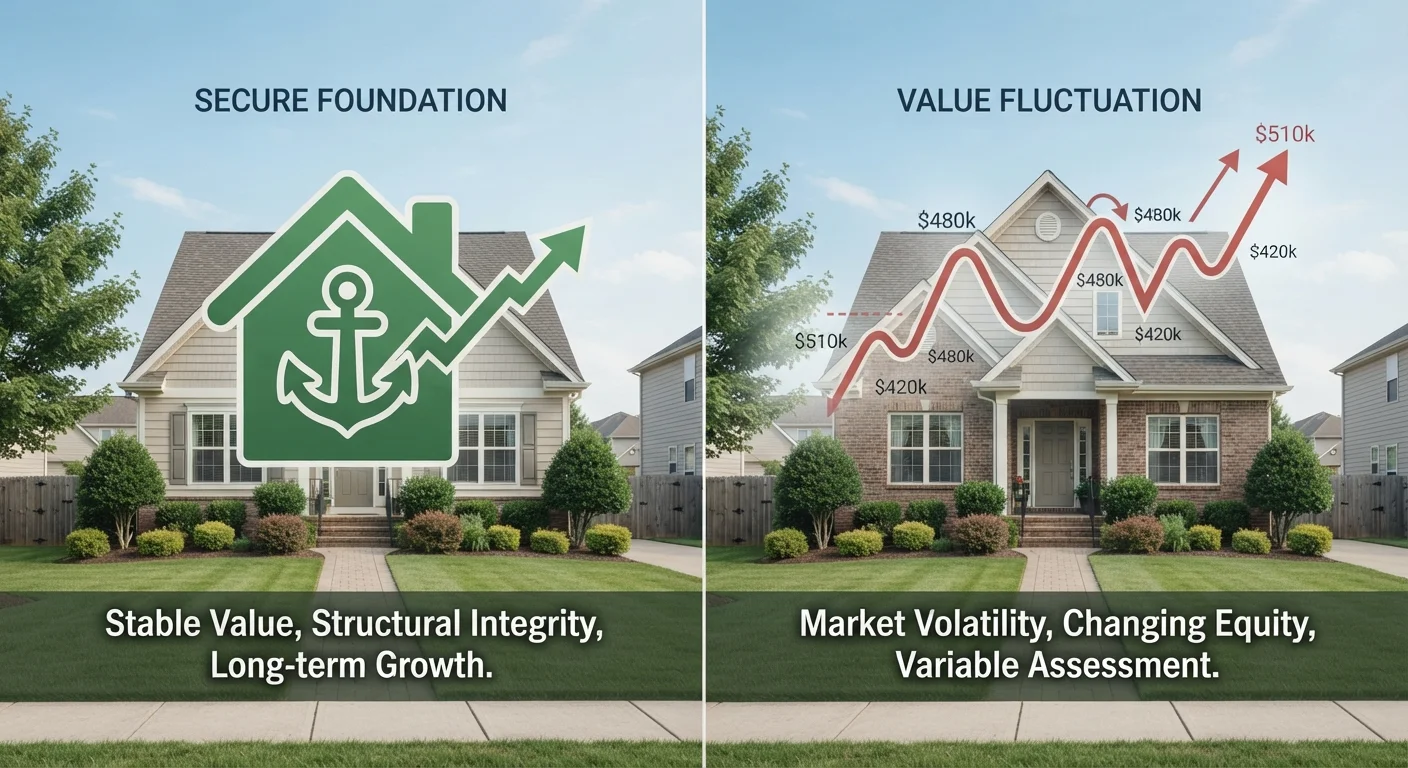
How Each Mortgage Type Works
A fixed-rate mortgage carries the same interest rate from the first payment to the last, whether the loan term is 15 or 30 years. Your principal and interest payment never changes, making it straightforward to plan a long-term budget. This is the dominant loan type for US homebuyers, particularly for primary residences.
An adjustable-rate mortgage (ARM) works differently. It begins with a fixed introductory rate - often lower than prevailing fixed-rate options - for an initial period, typically 5, 7, or 10 years. After that window closes, the rate adjusts periodically (commonly once a year) based on a benchmark index such as the Secured Overnight Financing Rate (SOFR), plus a margin set by the lender. A 5/1 ARM, for example, holds its rate steady for five years, then adjusts annually thereafter.
Because a mortgage is a form of secured debt - the home itself serves as collateral - understanding how the rate structure affects your long-term obligations is critical. For more on what makes mortgage debt distinct, see why secured debt works differently.
| Criterion | Fixed-Rate Mortgage | Adjustable-Rate Mortgage (ARM) |
|---|---|---|
| Interest Rate | Locked for the full loan term | Fixed initially, then adjusts periodically |
| Monthly Payment Stability | Completely predictable | Can rise or fall after adjustment period |
| Initial Rate | Typically higher | Typically lower |
| Best Time Horizon | Long-term (10+ years) | Short-to-medium term (under 7 years) |
| Rate Change Risk | None after closing | Significant after initial fixed period |
| Rate Cap Protections | Not applicable | Initial, periodic, and lifetime caps apply |
| Refinancing Need to Lower Rate | Required if market rates fall | Rate may adjust down automatically |
The Real Trade-Off: Certainty vs. Cost
The central tension between these two products is straightforward: fixed-rate loans offer certainty; ARMs offer a lower initial cost in exchange for future uncertainty. Neither is inherently superior - the better fit depends almost entirely on individual circumstances.
~90%
Share of US mortgages that are fixed-rate
According to the Urban Institute and Federal Reserve data, fixed-rate mortgages have historically represented the vast majority of new US home loan originations.
1-2%
Typical initial rate discount for ARMs vs. fixed
ARM introductory rates are generally one to two percentage points below comparable fixed-rate loans at the time of origination, though this spread varies with market conditions.
5/1
Most common ARM structure in the US market
The 5/1 ARM - fixed for five years, then adjusting annually - has historically been the most widely offered adjustable-rate product among US lenders.
Fixed-rate borrowers pay a premium for predictability. When market rates are high, locking in a rate can feel costly upfront. When rates fall, fixed-rate borrowers must refinance - incurring closing costs - to capture savings.
ARM borrowers, by contrast, accept that their payment could rise substantially once adjustments begin. Federal regulations require lenders to disclose rate caps (limits on how much the rate can increase per adjustment and over the life of the loan), which provide some protection. Still, a rate that rises from 6% to 9% over several adjustments translates to a meaningful jump in monthly payments on a typical US home loan.
This dynamic resembles broader budgeting principles. Just as fixed versus variable expenses behave differently in a household budget, fixed and adjustable mortgage payments carry very different planning implications month to month and decade to decade.
Understanding ARM Rate Caps
Federal rules require lenders to disclose three types of rate caps on ARM products: the initial adjustment cap (how much the rate can change at first reset), the periodic cap (the maximum change at each subsequent adjustment), and the lifetime cap (the maximum increase over the life of the loan). A common cap structure is 2/2/5 - meaning the rate can rise no more than 2% at first adjustment, 2% at each subsequent adjustment, and 5% total over the loan's life. Always verify the specific caps on any ARM you're considering.
Making the Choice: Key Questions to Ask
Before committing to either structure, work through these questions honestly - ideally with a licensed mortgage professional or HUD-approved housing counselor:
- How long will you stay? If you're confident you'll sell or refinance within the ARM's fixed window, the rate savings may outweigh the risk. If you're planting roots for the long term, a fixed rate removes a significant variable from your financial future.
- How stable is your income? Borrowers with predictable salaries often have more room to absorb potential payment increases. Those with variable income may find an ARM's uncertainty compounding existing financial pressure.
- Where are rates headed? No one can predict rate movements with certainty, and it's important not to treat expectations as guarantees. However, if you're buying when rates are historically elevated and there's broad consensus they may decline, an ARM could allow you to benefit from those drops without refinancing.
- What are the ARM caps? Review the initial cap, periodic cap, and lifetime cap carefully. These define the worst-case scenario for your payments and should factor into your affordability calculations.
If you're still weighing whether to buy at all, the broader comparison in renting vs. buying offers useful framing before you commit to any mortgage type.
This article provides general educational information about mortgage products and is not personalized financial or legal advice. Mortgage terms, rates, and regulations vary. Always consult a licensed mortgage professional or financial advisor before making borrowing decisions.