

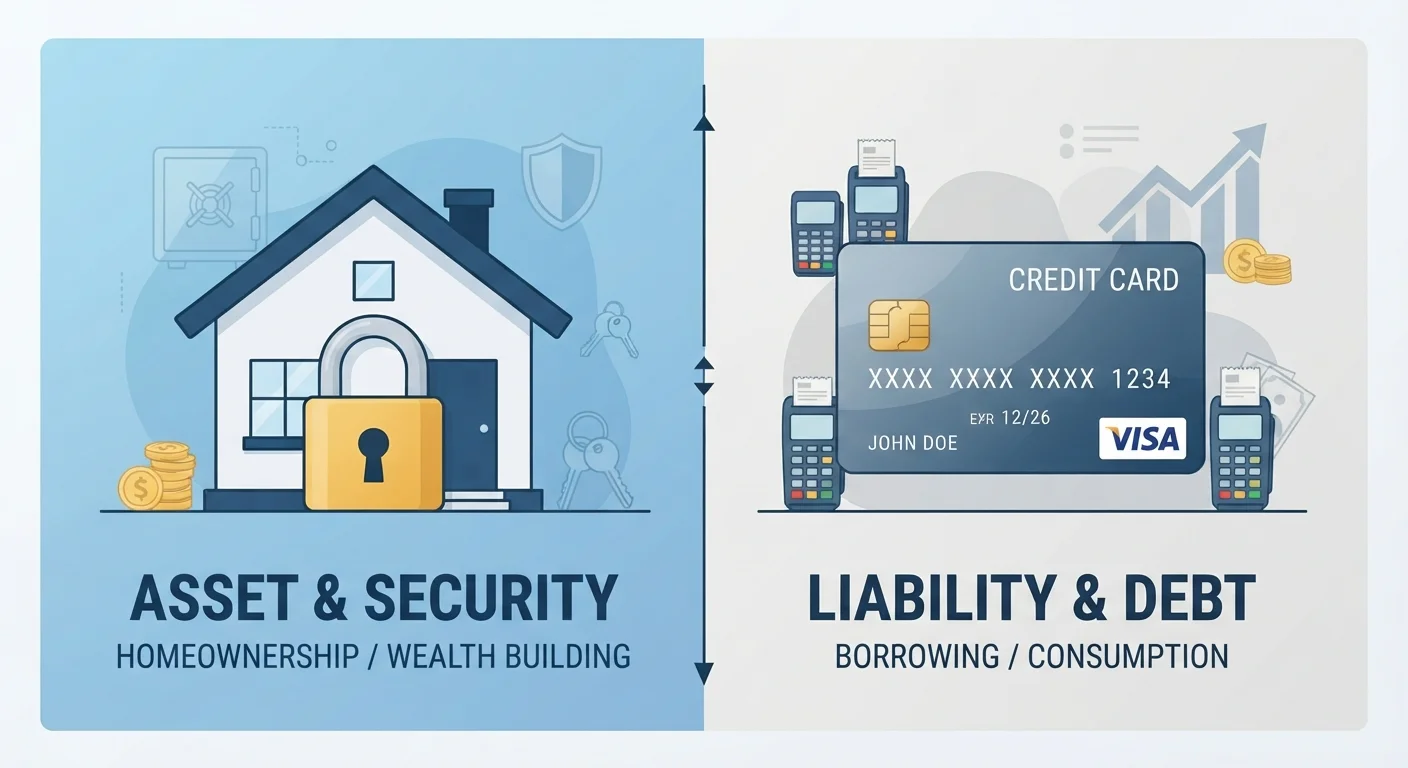
The Core Difference: Collateral
Every debt you carry falls into one of two broad categories. Secured debt is tied to a specific asset - called collateral - that the lender can legally claim if you stop making payments. Unsecured debt has no such backstop; the lender extends credit based purely on your creditworthiness, meaning your income, credit history, and debt load.
A mortgage is the most familiar example of secured debt. The home you purchase serves as collateral. If you default, the lender can initiate foreclosure to recover what it is owed. An auto loan works the same way - the vehicle secures the loan, and the lender can repossess it if payments stop. On the unsecured side, credit card balances and most personal loans are the clearest examples. There is no asset attached; if you default, the lender cannot automatically seize property. Instead, they may pursue collections, report the delinquency to credit bureaus, or eventually take legal action to obtain a court judgment.
If you are new to thinking about debt categories, this first-timer's overview of debt covers the foundational vocabulary before you go deeper.
| Criterion | Secured Debt | Unsecured Debt |
|---|---|---|
| Collateral required | Yes - asset pledged to lender | No - based on creditworthiness |
| Common examples | Mortgage, auto loan, home equity loan | Credit card, personal loan, medical debt |
| Typical interest rate | Lower, due to reduced lender risk | Higher, to offset lender risk |
| Consequence of default | Asset repossession or foreclosure | Collections, credit damage, potential judgment |
| Credit score impact | Missed payments reported to bureaus | Missed payments reported to bureaus |
| Approval requirements | Asset value helps offset credit gaps | Strong credit history typically required |
| Priority in repayment hardship | Higher - asset loss is immediate risk | Lower - no direct asset seizure initially |
Why This Distinction Affects Interest Rates
Collateral changes the math of lending risk. When a lender holds a claim on a real asset, they have a recovery mechanism if the loan goes bad. That reduced risk allows them to offer lower interest rates. This is why a 30-year mortgage typically carries a much lower rate than a credit card.
~7-8%
Average 30-year fixed mortgage rate range (recent years)
Mortgage rates, though they fluctuate with Federal Reserve policy, have historically remained well below average credit card APRs, illustrating the rate benefit of collateral-backed borrowing.
20%+
Average credit card APR in the US
According to Federal Reserve consumer credit data, average credit card interest rates have risen above 20% APR in recent periods, underscoring the cost of unsecured revolving debt.
$12T+
Total US mortgage debt outstanding
The Federal Reserve's Flow of Funds data shows mortgage debt represents the largest single category of household debt in the United States, reflecting the dominance of secured borrowing.
Unsecured lenders take on more risk because there is nothing concrete to recover. They offset that risk by charging higher interest rates and, often, by approving only borrowers with solid credit histories. Someone with a low credit score may find it difficult to qualify for an unsecured personal loan at a reasonable rate - but may still be able to obtain a secured loan, since the collateral provides the lender a safety net.
This rate difference is one reason why consolidating high-interest unsecured debt into a lower-rate option can sometimes make financial sense. For a balanced look at that decision, see what debt consolidation solves - and what it doesn't.
Consequences of Default: What You Actually Stand to Lose
The practical stakes of defaulting differ sharply between secured and unsecured debt. With secured debt, the consequence is direct and tangible: the lender can move to reclaim the asset. Miss enough mortgage payments and you face foreclosure. Stop paying an auto loan and the lender can repossess the car - sometimes within weeks, depending on state law and the loan terms.
With unsecured debt, there is no immediate seizure. But that does not mean consequences are minor. A defaulted credit card balance is typically sent to collections, a charge-off is reported to the credit bureaus, and your credit score can drop sharply. In some cases, creditors pursue a court judgment, which can lead to wage garnishment depending on your state's laws. The damage to your credit can affect your ability to rent housing, qualify for a mortgage, or even secure certain jobs.
Understanding these terms in full context is worthwhile - the credit glossary for borrowers defines charge-offs, derogatory marks, and other language you will encounter if a debt goes seriously overdue.
This article is for general informational and educational purposes only and does not constitute personalized financial, legal, or tax advice. Consult a qualified financial professional for guidance specific to your situation.
How to Use This Knowledge When Repaying Debt
Knowing whether a debt is secured or unsecured should directly influence your repayment decisions, especially during periods when cash is tight. As a general principle, secured debts tied to essential assets - your home and car - warrant prioritization, because the consequences of falling behind are immediate and hard to reverse.
Unsecured debts still matter: late payments damage your credit, and interest compounds quickly. But if you must choose between paying your mortgage and paying your credit card in a given month, the secured debt protects your most critical asset.
When you are ready to build a structured repayment plan across multiple balances, comparing approaches like the avalanche and snowball methods can help you allocate extra payments effectively. See how the two main payoff strategies compare to find the approach that suits your situation.
For borrowers weighing how to pay down unsecured balances specifically, the trade-offs between balance transfer cards and personal loans are worth understanding. Explore how credit cards and personal loans compare for paying off debt before committing to a path.
Secured Debt Is Not Always 'Safe' Debt
It can be tempting to view secured debt as the responsible kind and unsecured debt as risky - but that framing oversimplifies the picture. A mortgage or home equity loan puts your home on the line; borrowing more than you can comfortably repay is risky regardless of the debt type. The distinction matters most for understanding lender rights and repayment priorities, not for judging whether taking on debt was wise in the first place. Always assess your total debt load relative to your income - a concept covered in depth in the debt-to-income ratio guide.