
What AVMs Actually Do Under the Hood
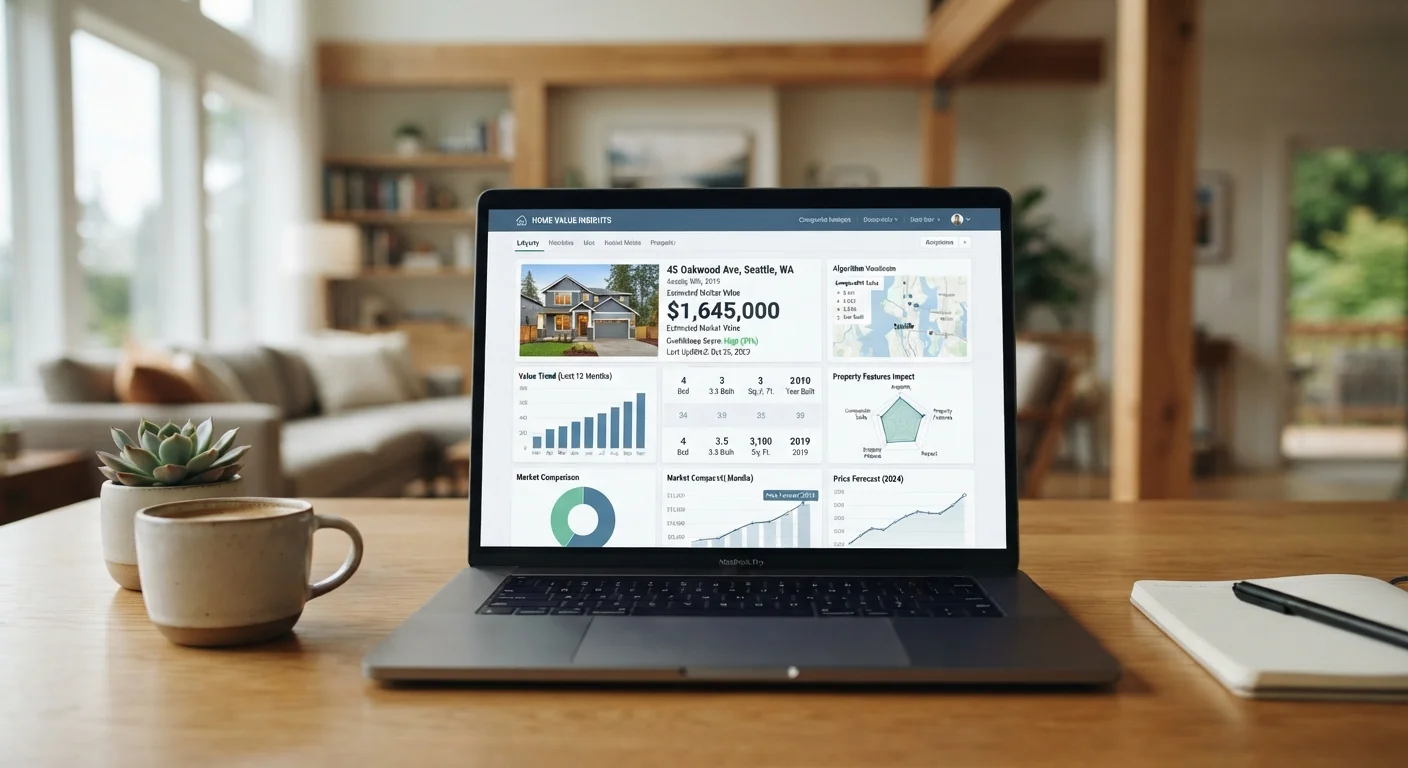
When you type an address into a major real estate portal and a value appears in seconds, an automated valuation model is doing the work. The algorithm pulls data from public property records, tax assessments, prior sale prices, and active listing databases, then identifies recently sold homes it considers comparable. It weights variables - square footage, bedroom count, lot size, zip code - and produces an estimated value, often with a confidence range.
The process is fast precisely because no human visits the property. That efficiency is also the core limitation. An AVM cannot see that a roof needs replacement, that a bathroom was gut-renovated last year, or that the home backs up to a noisy highway. It works from what's recorded, not from reality.
AVMs and the Three Value Types
Automated valuation models estimate market value - what a buyer might plausibly pay - not assessed value (used for property taxes) or appraised value (determined by a licensed professional for lending purposes). Conflating these figures is a common source of confusion. Understanding which number you're looking at matters before drawing any conclusions.
For a deeper look at how value types interact, see our guide on assessed value vs. appraised value vs. market value - three figures AVMs are sometimes confused with.
Where AVMs Perform Well - and Where They Fall Short
AVMs tend to be most reliable in dense suburban markets where many similar homes have sold recently. When a neighborhood has dozens of comparable transactions within the past six months, the model has robust data to work from, and error rates shrink.
Accuracy degrades sharply in several situations:
- Rural and low-transaction markets - fewer comparable sales mean the model extrapolates over longer distances or older data.
- Unique or high-end properties - custom architecture, unusual lot configurations, and luxury finishes are difficult to model from standardized data fields.
- Recently renovated homes - significant improvements rarely show up in public records promptly, so the algorithm prices the home as it was recorded, not as it stands.
- Rapidly shifting markets - in fast-moving markets, comparables from even three months ago can be meaningfully stale.
~7%
Zillow's median AVM error rate in lower-data markets
Zillow publicly discloses accuracy statistics by market; error rates in data-sparse areas have historically approached 7% or higher, per the company's own published figures.
$20,000+
Dollar impact of a 5% AVM error on a $400K home
On a median-priced US home, even a moderate percentage error translates into a gap large enough to affect negotiation, financing, and equity calculations.
3-6 months
Typical public records update lag for renovations
Permit and tax record updates often lag behind completed renovations, meaning AVM models may not reflect improvements for months - or ever, if unpermitted.
If your home fits any of these categories, treat the AVM figure as a rough directional signal rather than a credible estimate. A comparative market analysis from a licensed agent accounts for factors an algorithm cannot observe.
How AVMs Differ from a Professional Appraisal
The distinction matters most when money is on the line. A licensed appraiser physically inspects the property, documents condition, notes improvements, and applies professional judgment to comparable selection. Banks rely on appraisals - not AVMs - because they're conducted by credentialed professionals under regulatory standards.
“An automated valuation model is a starting point, not a verdict. It reflects what the data says, not what the property is.”
— Industry commentary, Widely cited framing in real estate appraisal literature and practitioner guidance
AVMs and appraisals answer different questions: an AVM asks what public data suggests your home is worth; an appraisal asks what a credentialed professional, having examined the property, concludes it would sell for under current market conditions. Our related article explains what licensed appraisers actually evaluate and where their findings have limits.
For most sellers and buyers, the right approach is to use an AVM to build initial awareness, then validate with professional tools before making an offer, setting a list price, or negotiating a deal.
Using AVM Data Responsibly
AVMs have genuine value when used in context. Tracking your home's estimated value over time can reveal broad neighborhood trends. Cross-referencing multiple platforms - Zillow, Redfin, Realtor.com - gives a rough range and highlights when estimates diverge significantly (a sign of data uncertainty). Homeowners can sometimes improve AVM accuracy by submitting verified updates - bedroom counts, square footage corrections, renovation details - through a platform's homeowner portal.
Improving Your AVM's Accuracy
Most major platforms let homeowners claim their property and submit verified updates - correcting square footage, bedroom count, bathroom count, or logging recent renovations. While this doesn't guarantee a more accurate estimate, it gives the model better inputs to work from. It's worth spending ten minutes doing this before you start tracking your home's value over time.
What AVMs should not drive, on their own: listing price decisions, offer amounts, refinancing choices, or property tax appeals. Each of those scenarios carries financial consequences significant enough to warrant professional input. Our article comparing Zestimates to professional appraisals walks through when each tool is appropriate.
Understanding what an AVM can and cannot see is itself useful knowledge - it helps you ask better questions of agents and appraisers, and it keeps you from anchoring too firmly to a number generated without anyone ever walking through your front door.