

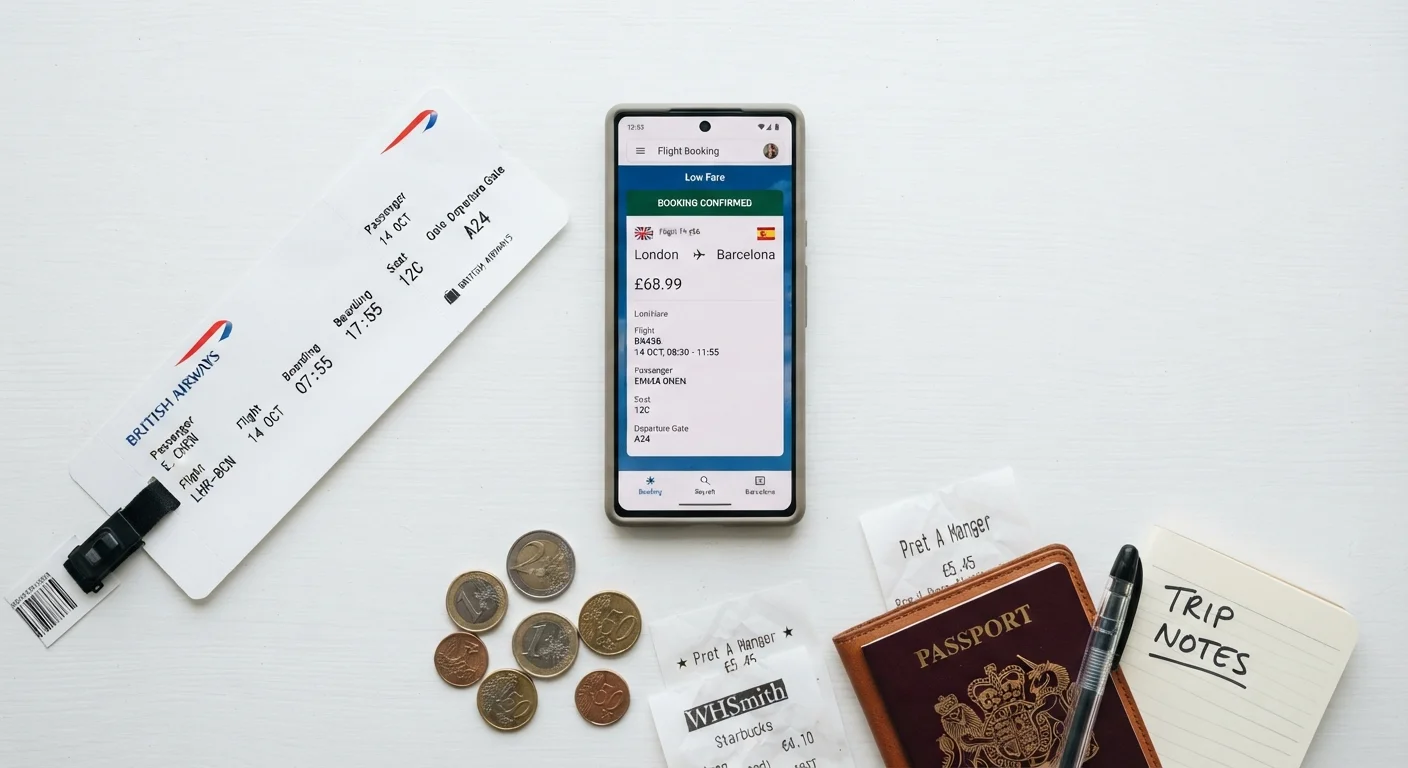
Why That $49 Fare Isn't Really $49
Airline pricing is built on a tiered model: display the lowest possible number to capture attention, then collect revenue through add-ons at checkout. This isn't deceptive in a legal sense - the fees are disclosed - but they're disclosed late in the booking process, after a traveler has already invested time comparing options.
The result is a widespread mismatch between what travelers expect to pay and what they actually spend. Ancillary fees are among the most common budget drains for American travelers, and they're easy to overlook precisely because they accumulate one small charge at a time.
Understanding how airline pricing is structured - and where the hidden costs live - is the first step toward making booking decisions that hold up in your actual bank account.
Check the Airline's Fee Schedule First
Before you compare fares across booking sites, visit each airline's own website and look up their current baggage and seat selection fees for the specific fare class you're considering. Fee schedules differ by fare tier - a basic economy ticket often carries stricter and costlier restrictions than a standard economy ticket on the same flight.
The Fee Categories That Add Up Fast
Airlines categorize ancillary fees in several ways. Knowing the major categories helps you anticipate total costs before checkout surprises you.
- Checked baggage: Fees typically range from $30-$40 per bag each way on domestic flights for most major U.S. carriers. That's up to $160 round-trip for one checked bag for two travelers.
- Carry-on bags: Full-service airlines generally allow one carry-on free, but many ultra-low-cost carriers charge separately for overhead bin access - sometimes $25-$75 depending on when you pay.
- Seat selection: Airlines increasingly charge for any seat that isn't a middle seat in the back. Preferred seats near the front, exit rows, or window seats often carry fees of $10-$50 per segment.
- Change and cancellation fees: Many basic economy fares are non-refundable and non-changeable. Even on carriers that eliminated standard change fees, basic fare tiers often remain restricted.
- In-flight amenities: Wi-Fi, meals, and even water on some carriers are pay-as-you-go on ultra-low-cost airlines.
$7.3B+
U.S. airline baggage fee revenue in a recent annual period
According to Bureau of Transportation Statistics data, U.S. airlines have consistently collected billions annually in checked baggage fees alone, reflecting how central ancillary revenue has become to carrier economics.
$33-$40
Typical first checked bag fee, each way, major U.S. carriers
Fees vary by airline, fare class, and frequent flyer status; travelers without elite status or co-branded credit cards generally pay the standard rate.
For a family of four on a round trip, these fees can turn a $200 fare total into a $500+ actual expenditure before the trip even begins.
The Secondary Airport Trap
One of the least-discussed true costs is geography. Ultra-low-cost carriers frequently operate out of secondary or regional airports that are less convenient and farther from city centers. A flight into a secondary airport may save $60 on the base fare but add $80 in round-trip ground transportation - a net loss.
Before booking, look up the distance from the arrival airport to your actual destination and price out realistic transportation options. This is especially relevant in metro areas where multiple airports serve the same region. A thorough cost comparison should account for all transportation legs, not just the airfare itself.
Secondary Airports Are Not Always Inconvenient
In some metro areas, secondary airports are actually closer to popular destinations than the main hub. The key is to look up actual travel time and transportation cost for your specific itinerary rather than assuming one airport is always more convenient than another. Ground truth varies significantly by destination.
How to Calculate the All-In Fare
A reliable all-in fare calculation follows a straightforward framework. Work through each category before finalizing any booking:
- Base fare (as displayed, including taxes and mandatory fees)
- Baggage costs - check the airline's fee schedule for your specific fare class
- Seat selection - if choosing your seat matters to you, price it before comparing
- Airport transportation - both origin and destination airports, round trip
- Change or cancellation coverage - factor in whether you need flexibility
Run this calculation for each flight option you're comparing. You may find that a higher base fare on a full-service carrier beats an ultra-low-cost fare once bags and seat selection are included. Skipping this step is one of the most common ways travelers overpay.
The same logic applies beyond air travel - advertised prices across many categories hide the real total until you dig into the details. Traveling on a budget doesn't mean accepting surprise charges - it means knowing where the charges are before you commit.