
Why 'Don't Drink the Tap' Isn't Enough
The standard travel warning - don't drink tap water in certain countries - is a useful starting point, but it dramatically understates the actual risk landscape. Waterborne illness while traveling is one of the most common health complaints tourists experience, and in many cases, the culprit isn't a glass of tap water. It's a handful of ice cubes, a salad rinsed under a kitchen faucet, or water left on a toothbrush.
Understanding water safety abroad means understanding every pathway through which contaminated water can reach your system - not just the obvious one. This matters especially because travelers often unconsciously let their guard down after making deliberate choices (ordering a bottled drink) while overlooking automatic behaviors (rinsing their mouth after brushing).
For a broader foundation before your trip, see our guide on travel health preparation, which covers vaccinations and destination-specific health planning.
Risk Varies Widely by Destination
Water safety standards differ dramatically around the world - and even within a single country, quality can vary between urban centers and rural areas. Always check current guidance from the CDC Travelers' Health site and the U.S. Department of State before your trip. What was true of a destination two years ago may have changed.
The Hidden Exposure Points Most Travelers Miss
Beyond drinking water directly, these are the routes most commonly responsible for waterborne illness in travelers:
- Ice: Unless confirmed to be made from purified water, ice carries the same risks as the tap water used to make it. This applies equally to drinks at restaurants and cocktails at hotel bars.
- Raw produce: Fruits and vegetables washed in local tap water - including salads, garnishes, and cut fruit - can transfer pathogens. Produce you peel yourself (bananas, oranges) presents lower risk.
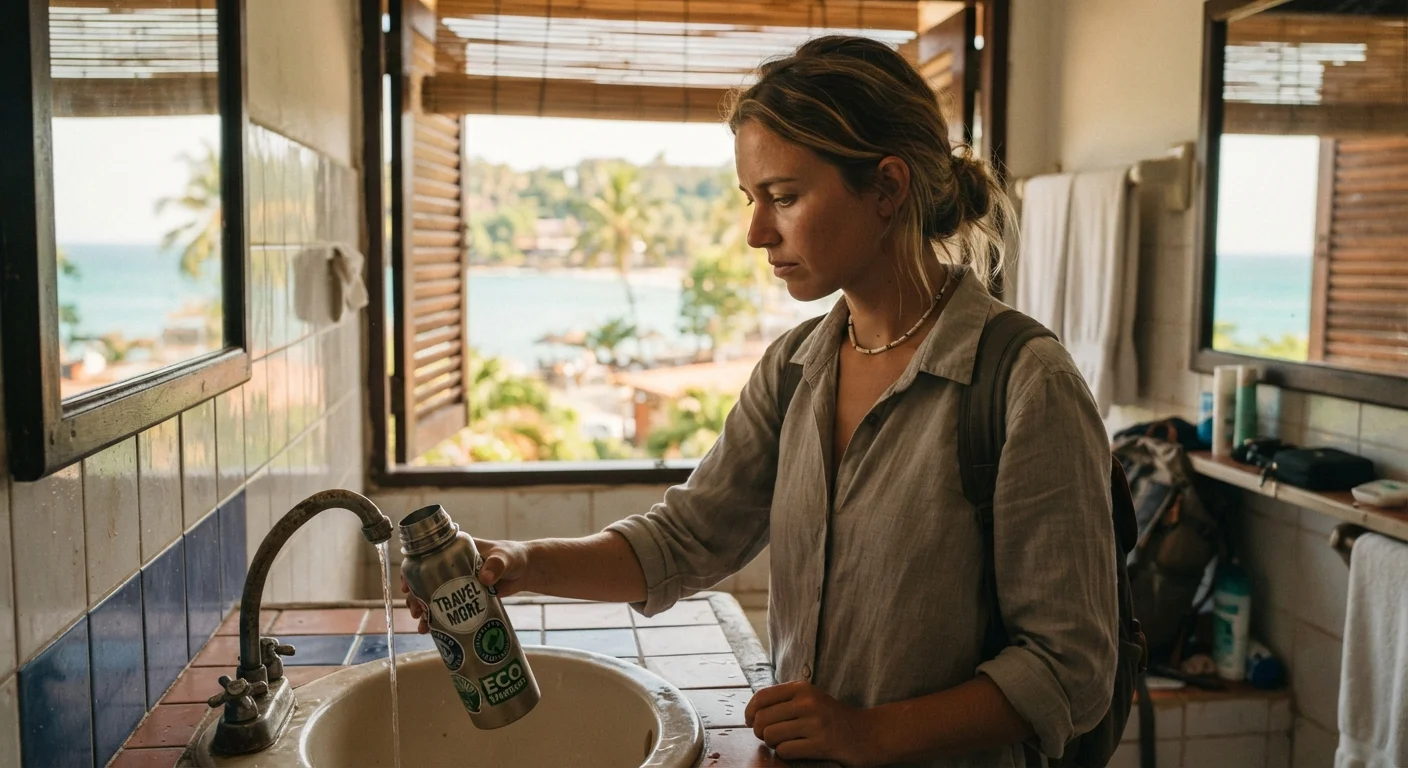
- Toothbrushing: Rinsing your brush or rinsing your mouth with tap water introduces small but potentially sufficient quantities of contaminants. Use bottled or boiled water for your full oral hygiene routine.
- Accidentally swallowed water: Showering with your mouth open, swimming in local pools or fresh water, or eating at a restaurant where dishes are rinsed but not dried properly all represent real exposure risk.
This intersects closely with food safety more broadly - our guide on food safety abroad walks through how to assess kitchen practices at your destination.
30-70%
Travelers affected by diarrhea in high-risk regions
The CDC estimates traveler's diarrhea affects 30-70% of international travelers depending on destination, with contaminated water and food among the primary causes.
1 min
Boiling time to kill common waterborne pathogens
The CDC recommends bringing water to a rolling boil for at least one minute (three minutes above 6,500 ft elevation) to reliably eliminate bacteria, viruses, and protozoa.
Reliable Ways to Make Water Safer
Fortunately, travelers have several practical and accessible options for reducing water-related risk:
- Sealed bottled water: The most practical choice for most travelers. Verify the seal is unbroken before drinking - bottle tampering has been reported in some markets.
- Boiling: Bringing water to a rolling boil for at least one minute (three minutes at elevations above 6,500 feet) kills bacteria, viruses, and protozoa reliably. This is the most universally effective low-tech method, per the U.S. Centers for Disease Control and Prevention (CDC).
- Filtration: Portable filters rated to 0.2 microns remove bacteria and protozoa but not viruses. For higher-risk destinations, pair filtration with a chemical disinfectant or UV purifier.
- UV purifiers: Handheld UV devices (SteriPen-style) can neutralize viruses, bacteria, and protozoa in clear water when used correctly. They don't work well in turbid (cloudy) water.
- Chemical disinfection: Iodine or chlorine tablets are lightweight backup options. They are effective against most pathogens but may not fully eliminate Cryptosporidium without extended contact time.
Pack a Water Treatment Backup
Even if you plan to rely on bottled water, carry purification tablets or a compact UV purifier as a backup. Bottled water isn't always available in remote areas, and having a secondary option costs little in weight or space while providing meaningful peace of mind.
Staying well-hydrated is essential, particularly in hot climates. For more on the interplay between hydration and heat exposure, see our guide on heat and hydration while traveling.
Knowing Your Destination's Risk Level
Water safety is not a binary safe/unsafe question - it exists on a spectrum that varies by country, by region within a country, and even by urban versus rural area. The CDC and the U.S. Department of State both publish destination-specific health and safety guidance that includes water quality information. Checking these resources before travel - not after arrival - gives you time to pack the right supplies and adjust your expectations.
Destinations in Western Europe, Canada, Australia, New Zealand, Japan, and similar countries generally have tap water that meets high safety standards, though local advisories can still apply after flooding or infrastructure issues. Much of Central America, South Asia, Southeast Asia, parts of Africa, and other regions warrant greater caution - but even within those areas, quality varies considerably. Always verify current conditions with official sources.
This article is for general informational purposes only and is not medical advice. Travelers with specific health concerns or questions about their destination should consult a qualified healthcare provider before departure.