
How Each Framework Works
Understanding the mechanics of each method helps you decide which one fits your life - not just your personality, but your income type, time availability, and financial goals.
The 50/30/20 Rule
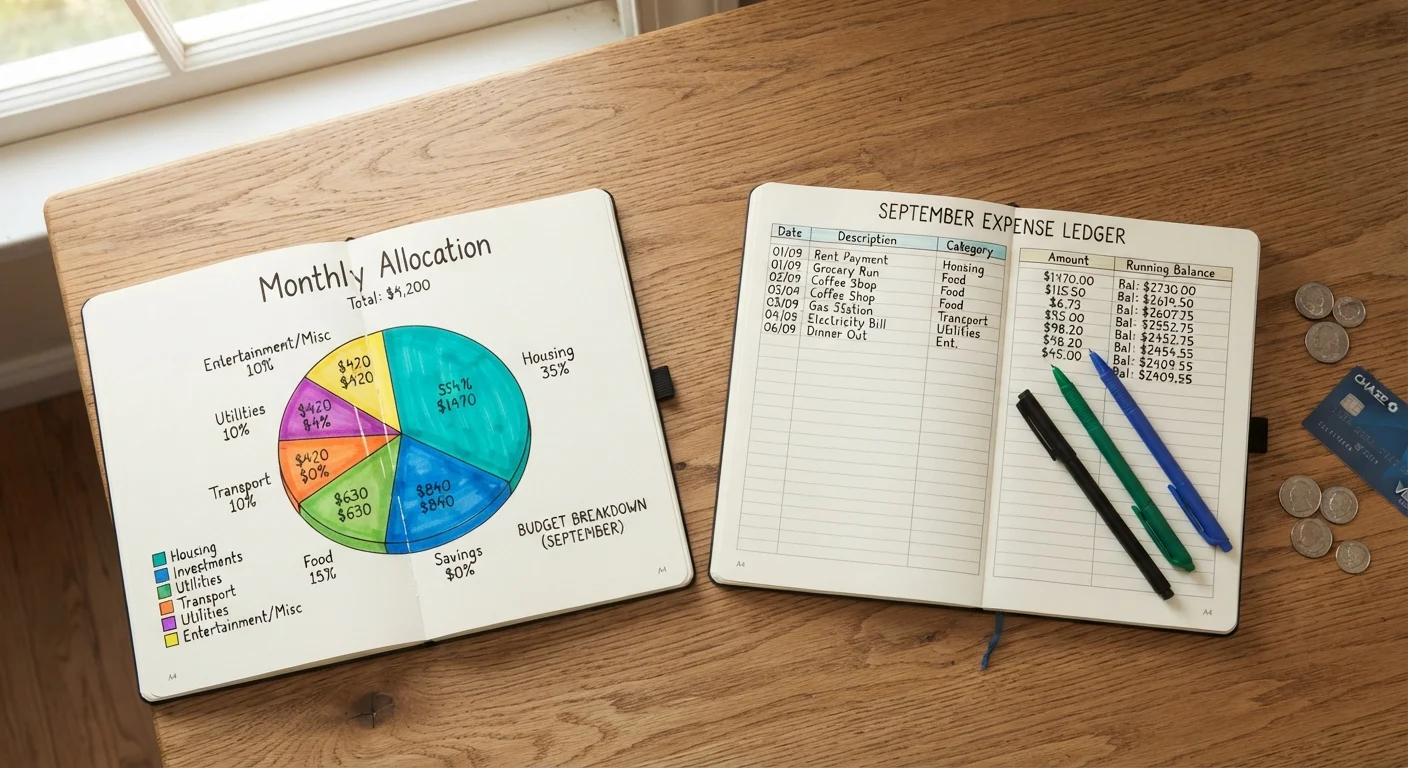
Popularized in personal finance circles, the 50/30/20 rule divides your after-tax income into three broad buckets:
- 50% for needs - rent or mortgage, utilities, groceries, minimum debt payments, and transportation essentials
- 30% for wants - dining out, subscriptions, entertainment, and non-essential shopping
- 20% for savings and extra debt repayment - emergency fund, retirement contributions, and accelerated loan payoff
If you take home $4,000 a month, $2,000 goes to needs, $1,200 to wants, and $800 to savings. The math is straightforward, and the categories are intentionally broad so you aren't tracking every cup of coffee.
Zero-Based Budgeting
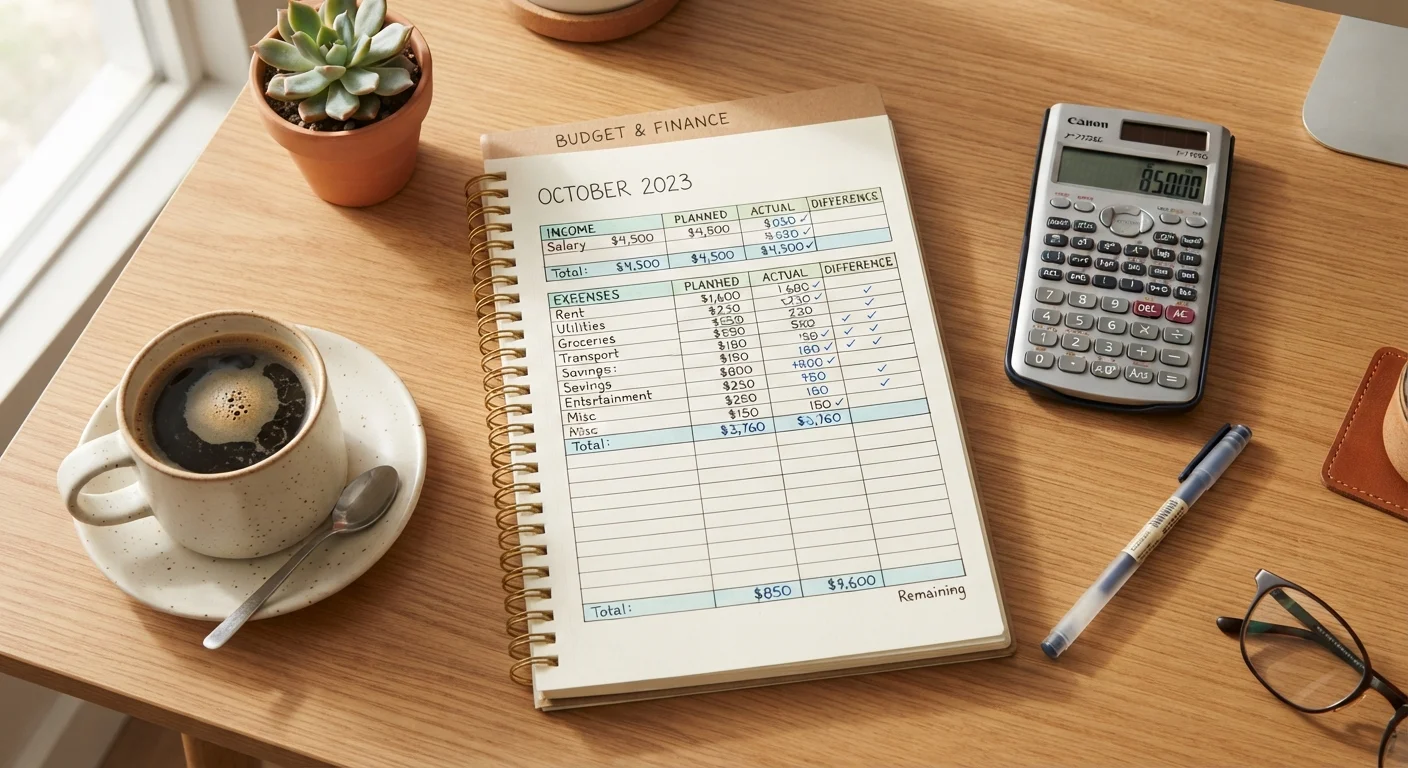
Zero-based budgeting (ZBB) starts from a different premise: every dollar of income must be assigned a job before the month begins. The goal is for income minus all assigned expenses, savings, and debt payments to equal zero - meaning no dollar is left unaccounted for.
If you earn $4,000, you plan where each dollar goes: $1,400 rent, $300 groceries, $150 utilities, $200 car payment, $100 subscriptions, $500 savings, $200 debt payoff - and so on until the full $4,000 is allocated. Each new month, you start the plan fresh based on that month's actual income.
If you're new to either approach, the beginner's guide to personal budgeting covers the foundational concepts - income, fixed costs, and variable expenses - before you choose a framework.
Head-to-Head: Key Differences
Both frameworks share the same goal - spending less than you earn and directing money intentionally - but they differ meaningfully in structure, effort, and flexibility.
| Criterion | 50/30/20 Rule | Zero-Based Budgeting |
|---|---|---|
| Core concept | Split income into three percentage buckets | Assign every dollar a specific purpose |
| Monthly setup time | 15-20 minutes | 1-2 hours or more |
| Ongoing tracking required | Light - broad category monitoring | Heavy - every expense tracked |
| Flexibility | High - broad categories absorb variation | Low - requires mid-month adjustments |
| Best income type | Stable, predictable salary | Variable or irregular income |
| Goal-oriented precision | Moderate - 20% savings bucket | High - savings are explicitly allocated |
| Learning curve | Low - intuitive percentages | Moderate - requires planning discipline |
The most important distinction is precision versus simplicity. The 50/30/20 rule trades granularity for ease; zero-based budgeting trades ease for control. Neither is objectively better - the right choice depends on your financial situation and how much monthly effort you're willing to invest.
~33%
Americans with a formal household budget
A Gallup survey found that fewer than one in three American households maintains a detailed written or tracked budget.
$1,400
Average monthly personal savings (median household)
Federal Reserve data consistently shows wide variation in household savings rates, with many middle-income families saving well below recommended targets.
20%
Savings target under the 50/30/20 rule
Financial educators commonly cite 20% of after-tax income as a meaningful savings and debt-payoff target for building long-term financial stability.
Strengths and Limitations of Each Method
50/30/20 Rule: Strengths
- Takes roughly 15-20 minutes per month to apply
- Flexible enough to absorb irregular spending without rebuilding the plan
- Easy to explain and stick with, which matters for long-term habit formation
50/30/20 Rule: Limitations
- Percentages don't work well for very low or very high incomes - 50% on needs may be unachievable in high-cost cities, or far too generous for high earners
- Broad categories can mask overspending on wants that creep into needs territory
- Less effective when you have a specific, urgent financial goal requiring tight allocation
Zero-Based Budgeting: Strengths
- Reveals exactly where money goes, making it easier to identify and cut waste
- Highly adaptable to irregular income - you rebuild the budget based on actual earnings
- Powerful for debt payoff or aggressive saving because every dollar has a destination
Zero-Based Budgeting: Limitations
- Time-intensive - requires tracking every expense and reconciling at month's end
- Unexpected expenses can disrupt the plan and require mid-month adjustments
- Can feel restrictive, which may reduce motivation over time for some people
Both Methods Require Honest Income Figures
Whether you use the 50/30/20 rule or zero-based budgeting, both frameworks should be built on your actual after-tax take-home income - not your gross salary. If your income varies, consider using a conservative estimate based on your lowest recent months to avoid overcommitting. Adjust upward in better months, and direct the surplus to savings or debt payoff.
For a broader look at how these two methods sit alongside other approaches like pay-yourself-first or envelope budgeting, see popular budgeting frameworks compared.
Choosing the Right Framework for You
Before picking a method, consider three questions:
- Is my income consistent? Stable, salaried income fits the 50/30/20 rule well. Variable income - freelance, hourly, commission-based - generally benefits from zero-based budgeting's month-by-month reset.
- Do I have a pressing financial goal? If you're building an emergency fund fast or paying off high-interest debt, zero-based budgeting's precision helps you redirect every available dollar. If you're in a maintenance phase, the 50/30/20 rule's structure is sufficient.
- How much time can I commit? If tracking every transaction feels unsustainable, start with the 50/30/20 rule. Consistency with a simpler method beats inconsistency with a rigorous one.
You don't have to commit permanently. Many people start with the 50/30/20 rule to build the habit of budgeting, then shift to zero-based budgeting when they have a specific goal or want deeper insight into their spending. Others move in the opposite direction after finding ZBB too demanding to maintain.
The monthly budget setup checklist can help you apply either framework systematically - covering income verification, expense tracking, savings targets, and a monthly review habit. And if you want to trace your budgeting practice through multiple life stages, the complete personal budgeting guide walks from first paycheck to long-term financial goals.
This article is for general informational and educational purposes only and does not constitute personalized financial advice. Consider consulting a qualified financial professional for guidance specific to your situation.