

How Zero-Based Budgeting Works
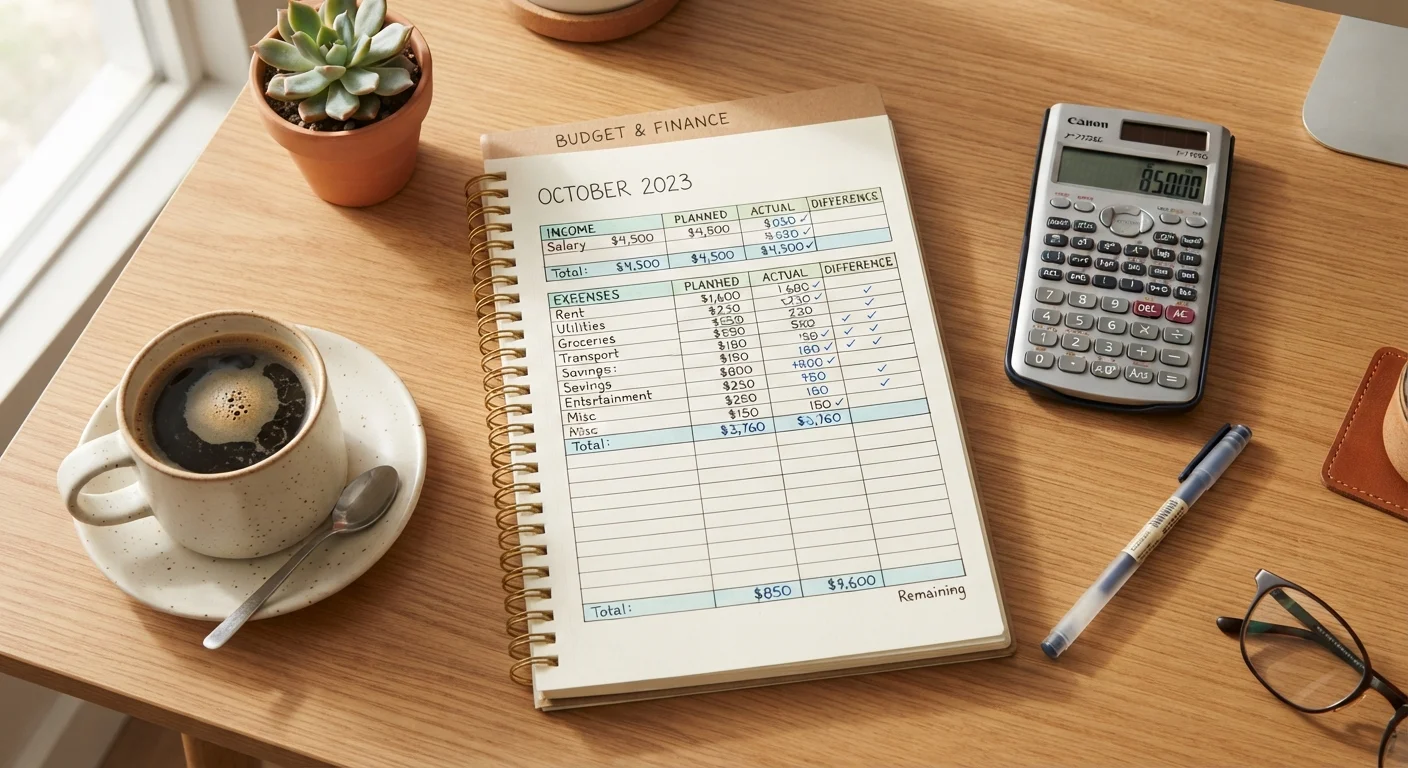
The core mechanic of zero-based budgeting is straightforward: start with your total monthly take-home income, then subtract planned amounts for every spending category, savings goal, and debt payment until you reach zero. Every dollar has an address.
Here is the basic sequence:
- Calculate your monthly take-home income. Use your actual net pay - what lands in your bank account after taxes and any payroll deductions.
- List all spending categories. Group expenses into fixed (rent, car payment, insurance) and variable (groceries, dining out, gas). Don't forget irregular expenses like annual subscriptions or car registration - divide those by 12 and budget monthly.
- Assign dollar amounts to each category. Work through every category until the full income is distributed.
- Include savings and debt payments as categories. Savings is not an afterthought - it gets a line item just like rent does.
- Adjust until the math balances. If you run out of income before covering all categories, trim discretionary items. If you have money left over, direct it to savings or debt.
If your income varies month to month, consider our beginner's guide to personal budgeting for foundational concepts before adopting ZBB.
Build a Buffer Category From Day One
Add a small "buffer" or "miscellaneous" line - even $50 to $100 - to your first zero-based budget. Unexpected costs are inevitable, and having a named category for them prevents the whole plan from unraveling when life doesn't cooperate. Once you have a few months of data, you can right-size this category based on actual patterns. See where your paycheck actually goes for guidance on setting realistic category amounts.
Where Zero-Based Budgeting Shines
ZBB is particularly effective in a few common financial situations:
- Paying down debt aggressively. When you account for every dollar, it becomes much harder to rationalize unplanned spending that could have gone toward a credit card balance.
- Building an emergency fund from scratch. Treating savings as a required category - not a leftover - accelerates progress toward a financial cushion.
- Identifying spending leaks. People who try ZBB for the first time frequently discover recurring charges, subscription creep, or habitual spending they had never consciously noticed.
- Living on a tight income. When margin is thin, knowing exactly where every dollar goes can mean the difference between staying current on bills and falling behind.
33%
Americans with no written budget
A widely cited survey by the National Foundation for Credit Counseling found roughly one-third of U.S. adults do not track their spending in any formal way.
$1,000+
Typical annual subscription spending per household
Research from West Monroe Partners found U.S. consumers frequently underestimate recurring subscription costs, often by hundreds of dollars per year - a gap ZBB tends to expose.
For a deeper look at how this compares to percentage-based approaches, see The 50/30/20 Rule vs. Zero-Based Budgeting.
Honest Trade-Offs to Consider
Zero-based budgeting demands more active management than looser frameworks. Before committing, weigh these real trade-offs:
- Time investment
- Building and maintaining a ZBB plan requires regular check-ins. If you dislike detailed tracking, a simpler framework may be more sustainable.
- Rigidity vs. flexibility
- Life rarely follows a script. Unexpected expenses - a car repair, a medical co-pay - can knock a tightly assigned budget off balance. Building a small "miscellaneous" or "buffer" category helps absorb surprises without abandoning the system.
- Learning curve
- The first month is the hardest. Most people underestimate variable categories on their first attempt. Treat month one as a calibration exercise, not a test of willpower.
ZBB Resets Every Month
Unlike a set-it-and-forget-it approach, zero-based budgeting requires a fresh plan at the start of each month. Your categories and amounts should reflect that month's specific expenses - a month with a holiday, a car registration renewal, or a medical appointment will look different from a baseline month. This monthly reset is a feature, not a bug: it keeps your budget current rather than stale.
ZBB is one of several frameworks covered in our popular budgeting frameworks comparison. If you want side-by-side structure, that resource maps multiple approaches to different income types and habits. ZBB also has useful applications beyond household budgets - for example, when planning travel on a budget, assigning every trip dollar to a category prevents overspending on accommodation while neglecting transportation costs.
This article is for general informational and educational purposes only and does not constitute personalized financial advice. For guidance tailored to your specific situation, consult a qualified financial professional.