
Why Herbal Tea Claims Need a Closer Look
Walk down any grocery store tea aisle and you'll encounter promises: "calming," "detoxifying," "immune-boosting," "digestive support." These labels tap into long traditions of plant-based medicine, and they're effective marketing. But traditional use and scientific evidence are two very different standards, and it's worth understanding the distinction before assuming your evening chamomile is doing what the package suggests.
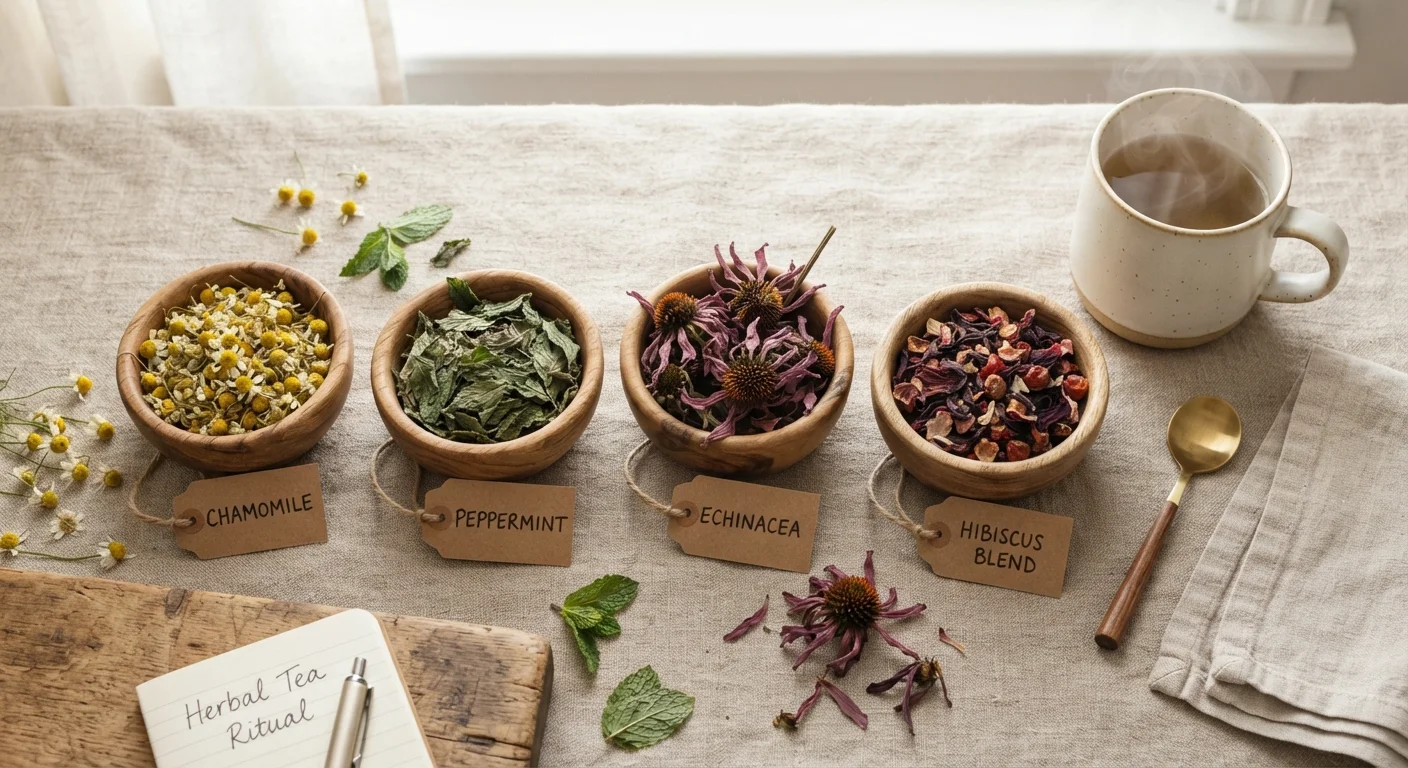
Herbal teas - technically called tisanes because they contain no actual tea leaves - are infusions of dried herbs, flowers, roots, or bark. While some herbs have been studied in clinical settings, much of the research is preliminary, conducted in small groups, or done on concentrated extracts rather than steeped tea. That gap matters when evaluating wellness claims.
This article looks at the most common herbal teas and their associated claims with honest assessment of what the science currently supports - and where the hype has gotten ahead of the evidence. For a similar look at another trending wellness category, see our piece on fermented foods and gut health.
Common Herbal Teas: Myth vs. Fact
Below are some of the most widely consumed herbal teas and the evidence - or lack thereof - behind their most popular health claims.
Myth
Chamomile tea reliably cures insomnia and anxiety.
Fact
Chamomile may support mild relaxation, but evidence for treating clinical insomnia or anxiety disorders is limited and inconclusive.
Chamomile contains apigenin, a compound that binds to receptors in the brain associated with sleepiness. Some small studies suggest it may modestly reduce self-reported anxiety and improve sleep quality in certain populations. However, these studies are generally short, small, and not replicated at scale. Chamomile tea is unlikely to harm most adults and the calming ritual of drinking it may itself contribute to relaxation - but it is not a treatment for diagnosed sleep or anxiety conditions.
Myth
Echinacea tea prevents you from catching colds.
Fact
Evidence on echinacea and cold prevention is mixed; some studies show modest reduction in duration, but prevention is not well established.
Echinacea is among the most studied herbs for immune support, yet the research remains contradictory. Some meta-analyses find small reductions in cold duration when echinacea preparations are taken at symptom onset; others find no significant effect. Critically, most studies use concentrated extracts - not brewed tea - making it difficult to apply results directly to a cup steeped from dried herb. Echinacea can also interact with certain medications and is not appropriate for people with autoimmune conditions without medical guidance.
Myth
Peppermint tea detoxifies the body and cleanses the liver.
Fact
Peppermint has some evidence for digestive comfort, but "detox" and liver-cleansing claims have no credible scientific basis.
Your liver, kidneys, and digestive system handle detoxification continuously - no tea accelerates or enhances this process in a meaningful clinical sense. Where peppermint does have more grounded support is in digestive comfort: peppermint oil (in enteric-coated capsule form) has reasonable evidence for easing symptoms of irritable bowel syndrome. Brewed peppermint tea may soothe mild indigestion or bloating for some people, likely due to menthol's antispasmodic properties. That's a real if modest benefit - but it's far from a "cleanse."
Myth
Herbal teas are always safe because they are natural.
Fact
"Natural" does not mean risk-free; some herbal teas can interact with medications or pose risks for specific populations.
Comfrey tea, for example, contains compounds linked to liver damage and is considered unsafe for regular consumption. Licorice root tea can raise blood pressure with prolonged use. Certain herbs interact with blood thinners, thyroid medications, and antidepressants. Pregnant individuals are advised to avoid many herbal teas - including high amounts of peppermint and licorice - without medical clearance. If you take any prescription medications or have a health condition, it is worth reviewing your herbal tea habits with a pharmacist or physician.
This article is for general informational purposes only and is not medical advice. Consult a qualified healthcare professional before using herbal teas to address any health condition, particularly if you are pregnant, nursing, taking medications, or managing a chronic illness.
How to Think About Herbal Teas Realistically
Herbal teas can be a genuinely enjoyable part of a balanced diet. Warm beverages are hydrating, slowing down to brew and drink tea can support relaxation as a ritual, and many teas taste pleasant without added sugar. These are real, if modest, benefits - and they don't require overstated health claims to be worthwhile.
Herbal Teas Can Interact With Medications
St. John's Wort tea is a well-documented example: it can reduce the effectiveness of birth control pills, anticoagulants, and certain antidepressants. Even teas perceived as mild - like chamomile or green tea blends - may have interactions at high intake levels. If you take prescription medications, let your doctor or pharmacist know which herbal teas you drink regularly, especially if you plan to increase consumption.
The most honest framing is this: herbal teas are a low-risk complement to healthy habits, not a treatment or cure. When a product promises to "detox" your liver or "boost" your immune system, ask what specific mechanism is being claimed and whether credible research backs it. In most cases, the answer will be nuanced at best.
~80%
Adults who use herbal products globally
The World Health Organization estimates roughly 80% of the world's population uses herbal medicine in some form as part of primary care.
< 30%
Herbal claims with robust clinical backing
Reviews of herbal supplement research consistently find that only a minority of commonly marketed claims are supported by well-designed human clinical trials.
Enjoying herbal tea for its taste, warmth, and the quiet moment it creates is a perfectly sound reason to drink it. Just don't let wellness marketing convince you it's doing more than your body and reasonable lifestyle choices are already doing.