
How Each Pan Handles Heat
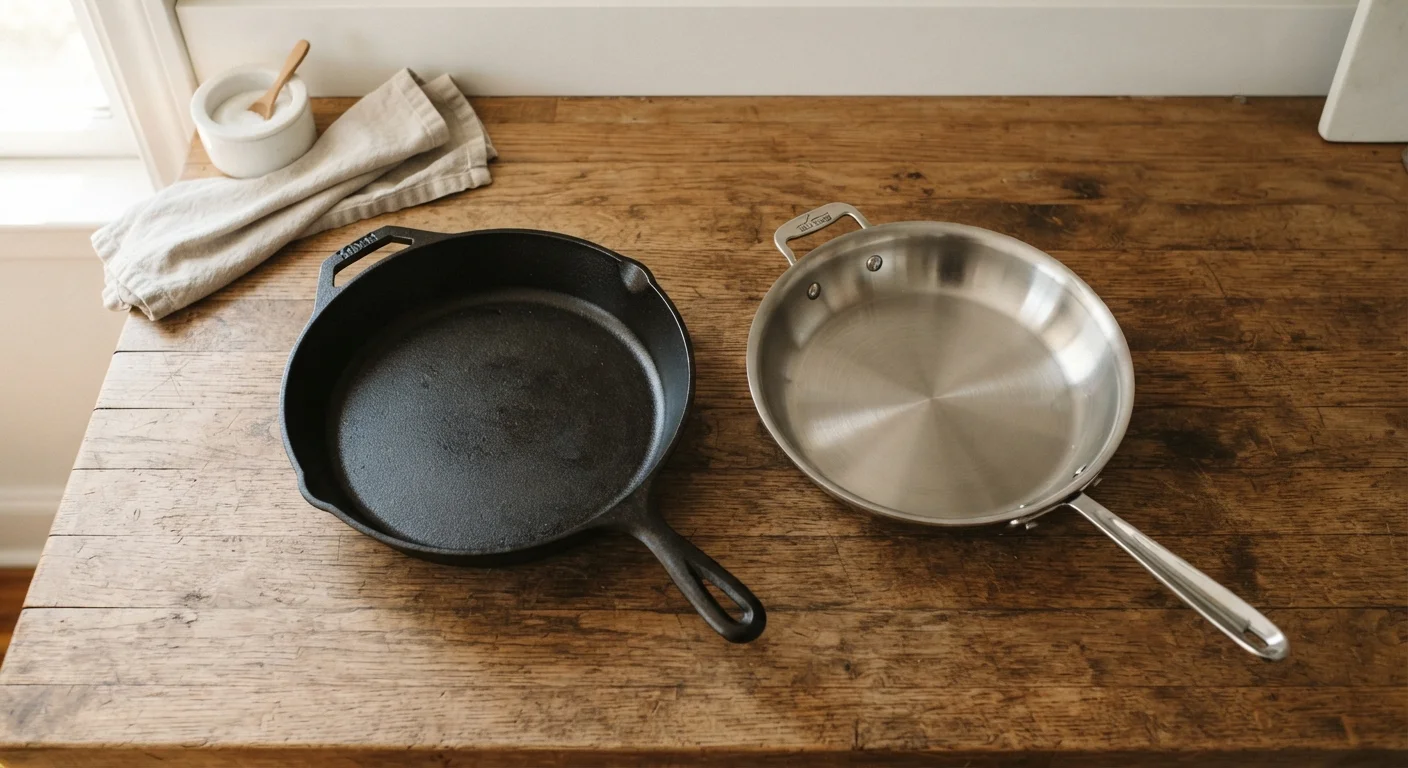
The most important difference between cast iron and stainless steel isn't surface texture or weight - it's how each pan absorbs, holds, and releases heat. Understanding this changes how you cook with both.
Cast iron is dense and slow to heat up, but once it reaches temperature, it holds that heat with impressive consistency. This makes it ideal for tasks where you need a stable, uninterrupted surface temperature - like searing a thick steak or cooking cornbread in the oven. The trade-off is lag time: when you turn the burner down, a cast iron pan keeps cooking for considerably longer.
Stainless steel behaves almost in reverse. It heats up faster and responds to burner changes more quickly. That responsiveness makes it a better tool for developing real-time heat judgment - you learn to read the pan because it reacts when you act. It's also why professional kitchens lean heavily on stainless for sautéing and sauce work.
| Criterion | Cast Iron | Stainless Steel |
|---|---|---|
| Heat retention | Excellent - holds temperature long | Moderate - cools relatively quickly |
| Heat responsiveness | Slow - lags behind burner changes | Fast - reacts to adjustments quickly |
| Nonstick quality | Develops with proper seasoning | Not nonstick; food releases when browned |
| Acidic ingredient use | Can react; strips seasoning | Fully non-reactive - safe for acids |
| Oven compatibility | Handles very high temperatures | Oven-safe; check handle limits |
| Maintenance | Requires regular seasoning | Low-maintenance; dishwasher-safe |
| Weight | Heavy (8-12 lbs typical) | Lighter and easier to maneuver |
| Best skill it builds | Patience and preheating discipline | Real-time heat reading and control |
What Each Pan Teaches You
Both pans are used in serious kitchens, but they build different instincts. Cast iron teaches patience and planning - you learn to preheat slowly and evenly, usually 3-5 minutes on medium heat, and to trust that stored energy will do the work. Rush it, and you'll get hot spots and uneven browning.
Stainless steel teaches you to read visual and auditory cues. A drop of water that skitters across the surface (the Leidenfrost effect) signals the pan is ready for oil. Food that releases easily from stainless steel means it's properly browned; food that sticks means it needs more time. This feedback loop is invaluable. For cooks working on foundational technique, stainless makes the connection between action and result more immediate and legible.
Eggs are a useful test case here - both pans can cook a fried egg well, but the technique differs significantly. For a deeper look at what eggs reveal about kitchen control, see eggs as a cooking skill.
A Note on 'Seasoning' Cast Iron
Seasoning doesn't mean adding flavor - it refers to baked-on layers of oil that form a protective, nonstick-like coating. A new cast iron pan often comes pre-seasoned, but that initial layer is thin. Regular cooking with fats and proper drying after washing builds the surface over time. Avoid dish soap in large quantities or long soaks, which can degrade the seasoning.
Maintenance and Practical Considerations
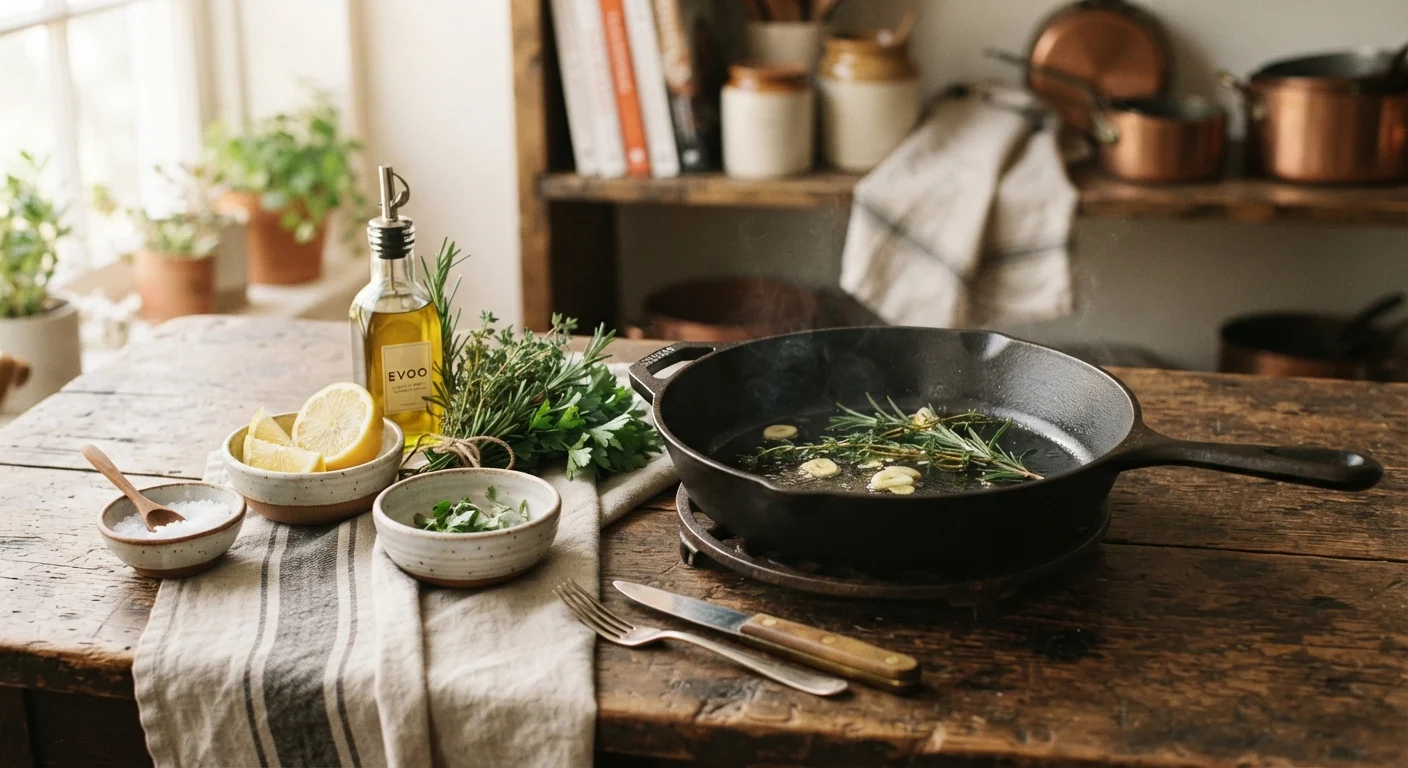
Cast iron requires seasoning - a thin layer of polymerized oil that builds up over time and creates its characteristic nonstick quality. Seasoning is straightforward but ongoing: dry the pan thoroughly after washing, apply a light coat of neutral oil, and heat it briefly. Avoid prolonged soaking or acidic ingredients that can strip the surface. Done right, a well-seasoned cast iron pan improves with every use.
Stainless steel is considerably lower-maintenance. It's dishwasher-safe (though hand washing preserves finish), and you can cook anything in it without worrying about reactive ingredients. Discoloration and stuck-on bits are normal and easily handled with a deglazing technique or a paste of baking soda and water.
The choice of heat source also plays a role. Both pans work on gas, electric, and induction ranges, but cast iron's weight and flat base make it better suited to certain stovetop setups. Our guide on choosing the right heat source can help you think through which setup fits your cooking style.
~10x
Heat capacity difference between cast iron and stainless
Cast iron has significantly higher volumetric heat capacity than stainless steel, which explains its superior ability to maintain temperature when cold food is added.
3-5 min
Recommended cast iron preheat time on medium heat
Most culinary educators recommend a gradual preheat for cast iron to ensure even heat distribution across the entire cooking surface before adding food.