
Why Recipes Are a Starting Point, Not a Script
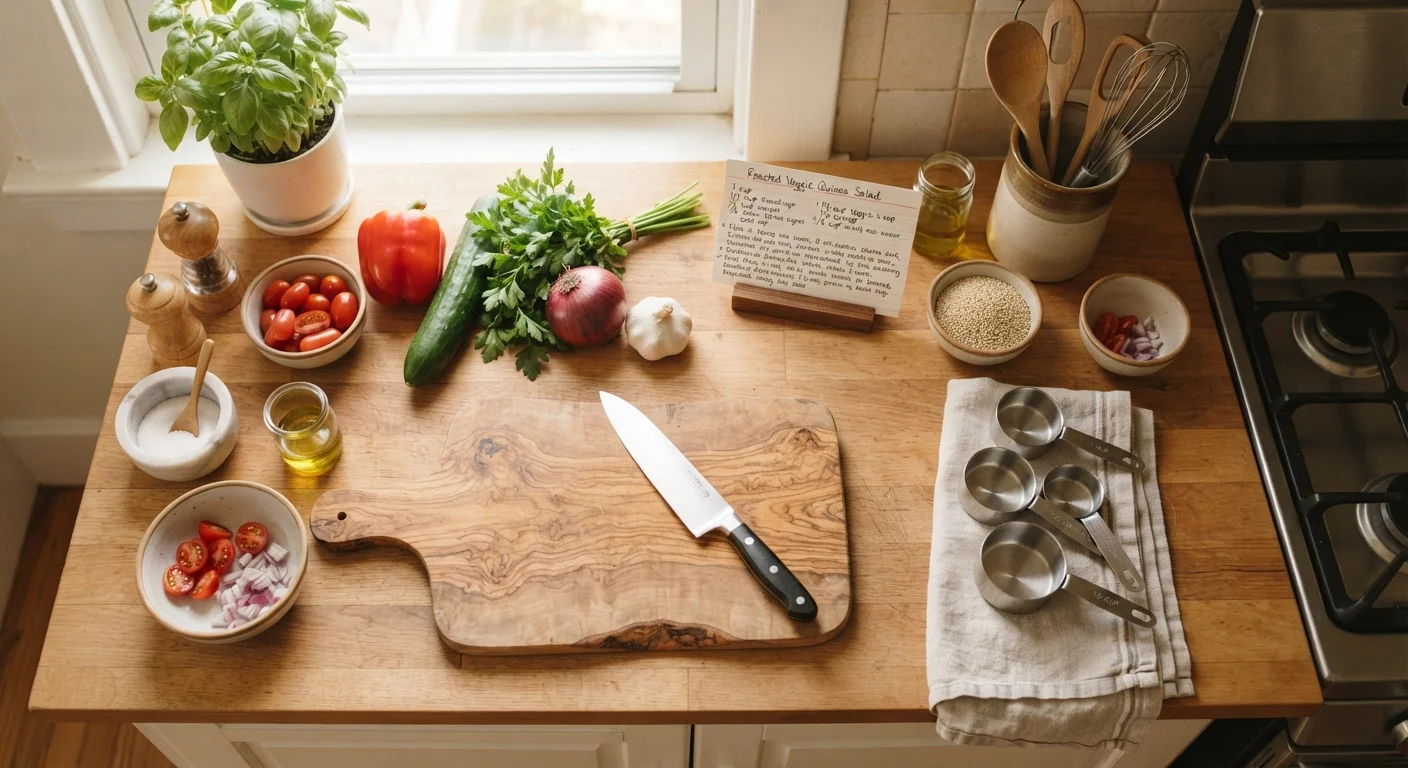
A recipe is a snapshot of one cook's decisions on one particular day. It tells you what worked for them - but it can't account for your stove's quirks, how salty your butter is, or whether your tomatoes are riper than theirs were. Treating a recipe as an immutable script is one reason so many home cooks feel lost the moment something goes slightly off-track.
The more empowering approach is to understand why dishes taste the way they do. Once you see cooking as a set of adjustable levers rather than a fixed sequence of steps, you can work with almost any ingredient in the fridge and still produce something satisfying. This pairs naturally with learning techniques in order of usefulness - skills compound when you understand the principles behind them.
It also helps to unlearn a few habits. Some of the instincts home cooks pick up along the way actively work against good flavor - see kitchen myths that lead home cooks astray for a useful corrective.
The Four Levers of Flavor
Every decision you make in the kitchen ultimately affects one or more of four variables: salt, fat, acid, and heat. These aren't categories of ingredient - they're functional roles. Understanding them gives you a diagnostic language. When something tastes flat, dull, greasy, or harsh, you can identify which lever needs adjusting rather than just guessing.
~80%
Of perceived flavor attributed to aroma
Research on sensory perception consistently shows that most of what we experience as flavor is actually smell, making fat's role as an aroma carrier especially significant.
280°F
Minimum temperature for Maillard browning
The Maillard reaction - responsible for the complex flavors in browned foods - requires surface temperatures above approximately 280°F (138°C) to begin.
3-4×
Flavor depth from layered seasoning vs. end-only salting
Culinary instructors commonly observe that dishes seasoned at multiple stages during cooking register as significantly more flavorful than those seasoned only at the end.
Think of each lever as a dial with a useful range, not a binary switch. Too little salt and food tastes lifeless; too much and it's punishing. The same logic applies to fat, acid, and heat. Good cooking is about finding the right position on each dial for the specific ingredients and technique you're using.
Salt: The Non-Negotiable Foundation
Salt doesn't just make food taste salty - it suppresses bitterness, enhances sweetness, and draws out the natural flavor compounds already present in your ingredients. When food tastes "bland," salt is almost always part of the answer.
The key principle is layering. Salting only at the end of cooking is a common shortcut that produces flat results. Salt your onions while they soften, season your sauce as it simmers, and taste repeatedly. Each stage of cooking is an opportunity to build flavor into the food rather than sprinkle it on top afterward.
Season pasta water until it tastes faintly of the sea - this is your only chance to season the pasta itself, not just the sauce coating it.
Pasta absorbs water as it cooks; under-seasoned water produces bland noodles that no sauce can fully rescue, no matter how flavorful.
Keep a small bowl of salt next to the stove and pinch from it rather than pouring - it forces you to be deliberate and gives you better physical control over how much you add.
Tactile control over seasoning is a habit shared by professional cooks; it prevents accidental over-salting and builds awareness of quantities over time.
Different salts behave differently. Kosher salt, fine sea salt, and table salt all have different crystal sizes, which means a teaspoon of each delivers a different amount of sodium. If you switch salts, adjust by taste rather than by volume measurement.
Fat: Carrier, Texture, and Richness
Fat does two important jobs: it carries fat-soluble flavor compounds (including most of what you smell in garlic, spices, and herbs) and it adds body and a satisfying mouthfeel. A dish with too little fat often tastes thin and sharp. Too much and it feels heavy and one-dimensional.
The type of fat matters as much as the amount. Butter adds richness and a slightly sweet, dairy note. Olive oil brings its own grassy, peppery character. Neutral oils like grapeseed let other flavors lead. A finish of good olive oil, a pat of butter swirled into a pan sauce, or a drizzle of toasted sesame oil at the end are examples of using fat strategically - not just for cooking, but for flavor.
Use Fat at Two Stages for Maximum Effect
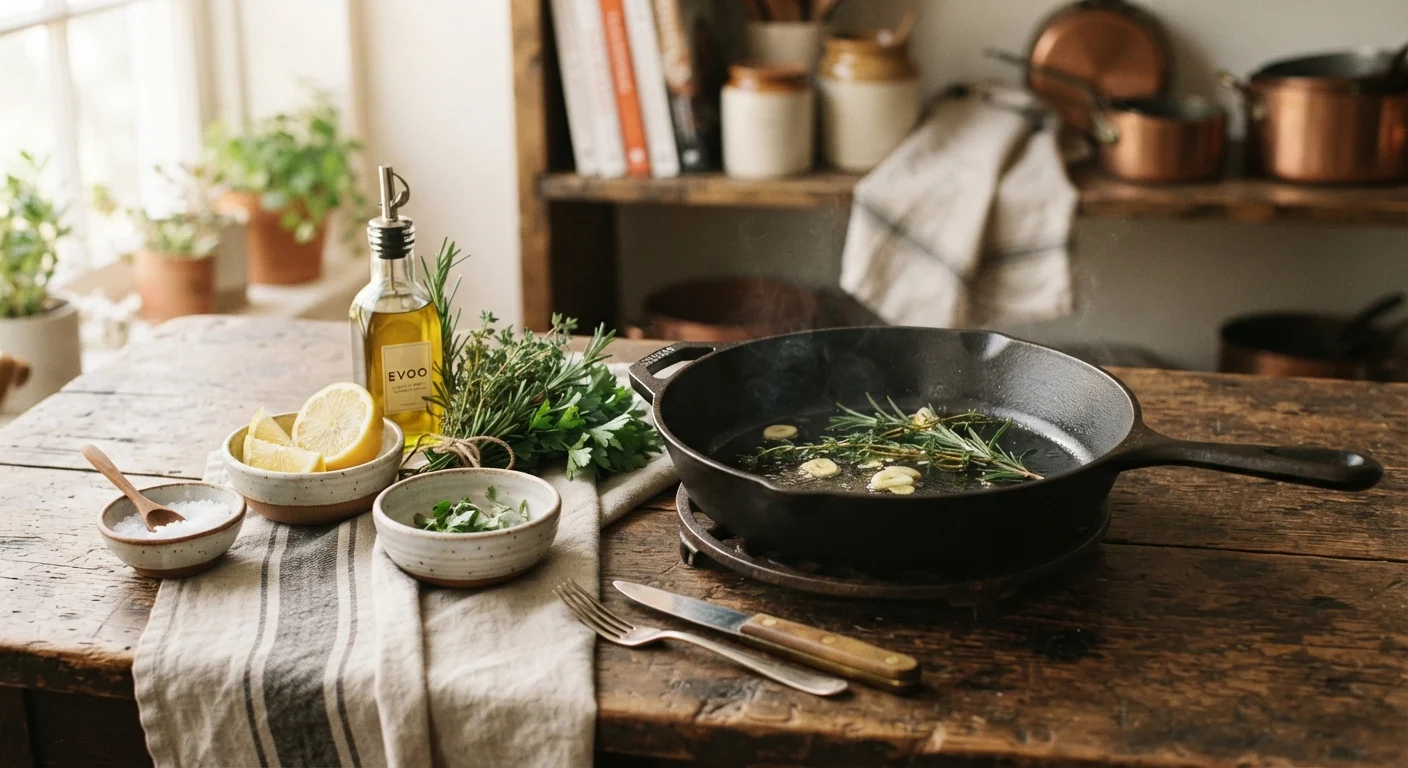
For most savory dishes, use a neutral or high-smoke-point fat for cooking - to build heat-generated flavor - and then finish with a flavorful fat like good olive oil or butter just before serving. The finishing fat carries aromatic compounds that would break down under prolonged heat, so it delivers maximum flavor impact when added at the end.
Acid: The Flavor Brightener Most Cooks Skip
Acid - lemon juice, vinegar, wine, yogurt, fermented sauces - is one of the most underused tools in the home cook's repertoire. When a dish tastes heavy, dull, or somehow "missing" something even after proper salting, acid is often the answer. A squeeze of lemon at the end of a braise or a splash of red wine vinegar into a soup can make every other flavor in the pot snap into focus.
Acid works by contrasting richness and cutting through fat, which is why it's so commonly paired with them. Think of the brightness of a vinaigrette on a fatty piece of salmon, or the way pickled vegetables wake up a rich sandwich. This contrast principle also shows up in beverages - understanding cocktail flavor profiles involves the same balance of bright and rich elements.
Add Acid Gradually and Taste as You Go
Acid is easy to over-add. A half teaspoon too much lemon juice can make an entire dish taste sharp and thin. Always add acid in small amounts - a teaspoon at a time - stir, taste, and wait a few seconds before adding more. Once acid is in, it cannot be removed, so patience here prevents a dish from being unsalvageable.
Heat: Control, Not Speed
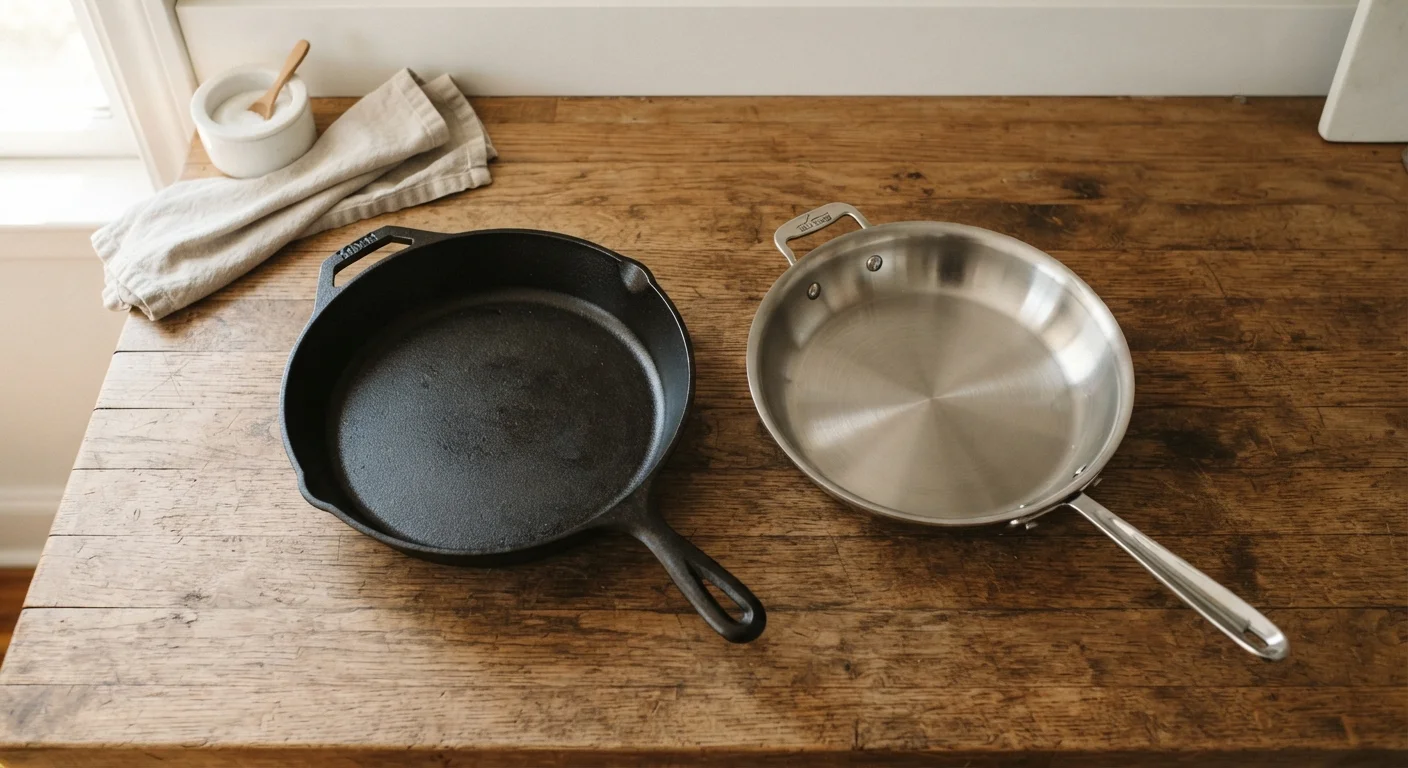
Heat determines texture, color, and the chemical reactions that create flavor in the first place. The Maillard reaction - the browning that gives seared meat, roasted vegetables, and toasted bread their complex flavor - only occurs above around 280°F (138°C). You can't get it in a pan full of steaming liquid or with wet ingredients crowding each other.
Most home cooks run into two problems: pans that aren't hot enough when ingredients go in, leading to steaming instead of browning; and heat that's too high and not watched carefully, leading to burning rather than caramelizing. The solution is patience and attention. Let the pan preheat. Don't overcrowd. Listen - a steady sizzle is right; a violent spit means too hot, silence means too cool. For more on what happens after the heat is off, resting cooked meat is a related concept worth understanding.
Putting the Levers Together
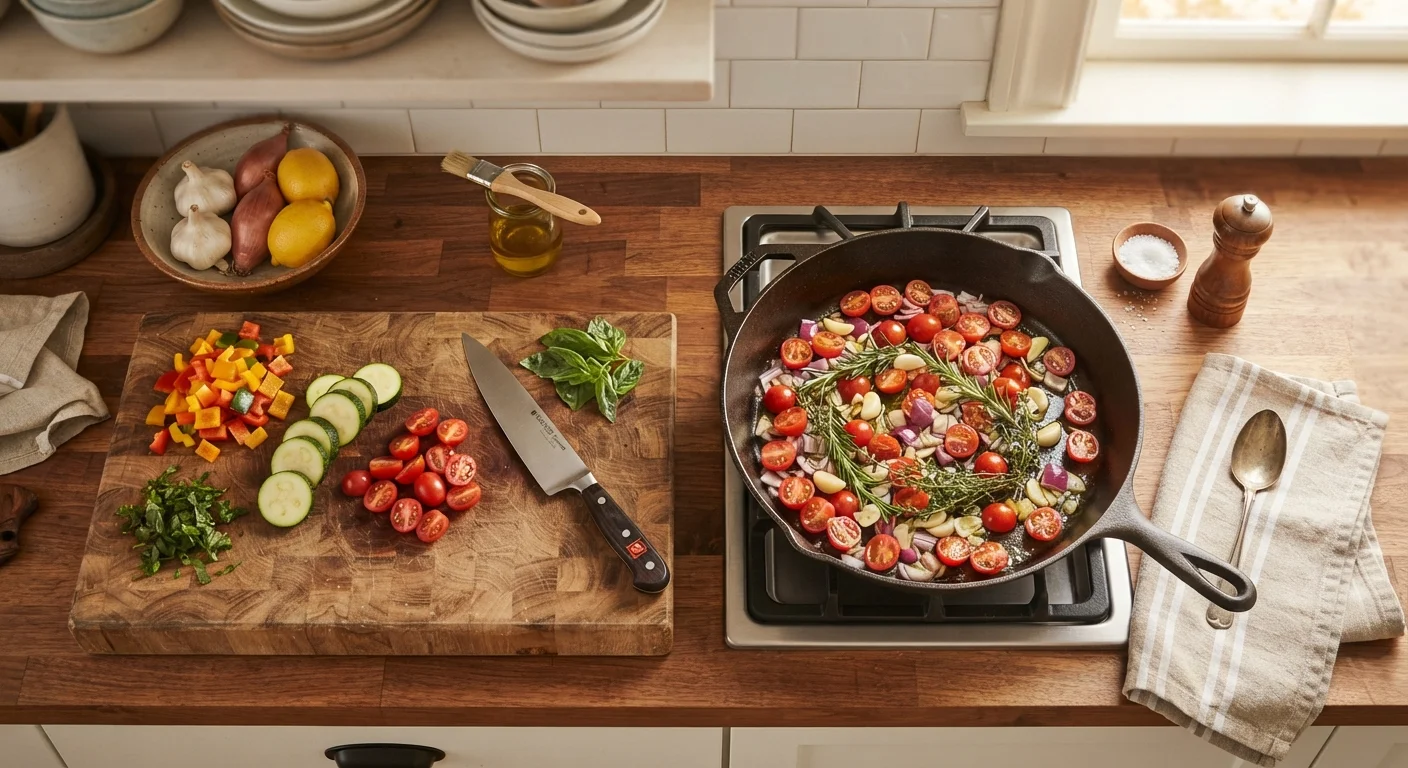
In practice, these four levers interact constantly. You might sear chicken in fat at high heat (Maillard reaction), deglaze with white wine (acid), reduce, then season with salt and finish with butter (fat again). Each decision reinforces the others. When the dish is nearly done, tasting tells you which dial needs a small adjustment.
A useful mental checklist: Is it seasoned enough? Does it have enough richness? Is there brightness to balance that richness? Did the ingredients actually brown and develop flavor, or did they just cook through? Working through those four questions will get you further than any mid-cook panic, and it applies whether you're following a recipe you prepped in advance or improvising from what's available.
Tasting Is a Skill, Not an Afterthought
Tasting repeatedly during cooking is the most important habit you can build. Your palate needs a moment to register what's there - eat a small spoonful slowly, then pause before deciding what to adjust. Many cooks taste too quickly and make corrections before they've fully registered the current state of the dish.
Once these concepts feel intuitive, building nutritious everyday meals becomes easier too - flavor-forward cooking doesn't require heavy additions when the fundamentals are dialed in.
This article is for general informational purposes and reflects foundational culinary principles. Individual results may vary based on equipment, ingredients, and cooking conditions.