
Why a Pre-Cook Checklist Actually Matters
Most cooking mistakes don't happen at the stove - they happen in the five minutes before it. A forgotten ingredient, an oven that wasn't preheated, a chicken breast that's still half-frozen: these are preparation failures, not skill failures. Running through a quick checklist before you start cooking costs very little time and prevents the kind of mid-recipe scrambling that leads to overcooked, underseasoned, or rushed meals.
Think of it like checking your mirrors before you pull out of the driveway. It takes seconds, but it changes what happens next. Whether you're cooking a weeknight pasta or a more involved dish, the habits below apply. If you're looking to sharpen your broader kitchen abilities, our guide to cooking techniques worth learning breaks down which skills pay off most over time.
Recipe Review
Ingredients
Equipment & Oven
Food Safety
Final Setup
Tools and Equipment You'll Want Ready
Having the right tools at hand before you start is as important as having the right ingredients. Stopping mid-cook to hunt for a colander or realize your instant-read thermometer is dead disrupts your timing and focus.
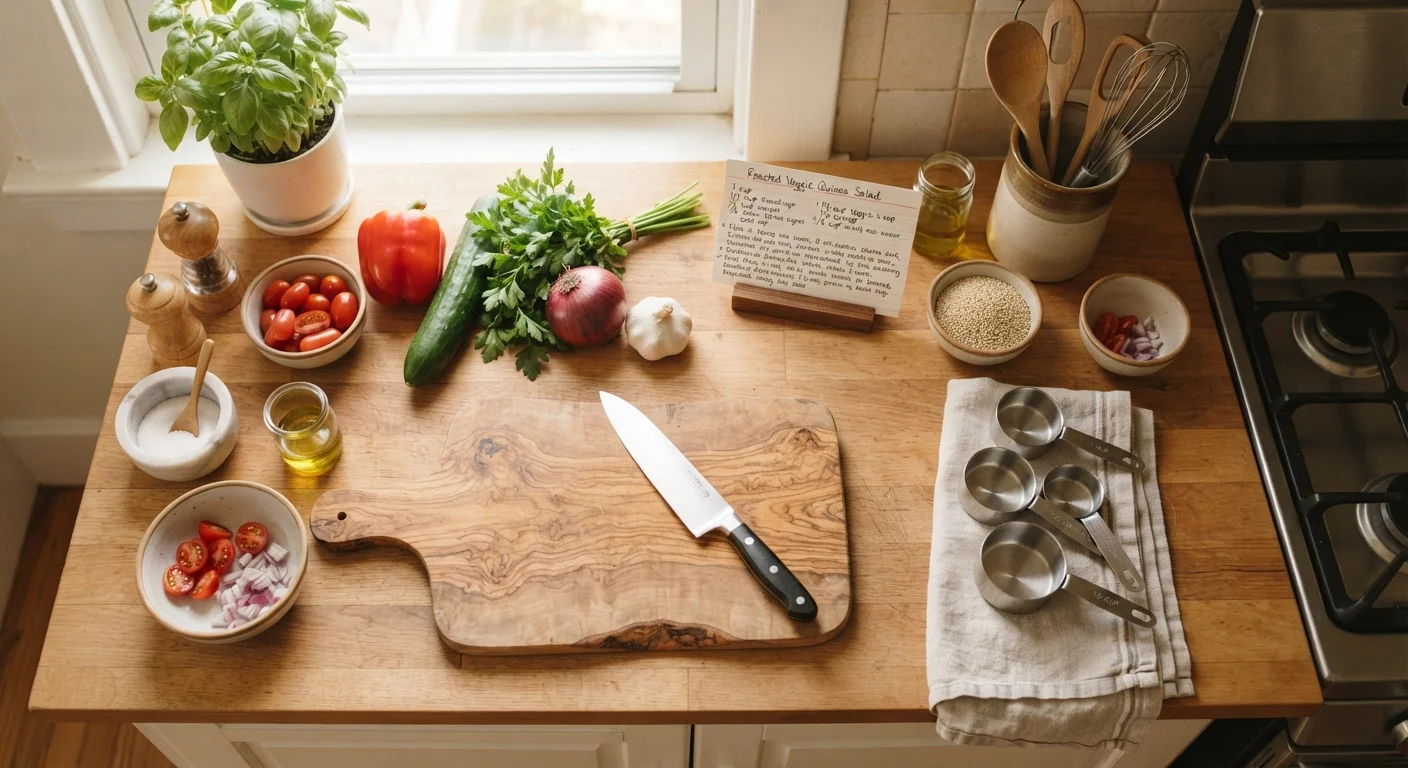
Chef's Knife
Used for the majority of ingredient prep - chopping vegetables, slicing proteins, and mincing aromatics.
Cutting Board
A stable surface for safe prep; ideally use separate boards for proteins and produce.
Instant-Read Thermometer
Confirms internal doneness in poultry, pork, and ground meat to ensure food safety.
Measuring Cups and Spoons
Ensures accurate ratios, especially important in baking or when building sauces and spice blends.
Mixing Bowls (assorted sizes)
Useful for organizing prepped ingredients by stage before cooking begins.
Kitchen Timer
Keeps timed steps on track without relying on memory when you're managing multiple pots or pans.
Good knife technique also accelerates your prep significantly. If you haven't yet built confidence with a chef's knife, our knife skills guide for home cooks is a practical place to start.
Common Pre-Cook Mistakes to Avoid
Even experienced cooks fall into predictable traps. Skimming a recipe instead of reading it fully is one of the most common - timing steps, resting periods, and marinating requirements are easy to miss. Vegetables are especially vulnerable to hurried prep; overcooked vegetables often trace back to poor timing decisions made before the pan ever got hot.
Don't Skip the Full Recipe Read
Skimming a recipe and starting immediately is one of the most common causes of cooking failures at home. A step buried mid-recipe - like "refrigerate for 2 hours" or "bring to room temperature before baking" - can derail your entire meal if you miss it. Always read the complete recipe before you prep a single ingredient.
Raw Protein Cross-Contamination Is a Real Risk
Using the same cutting board and knife for raw chicken and then fresh vegetables without washing in between is a common food safety error. The USDA recommends either using separate cutting boards for proteins and produce, or thoroughly washing and sanitizing between uses. This applies to hands and prep surfaces as well.
If your goal is to make cooking a consistent weekly habit rather than a one-off effort, pairing this checklist with a broader meal planning approach helps. Our meal prep fundamentals article walks through how a few hours on Sunday can make weekday cooking significantly easier and more nutritious.