

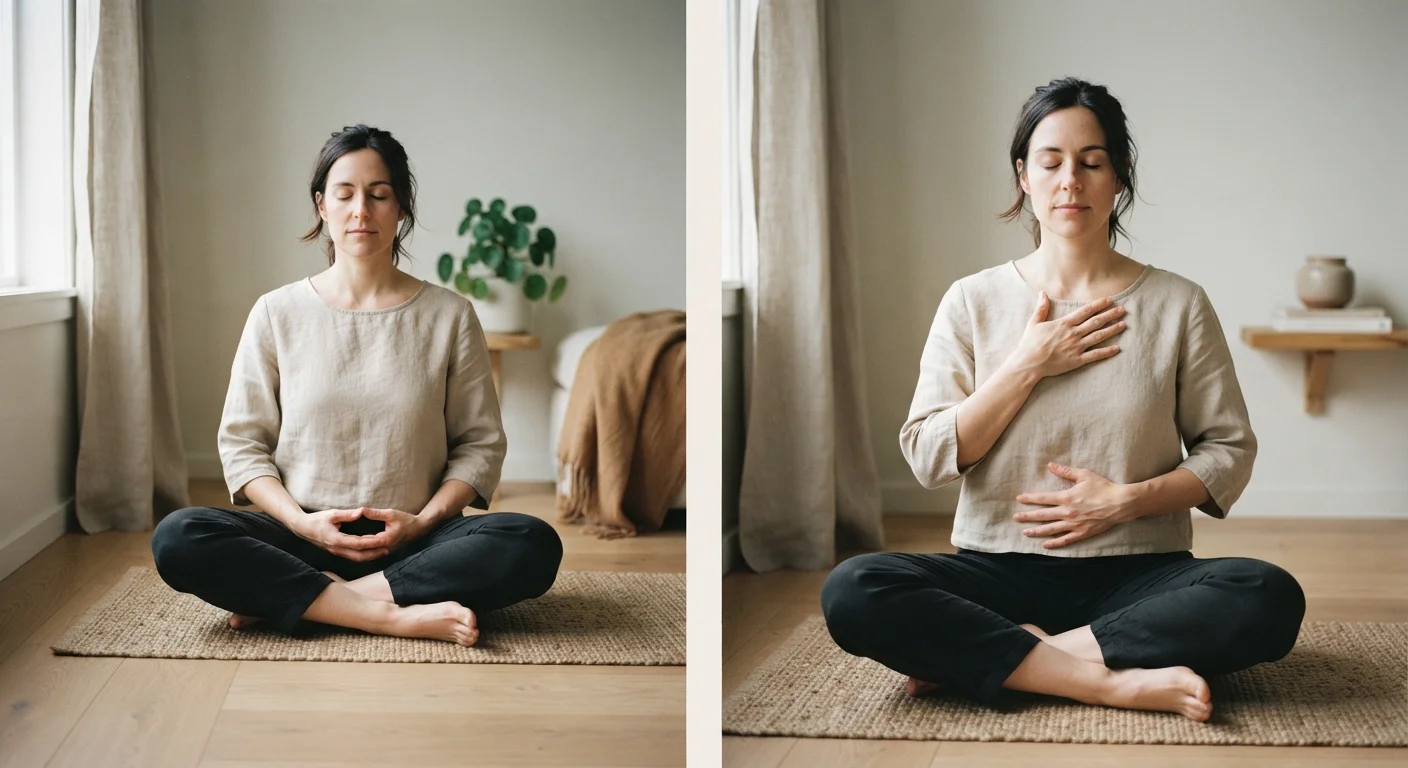
How Each Practice Actually Works
Meditation and deep breathing are frequently lumped together under the umbrella of "relaxation techniques," but their mechanisms are meaningfully different. Understanding those differences helps you choose the right tool for a given moment - or recognize when using both makes sense.
Deep breathing works by directly influencing the autonomic nervous system. Slow, deliberate exhalations stimulate the vagus nerve, shifting the body from sympathetic arousal (the stress response) toward parasympathetic dominance - sometimes called the "rest and digest" state. Techniques like diaphragmatic breathing, box breathing (equal counts of inhale, hold, exhale, hold), and 4-7-8 breathing have been studied in clinical settings for their ability to lower heart rate and reduce perceived tension within minutes. The effect is largely physiological and does not require mental training to initiate.
Meditation operates differently. Rather than directly targeting bodily functions, meditation trains attention and metacognitive awareness - the ability to observe your thoughts and feelings without being automatically driven by them. Mindfulness-based practices, for example, repeatedly redirect attention to a chosen anchor (often the breath, a word, or a sensation) when the mind wanders. Over time, neuroimaging research suggests this repetition changes the structure and connectivity of brain regions involved in attention, emotional regulation, and self-referential thinking. These changes accumulate over weeks to months, not minutes. For a broader grounding in the principles behind these practices, see our complete mindfulness overview.
| Criterion | Meditation | Deep Breathing |
|---|---|---|
| Primary mechanism | Trains attention and metacognition | Stimulates parasympathetic nervous system |
| Speed of effect | Weeks to months of practice | Minutes to immediate relief |
| Learning curve | Moderate - requires consistent practice | Low - effective from first use |
| Session length | Typically 10-45 minutes | 2-10 minutes |
| Best stress scenario | Chronic, recurring, or pattern-based stress | Acute, situational, or sudden stress |
| Equipment or guidance needed | Optional (apps, classes help beginners) | None required |
| Can be combined? | Yes - many styles use breath as anchor | Yes - fits naturally into meditation |
What the Research Shows
Both practices are supported by substantial peer-reviewed evidence, though the strength and specificity of findings vary by technique and outcome measure.
For deep breathing, a 2017 study published in Frontiers in Psychology found that participants assigned to a diaphragmatic breathing intervention showed significant reductions in cortisol (a primary stress hormone) and self-reported anxiety compared to controls. Short-term effects on heart rate variability - a marker of nervous system flexibility - are among the most consistently replicated findings in the breathing literature.
Meditation research, particularly on Mindfulness-Based Stress Reduction (MBSR), a structured eight-week program developed at the University of Massachusetts Medical School, has demonstrated reductions in perceived stress, improvements in emotional regulation, and benefits for certain anxiety and pain conditions. A 2014 meta-analysis in JAMA Internal Medicine reviewed 47 randomized controlled trials and found moderate evidence supporting mindfulness meditation for psychological distress.
47
Randomized trials reviewed in landmark MBSR meta-analysis
A 2014 meta-analysis in JAMA Internal Medicine reviewed 47 randomized controlled trials examining mindfulness meditation for psychological distress.
~26%
Cortisol reduction with diaphragmatic breathing
A 2017 Frontiers in Psychology study found diaphragmatic breathing was associated with significant reductions in salivary cortisol in healthy adults.
8 weeks
Standard MBSR program duration
The Mindfulness-Based Stress Reduction program developed at UMass Medical School runs eight weeks, the benchmark for most meditation efficacy research.
Critically, most meditation research involves multi-week programs, meaning the benefits aren't a single-session phenomenon. Deep breathing, by contrast, delivers acute physiological effects more immediately - a meaningful distinction for anyone dealing with sudden situational stress.
If your stress responses are feeling less situational and more persistent, it is worth reviewing the signs that stress may have crossed into burnout before choosing a self-help strategy alone.
Learning Curve, Commitment, and Accessibility
One of the most practical differences between these two practices is how quickly a beginner can use them effectively.
Deep breathing is accessible to virtually anyone from the first attempt. Most techniques require only a quiet moment and clear instructions - no apps, cushions, or prior experience. A person can learn the basics of box breathing in under five minutes and apply it usefully the same day.
Meditation has a steeper initial curve. Many beginners find sitting with a wandering mind frustrating and may misinterpret normal distraction as failure. The practice becomes more effective and self-sustaining with consistency, typically requiring a commitment of at least eight to twelve weeks before meaningful baseline changes in stress reactivity tend to be observed in research settings. Guided apps, classes, or structured programs like MBSR can support early practice.
For those who want to pair either of these tools with additional self-directed mental wellness strategies, cognitive behavioral techniques you can practice without a therapist offer another evidence-informed layer. Similarly, readers working on managing reactions to stress in real time may find emotion regulation skills a useful complement to either practice.
This article is for general informational purposes only and is not a substitute for professional medical or mental health advice. If you are experiencing significant anxiety, depression, or stress-related symptoms, please consult a qualified healthcare provider.