

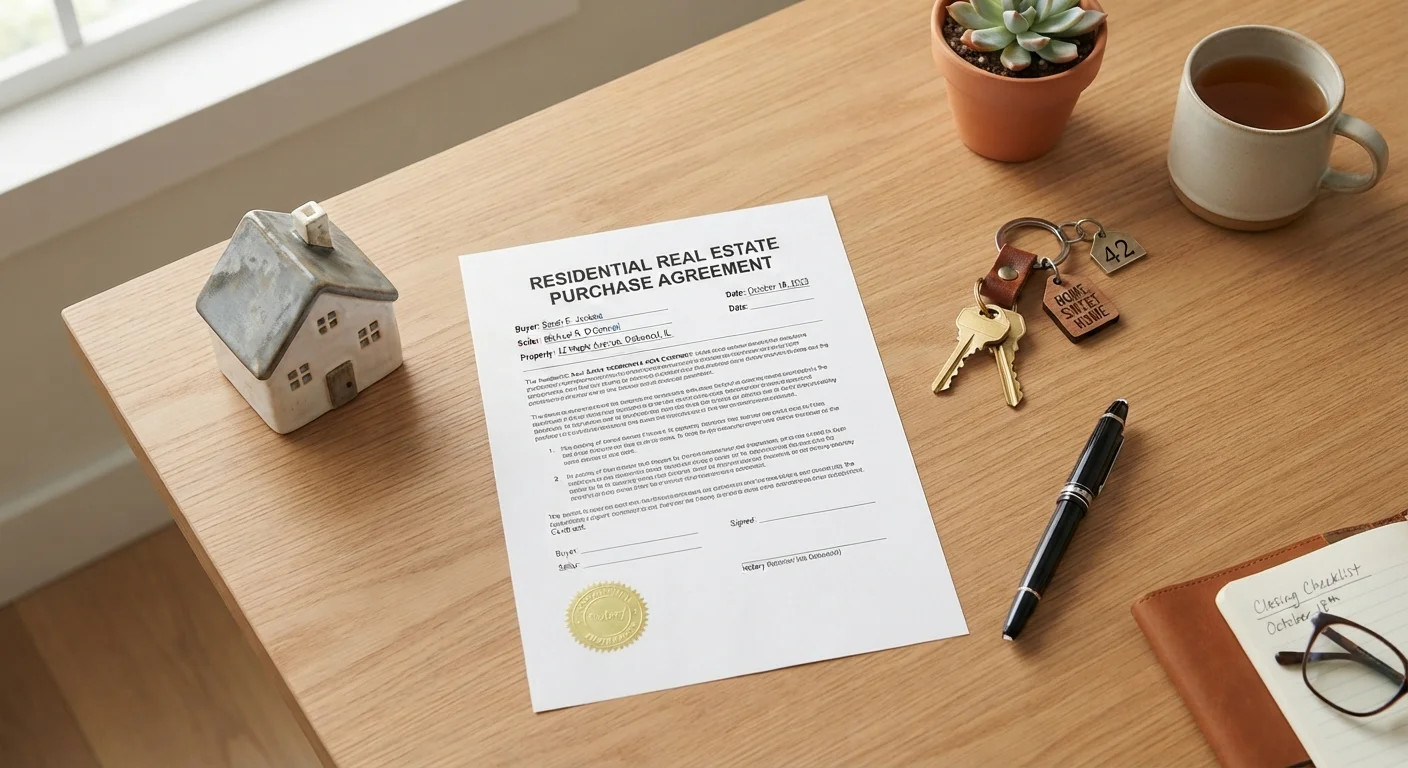
Making an Offer
Once you find a home you want to buy, your agent drafts a purchase offer - a formal written proposal that includes your offered price, preferred closing date, earnest money amount, and any contingencies. Contingencies are conditions that must be met for the sale to proceed; the most common protect you if financing falls through or serious problems surface during inspection.
In competitive markets, sellers may receive multiple offers simultaneously, so response times can be short. Your agent will review comparable recent sales - called comps - to help you submit an offer grounded in the home's actual market value. If the seller counters, you enter a negotiation phase until both parties agree in writing or one party walks away.
Lock In Your Pre-Approval Before Offering
A mortgage pre-approval letter shows sellers you're a serious, creditworthy buyer - and it defines the price range you can realistically compete in. Pre-approval requires a hard credit pull and income verification, unlike a soft pre-qualification. Have it ready before you tour homes, not after you've fallen in love with one.
Before submitting an offer, confirm you have a mortgage pre-approval letter - not just a pre-qualification. Sellers and listing agents treat pre-approval as a stronger signal of financial readiness. For a full preparation checklist, see our buyer preparation guide.
Under Contract: What Happens Next
When both parties sign, the home is considered under contract (also called in escrow in many states). At this point, a neutral third party - typically an escrow company or title company - holds your earnest money deposit and coordinates the transaction's moving parts.
The contract sets a timeline, usually 30-45 days to closing, with specific deadlines for completing your inspection, securing financing, and satisfying other contingencies. Missing a deadline can put your earnest money at risk or give the seller grounds to cancel. Your agent tracks these dates, but you should keep your own calendar as well.
30-45 days
Typical time from contract to closing
The National Association of Realtors reports that most purchase transactions close within 30-45 days of an accepted offer, though timelines vary by loan type and market.
2-5%
Typical closing costs as share of loan
The Consumer Financial Protection Bureau estimates buyers generally pay 2-5% of the loan amount in closing costs, on top of the down payment.
~81%
Buyers who used a real estate agent
According to the National Association of Realtors' Profile of Home Buyers and Sellers, the vast majority of buyers work with a licensed agent during their purchase.
The Home Inspection
A licensed home inspector examines the property's structure, systems, and major components - roof, foundation, HVAC, plumbing, electrical - and delivers a written report, usually within 24-48 hours. This report becomes a negotiating tool: you can request that the seller make repairs, provide a credit toward closing costs, or reduce the purchase price to reflect needed work.
Sellers aren't obligated to agree to every request, and you aren't obligated to proceed if the findings are too serious. Walking away during the inspection contingency period typically allows you to recover your earnest money.
Attend the home inspection in person whenever possible. Walking through the property with the inspector gives you context that a written report alone can't convey.
Inspectors can point out minor maintenance items they won't include in the formal report, giving you a fuller picture of what you're buying.
Request the seller's disclosure statement before waiving any contingencies. It documents known defects and can inform which specialty inspections are worth adding.
Disclosure statements are legally required in most states and often reveal issues - past flooding, roof age, permit history - that shape your negotiating position.
Specialty inspections - for radon, mold, sewer lines, or termites - are separate from a general inspection and are worth considering depending on the property's age and location. Understanding how inspection timelines work differently for new builds is covered in our new construction vs. existing home guide.
Financing and Appraisal
While the inspection proceeds, your lender orders an independent appraisal to confirm the home's market value supports the loan amount. If the appraisal comes in below the purchase price, the lender will only finance up to the appraised value - meaning you'd need to cover the gap, renegotiate the price, or exercise an appraisal contingency to exit the contract.
Simultaneously, the lender's underwriting team reviews your financial documents - income verification, tax returns, bank statements - to issue a final loan approval. Avoid major financial changes during this period: new credit inquiries, large deposits without paper trails, or job changes can delay or jeopardize approval.
Budget for Costs Beyond the Purchase Price
Many first-time buyers are surprised by the total cash needed at closing. Beyond your down payment, expect to cover loan origination fees, title insurance, prepaid homeowners insurance, property tax escrow, and more. These costs are itemized on your Closing Disclosure, which your lender must provide at least three business days before closing.
Buyers often focus on the purchase price and down payment, but closing costs and prepaid expenses can add thousands of dollars due at the table. Our companion article on costs beyond the purchase price breaks down each line item so you're not caught off guard.
Closing Disclosure Timing Matters
Federal law requires lenders to provide your Closing Disclosure at least three business days before closing. Use this window to review every line item carefully and compare it to your Loan Estimate. Any unexplained differences should be questioned with your lender before you arrive at the closing table.
Closing Day
Before signing, conduct a final walkthrough - typically within 24 hours of closing - to verify the property's condition matches the contract, agreed repairs were completed, and the seller has vacated. This is not a second inspection; it's a confirmation review.
At the closing table, you'll sign a substantial stack of documents, including the mortgage note, deed of trust, and closing disclosure. You'll also wire or bring a certified check covering your down payment and closing costs. Once all documents are signed and funds are distributed, the deed is recorded with the local government - and you receive the keys.
The full arc from offer to closing typically spans 30-60 days, though it varies by market, financing type, and transaction complexity. Understanding how each stage connects to the next - and what can slow things down - gives you realistic expectations and lets you respond quickly when decisions are needed. For a broader view of how property values are established throughout this process, see our guide to understanding property markets.
This article is for general informational purposes only and does not constitute legal, financial, or real estate advice. Consult a licensed real estate professional and attorney for guidance specific to your transaction and jurisdiction.