

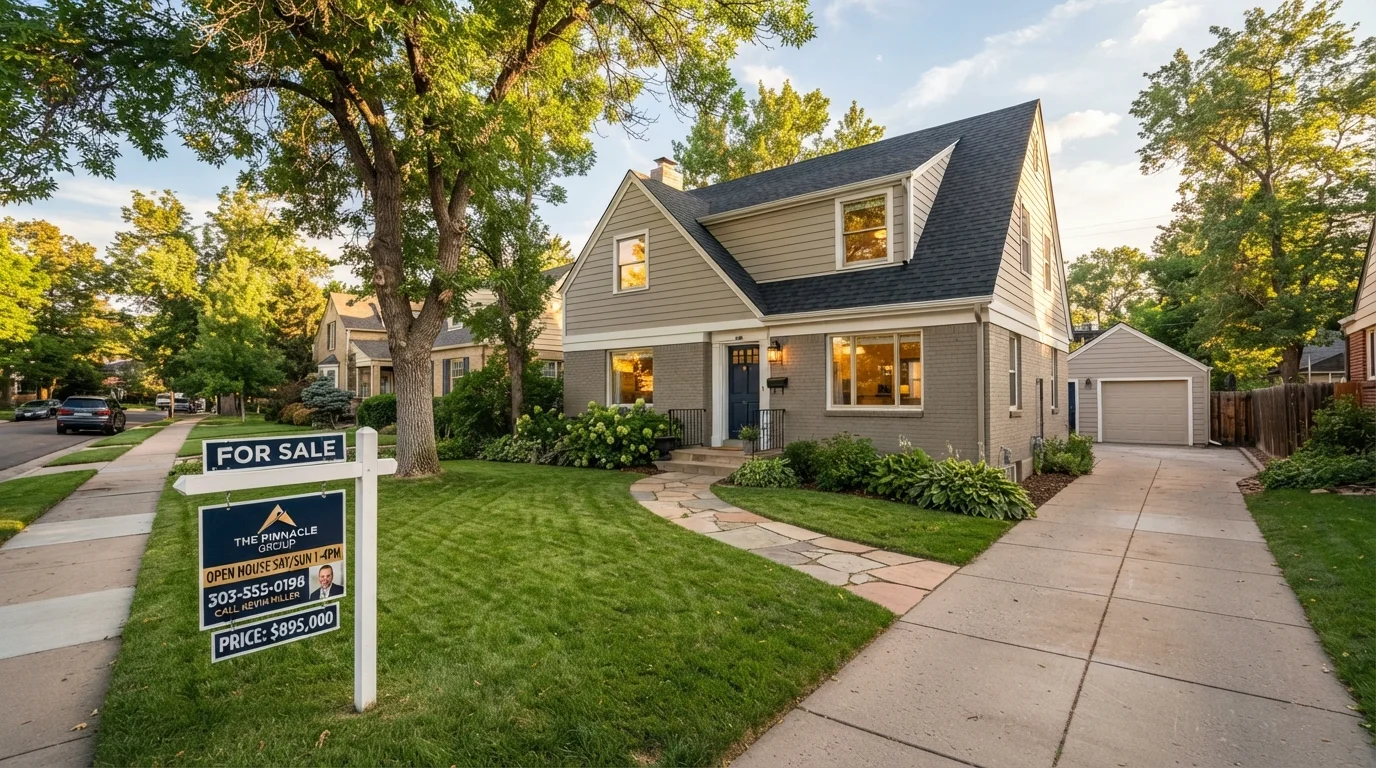
Why Property Value Myths Stick Around
Home ownership is one of the largest financial commitments most Americans ever make, yet many of the beliefs that guide buying, selling, and renovation decisions are based on outdated assumptions or oversimplified rules of thumb. These myths spread through casual conversation, real estate television, and well-meaning but uninformed advice - and they can be expensive to act on.
The challenge is that some myths contain a kernel of truth in certain contexts, which makes them harder to dismiss entirely. A swimming pool might add value in one ZIP code and subtract it in another. A renovation might pay off in a seller's market but not a buyer's one. Context is everything in real estate, and blanket statements almost always overpromise.
Myth
A swimming pool will significantly increase my home's resale value.
Fact
In most US markets, a pool adds limited value relative to its installation cost, and can actually deter certain buyers.
The idea that a pool is a universal selling point persists widely, but the reality is far more nuanced. Cost of installation, ongoing maintenance, insurance implications, and buyer preferences all vary significantly by region. In warm-weather states like Arizona or Florida, a pool may be more expected and better received. In the Midwest or Northeast, however, a pool can be seen as a liability - something buyers mentally deduct from their offer rather than add to it. The Remodeling Magazine Cost vs. Value report has consistently shown that outdoor pool projects recover only a fraction of their cost at resale.
Myth
Online home value estimates give an accurate picture of what my property is worth.
Fact
Automated valuation models (AVMs) use algorithms and public data - they cannot account for interior condition, recent upgrades, or hyperlocal dynamics.
Tools that generate instant online estimates are useful for a rough ballpark, but they have well-documented limitations. They typically rely on tax records, comparable sales, and square footage data - none of which captures whether your kitchen was recently renovated or your roof is ten years past its useful life. As detailed in our guide on how automated valuations work and when to distrust them, margins of error on individual properties can be substantial. Always treat these figures as a starting point, not a conclusion.
Myth
Home renovations generally pay for themselves when you sell.
Fact
Most major renovations recoup only a portion of their cost at resale, with returns varying widely by project type and local market.
The assumption that money spent on improvements translates directly to sale price is one of the most persistent myths in real estate. Industry data consistently shows that even high-impact projects like kitchen remodels or bathroom additions often return 60-80 cents on the dollar - and some recover far less. Cosmetic upgrades, energy efficiency improvements, and curb appeal enhancements tend to fare better than large structural projects. Understanding what ROI actually means in home improvement is essential before committing to significant work. See also: renovations that rarely recoup their cost at resale.
Myth
A higher property tax assessment means my home is worth more on the open market.
Fact
Property tax assessments and market value are calculated differently and often diverge significantly.
Assessed value is a figure local governments use to calculate your property tax bill, and it is typically derived using formulas that lag behind real market conditions. Many jurisdictions assess at a percentage of market value, others reassess infrequently, and still others apply caps on annual increases. The result is that assessed value and actual market value can differ by thousands - or tens of thousands - of dollars in either direction. If you want a reliable sense of what your home would sell for today, a comparative market analysis from a licensed agent or a formal appraisal is far more informative than your tax bill.
Myth
Your home's value is determined almost entirely by what you do to the property.
Fact
Neighborhood-level forces - school ratings, nearby development, demographic shifts - can move property values independent of anything a homeowner does.
Homeowners naturally focus on what they control: upgrades, landscaping, maintenance. But market value is shaped substantially by forces outside the property line. Neighborhood-level trends shape individual home values in ways that can override even significant improvements. A well-maintained home in a declining micro-market may struggle to appreciate, while a modest property in a rapidly improving area can see dramatic gains. This also explains why two homes on the same street can sell for very different prices.
What Actually Determines Your Home's Value
Appraisers and experienced agents evaluate property value using a combination of factors: recent comparable sales in the immediate area, the property's physical condition, functional layout, lot characteristics, and broader market conditions. No single element dominates in every situation.
Valuation Myths Can Be Costly
Acting on inaccurate assumptions about your home's value can lead to over-investing in renovations, mispricing a listing, or making poorly timed buying decisions. Before making any significant financial move based on perceived property value, consult a licensed appraiser or real estate professional familiar with your local market.
It's also worth noting that value and price are not identical. A home's appraised value reflects what trained professionals estimate it would sell for under normal market conditions. The actual sale price is influenced by buyer competition, timing, negotiation, and presentation. Both matter - and neither is static.
For homeowners considering major projects, understanding the realistic return on any improvement is crucial. Our overview of common home improvement myths that keep costing people money covers related misconceptions that apply even before a home reaches the market. And if you're concerned about value in a shifting environment, consider reading about why your home's value can drop even in a strong market - a reality that surprises many owners during periods of general price growth.
~60-80%
Average cost recouped on major kitchen remodels
According to recurring findings from the Remodeling Magazine Cost vs. Value report, most large kitchen renovations return well under their full cost at resale.
±7%
Typical AVM margin of error
Studies of major automated valuation tools have found median error rates often in the 6-8% range, translating to tens of thousands of dollars on a median-priced home.