

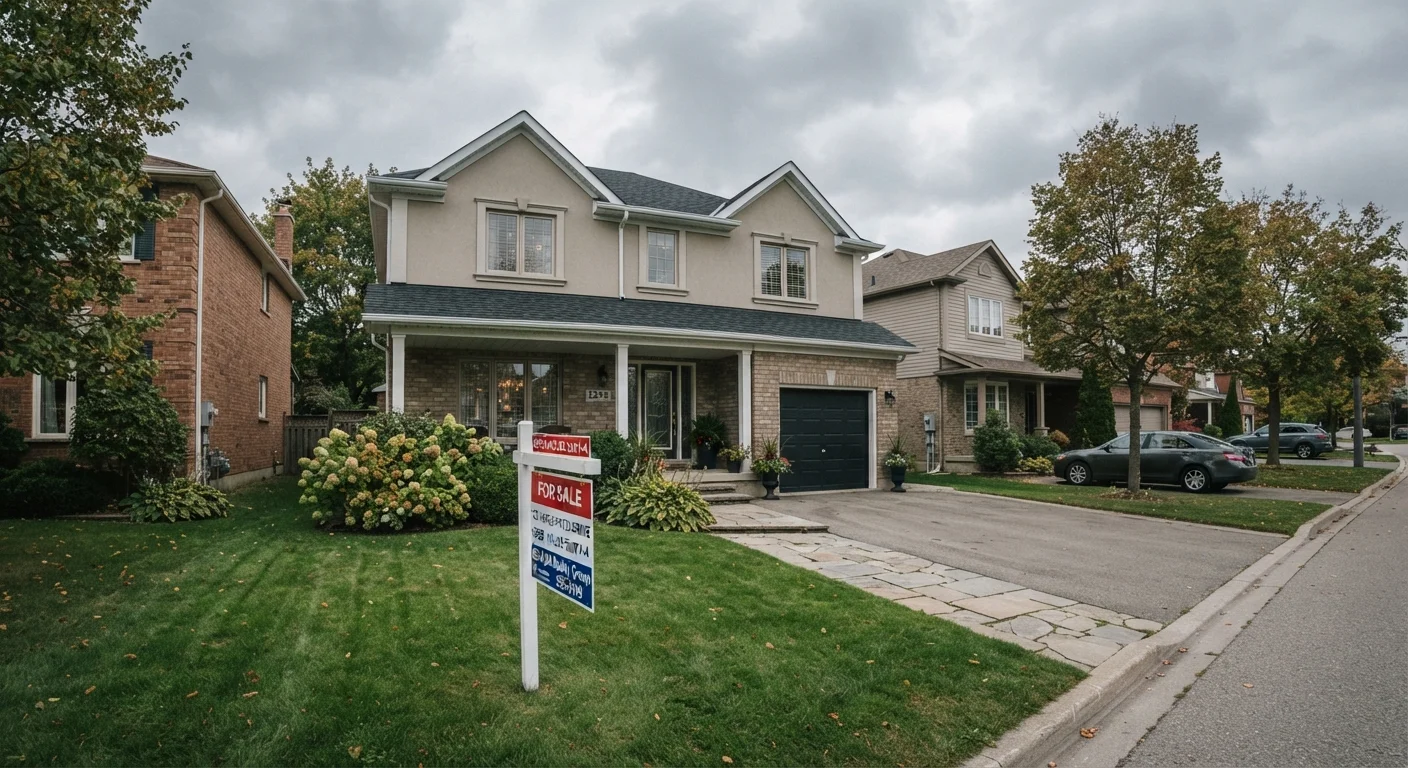
Market Headlines Don't Tell the Whole Story
When national or regional home prices are climbing, it's tempting to assume every property is riding that same upward wave. That assumption is one of the most expensive misconceptions in real estate. Aggregate price indexes reflect broad trends - they say nothing about the fate of a single property on a specific street with its own set of physical, legal, and neighborhood-level characteristics.
Market conditions shift the balance of power between buyers and sellers, but they cannot override the fundamental attributes of an individual home. A rising tide raises most boats - but not ones with holes in the hull. Understanding what makes a property vulnerable to value erosion, even in a favorable macro environment, is essential for homeowners and buyers alike.
Assuming deferred maintenance has no impact on appraised value in a hot market.
Why it happens: Owners see strong sale prices in their zip code and conclude that buyers will overlook physical deficiencies. Media coverage of bidding wars reinforces this belief.
Over-improving a home well beyond the value ceiling of its immediate neighborhood.
Why it happens: Homeowners conflate renovation cost with added value, expecting a dollar-for-dollar return on high-end upgrades in a modest-priced area.
Ignoring functional obsolescence - outdated floor plans, inadequate storage, or too few bathrooms for the bedroom count.
Why it happens: These issues are invisible in photos and easy to normalize for long-term owners who have adapted to them over time.
Overlooking hyperlocal negative influences such as new commercial development, increased traffic, or a deteriorating adjacent property.
Why it happens: Homeowners often track citywide or zip-code-level data but miss granular shifts happening within a few blocks of their property.
Misreading an automated valuation model (AVM) estimate as an accurate reflection of current market value.
Why it happens: Online valuation tools are widely available and feel authoritative, leading owners to anchor on figures that may not reflect the home's actual condition, recent comparable sales, or local nuances.
The Property-Specific Factors That Quietly Erode Value
Value decline rarely announces itself. It accumulates through overlooked maintenance, poor improvement decisions, and shifts in the immediate neighborhood that owners fail to monitor. Location alone doesn't explain price gaps between neighboring properties - the condition, configuration, and history of each home carry significant weight with appraisers and buyers alike.
~5%-10%
Typical value discount for deferred maintenance
Real estate appraisal literature and industry practitioners commonly estimate that visible deferred maintenance can reduce appraised value by roughly 5-10%, depending on the severity and local market.
63%
Homeowners who rely on online AVM tools
A National Association of Realtors survey found that a significant majority of homeowners reference online valuation tools as a primary source when estimating their home's worth, despite known accuracy limitations.
Homeowners who track their property's condition with the same attention they give to the broader market are far better positioned to protect and grow their equity. For a deeper look at how external forces interact with these internal variables, the relationship between neighborhood-level trends and individual home values is worth understanding in detail.
Buyers: Price Anomalies Rarely Disappear at Closing
If a home is priced noticeably below its neighbors in an appreciating market, that discount typically reflects something the market has already priced in - a floor plan issue, a location nuisance, a title complication, or deferred maintenance. Due diligence before an offer is the only reliable way to determine whether the gap represents a genuine opportunity or a persistent liability.
Buyers entering a competitive market should also be cautious about assuming a low-priced home in an appreciating area is automatically a bargain. Price anomalies usually exist for a reason - and those reasons tend to persist through appraisals, inspections, and resale. See the property value myths that mislead a surprising number of homeowners for more on beliefs worth questioning. For a full framework on how values are established at every transaction stage, refer to understanding property markets from listing to closing.