

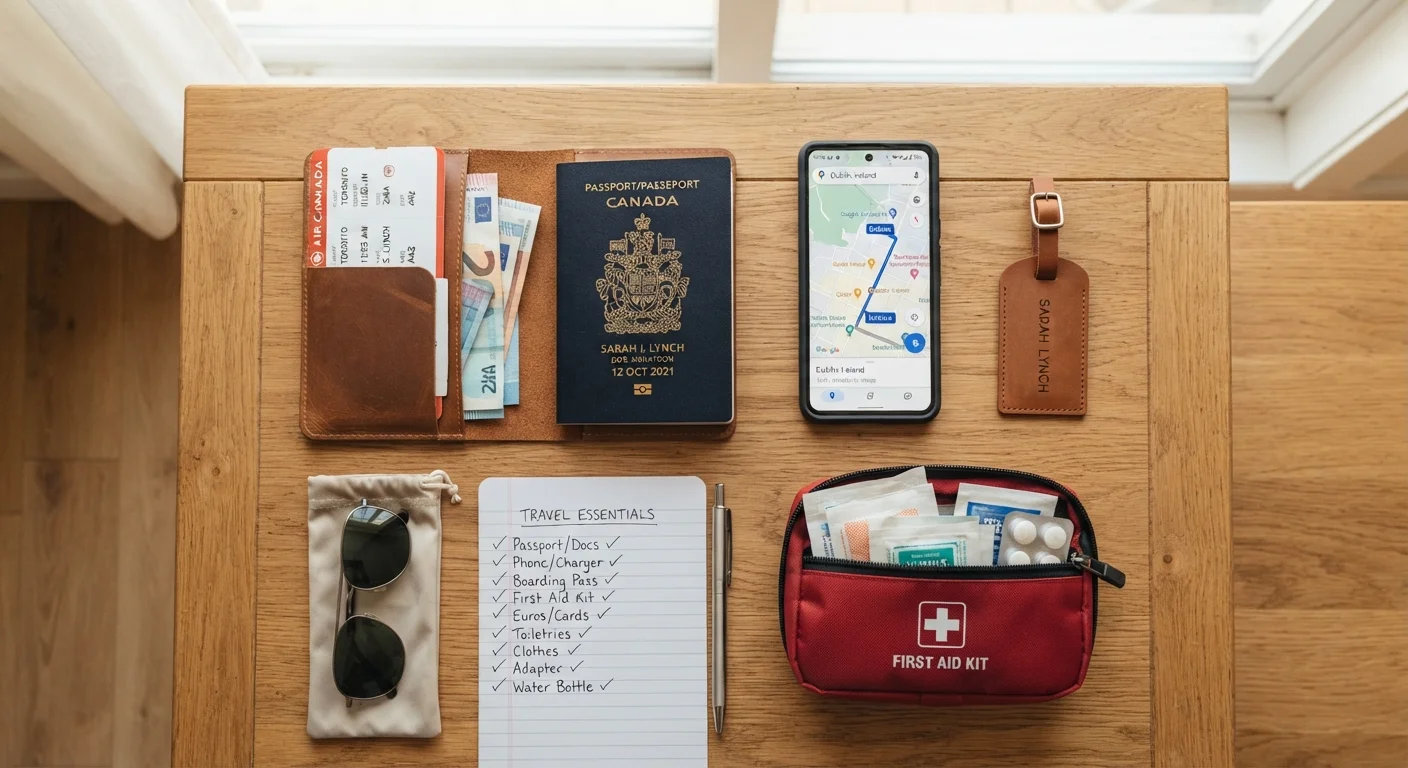
Why a Pre-Trip Checklist Pays Off
Even seasoned travelers get tripped up by small oversights - an expired passport discovered the night before departure, a hotel booking made under the wrong dates, or a pet-care arrangement that fell through. The good news is that nearly every common travel disruption is preventable with a systematic review done days, not hours, before you leave.
This checklist covers the four areas that account for the vast majority of pre-departure problems: documents and identity, bookings and logistics, home security, and health and finances. Work through each group in order, and you'll board your flight - or hit the highway - with genuine confidence rather than crossed fingers.
If cost control is also on your mind, our pre-trip budget checklist runs alongside this one well. And for anyone planning an international trip, the travel health prep guide goes deeper on vaccines, prescriptions, and destination-specific health considerations.
Documents & Identity
Bookings & Logistics
Home Security & Logistics
Health & Medications
Finances & Connectivity
Tools That Make the Process Easier
You don't need sophisticated software to run this checklist, but a few basic tools make it faster and more reliable. Before you sit down to review everything, gather the resources below.
Government Travel Advisory Portal (e.g., travel.state.gov for US travelers)
Check current entry requirements, safety advisories, and visa information for your destination.
Digital document storage app (password-protected)
Store encrypted copies of your passport, bookings, and insurance details so they're accessible even if your bag is lost.
Travel insurance policy documents
Review coverage limits and emergency contact numbers before departure so you know exactly what's covered.
Offline maps application
Download destination maps in advance so you can navigate without relying on mobile data or Wi-Fi.
Packing list app or printed template
Systematically track what's packed to avoid leaving essential items behind.
Travelers with chronic health conditions should pay particular attention to the health and medications group. Our guide on travel safety for people with chronic health conditions covers contingency planning in detail. Similarly, if you're driving to your destination, run through the pre-trip vehicle safety check in parallel with this list.
Don't Rely Solely on Email Confirmations
Booking confirmations sent by email can contain errors that neither you nor the provider noticed at the time. Always log in directly to the airline, hotel, or rental platform to verify your reservation details independently. Discrepancies in name spelling, dates, or traveler counts are far easier to correct before departure than after.
Visa and Entry Rules Change - Verify Officially
Entry requirements, visa-on-arrival policies, and health documentation rules can change with little public notice. Never rely on travel blogs or third-party sites as your final source. Always verify current requirements directly through the destination country's official embassy or consulate website and the US Department of State before you travel.
Travel-related stress peaks in the 24 hours before departure. If anxiety tends to build for you around airports or security lines, reading up on managing travel anxiety before you leave can make a real difference.
Passport Validity: The Six-Month Rule
Many countries require that your passport remain valid for at least six months beyond your intended departure date from their territory - not just your arrival date. Travelers have been denied boarding or turned away at the border for failing this requirement even with an otherwise valid passport. Check your passport's expiration date against this standard well before your trip, as expedited renewal still takes time. Visit the US Department of State's passport website for current processing timeframes.