
The Basic Mechanics: Principal, Interest, and Term
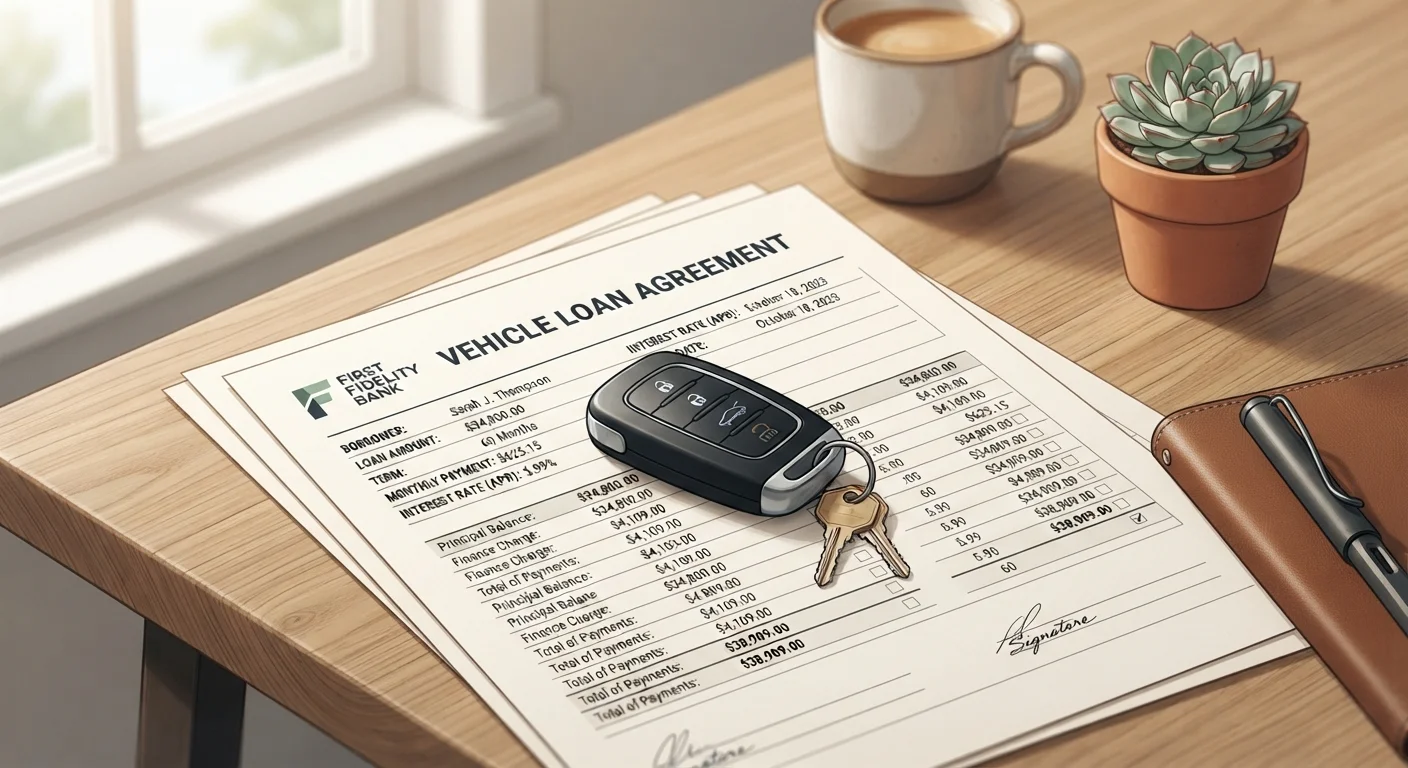
Every car loan comes down to three core variables: the principal (the amount you borrow), the interest rate (what the lender charges for lending it), and the loan term (how long you have to repay). Your monthly payment is essentially a formula that splits your total obligation - principal plus interest - into equal installments across the term.
Here's what's easy to miss: in the early months of a loan, most of your payment covers interest, not principal. As your balance shrinks, the interest portion decreases and more of each payment goes toward what you actually borrowed. This is how simple-interest amortization works in practice. For a deeper look at how interest builds over time, see how interest works.
A common mistake is focusing only on the monthly payment. A lower payment usually just means a longer term - which means more interest paid overall. Always calculate the total cost of the loan, not just the monthly number.
~$40,000+
Average new car loan amount in the US
According to data from Experian's State of the Automotive Finance Market report, average new vehicle loan balances have exceeded $40,000 in recent years.
72 months
Most common new car loan term
Experian data shows the 72-month loan term has become one of the most frequently chosen options among new vehicle buyers.
~3-5%
Rate difference between top and bottom credit tiers
Industry data consistently shows borrowers in the lowest credit tier pay several percentage points more than prime borrowers, often totaling thousands in extra interest.
APR vs. Interest Rate: Why the Difference Matters
Lenders advertise interest rates, but the number that actually tells you what you're paying is the Annual Percentage Rate (APR). APR folds in the interest rate plus any lender fees or charges, expressed as a single annual figure. Two offers with a 6% interest rate can have different APRs if one lender charges origination fees.
When comparing loan offers - from a dealer, a bank, or a credit union - always compare APRs side by side. For a broader reference on credit and borrowing terms, the credit glossary covers the vocabulary you'll encounter throughout the lending process.
Get Pre-Approved Before You Shop
Walking into a dealership with a pre-approval from your bank or credit union gives you a concrete rate to benchmark against any dealer financing offer. It shifts the conversation from 'what monthly payment works for you?' to 'what's the total price and APR?' - a much more transparent negotiation. Pre-approval checks are typically soft pulls or rate-shopping windows that minimally affect your credit score.
How Your Credit Score Shapes the Loan
Lenders use your credit score to assess how likely you are to repay. The higher your score, the lower the risk they perceive - and the lower the interest rate they'll offer. The difference between a strong and a weak credit score can translate to thousands of dollars over a 60-month loan.
Before applying for any financing, pull your credit report and check for errors. If your score needs work, even a few months of on-time payments and reduced credit card balances can improve your position. The Debt & Credit hub has practical guidance on improving your credit standing before major borrowing decisions.
Down Payments, Trade-Ins, and Loan-to-Value
A down payment reduces the amount you need to borrow, which lowers both your monthly payment and total interest. It also protects you from going underwater - owing more than the car is worth - in the early months when depreciation hits hardest.
Trade-in vehicles can serve the same function as a down payment, reducing what you finance. However, trade-in value and vehicle price are two separate negotiations. Don't let a dealer bundle them together in a way that obscures what you're actually getting for each.
Lenders also evaluate the loan-to-value (LTV) ratio - the loan amount relative to the vehicle's market value. A lower LTV often unlocks better rates. Rolling add-ons like extended warranties or gap insurance into the loan increases LTV and your total cost.
For a full picture of how financing fits into the broader purchase, see the car-buying process start to finish. And if you've heard that you must put 20% down or that negotiating on monthly payment is smart strategy, common car-buying myths explains why those assumptions can cost you.
This article is for general informational and educational purposes only and does not constitute personalized financial or legal advice. Consult a qualified financial professional before making borrowing decisions.