
Why High-Mileage Vehicles Need a Different Approach
Once a vehicle crosses roughly 100,000 miles, the rules of maintenance shift. Parts that performed reliably for years start operating closer to their wear limits. Gaskets compress and harden, seals develop minor weeping, and clearances inside the engine and transmission begin to widen slightly. None of this means the car is failing - it means the tolerances for neglect have narrowed.
The goal at this stage isn't to fix everything at once. It's to identify which systems are most vulnerable to deferred maintenance and prioritize accordingly. Compared to a newer vehicle, a high-mileage car rewards attention and consistency more than any single repair.
If you're not sure whether your service intervals are still appropriate, our overview of time-based vs. mileage-based service intervals explains how to calibrate your schedule for an aging vehicle.
~230M
Vehicles over 100,000 miles on US roads
Industry data consistently shows the US vehicle fleet is aging, with median vehicle age now exceeding 12 years.
60-105K mi
Typical timing belt replacement window
Manufacturer intervals vary widely; check your owner's manual for the specific interval that applies to your engine.
6 years
Maximum recommended tire age regardless of tread
Most tire and vehicle manufacturers advise replacement after six years from the tire's production date, irrespective of tread depth.
Fluids and Seals: The First Line of Defense
High-mileage engines consume and contaminate fluids faster than new ones. Engine oil should be checked more frequently - every few weeks or at each fuel stop if the vehicle is known to burn oil. At this stage, some mechanics recommend a slightly higher-viscosity oil or a formulation marketed for high-mileage engines, which typically includes seal conditioners. The value of these products varies by vehicle; consult your owner's manual and a trusted mechanic before switching grades.
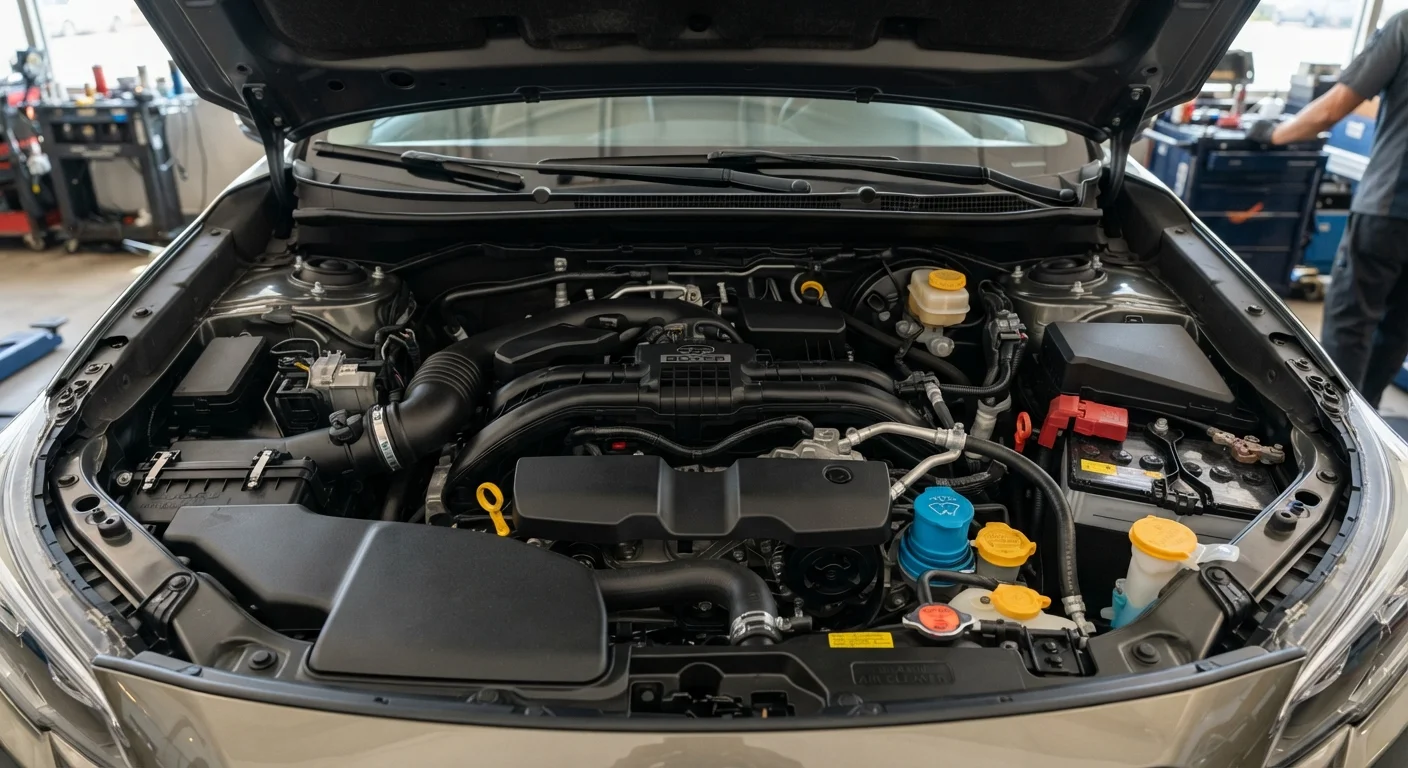
Transmission fluid, coolant, and power steering fluid all degrade over time regardless of mileage. If these haven't been serviced in the last 30,000-50,000 miles, they're worth inspecting now. Brake fluid absorbs moisture over time, which lowers its boiling point - a safety concern. Our guide on car fluids every driver should know how to check covers where to find each reservoir and what color changes to look for.
When checking oil on a high-mileage engine, look at the dipstick twice - once immediately after shutdown and once after the car has sat for 10 minutes. The second reading is more accurate and helps you gauge actual consumption between changes.
Oil drains back into the pan after the engine sits, giving a more representative reading than a hot check, which matters when monitoring consumption closely.
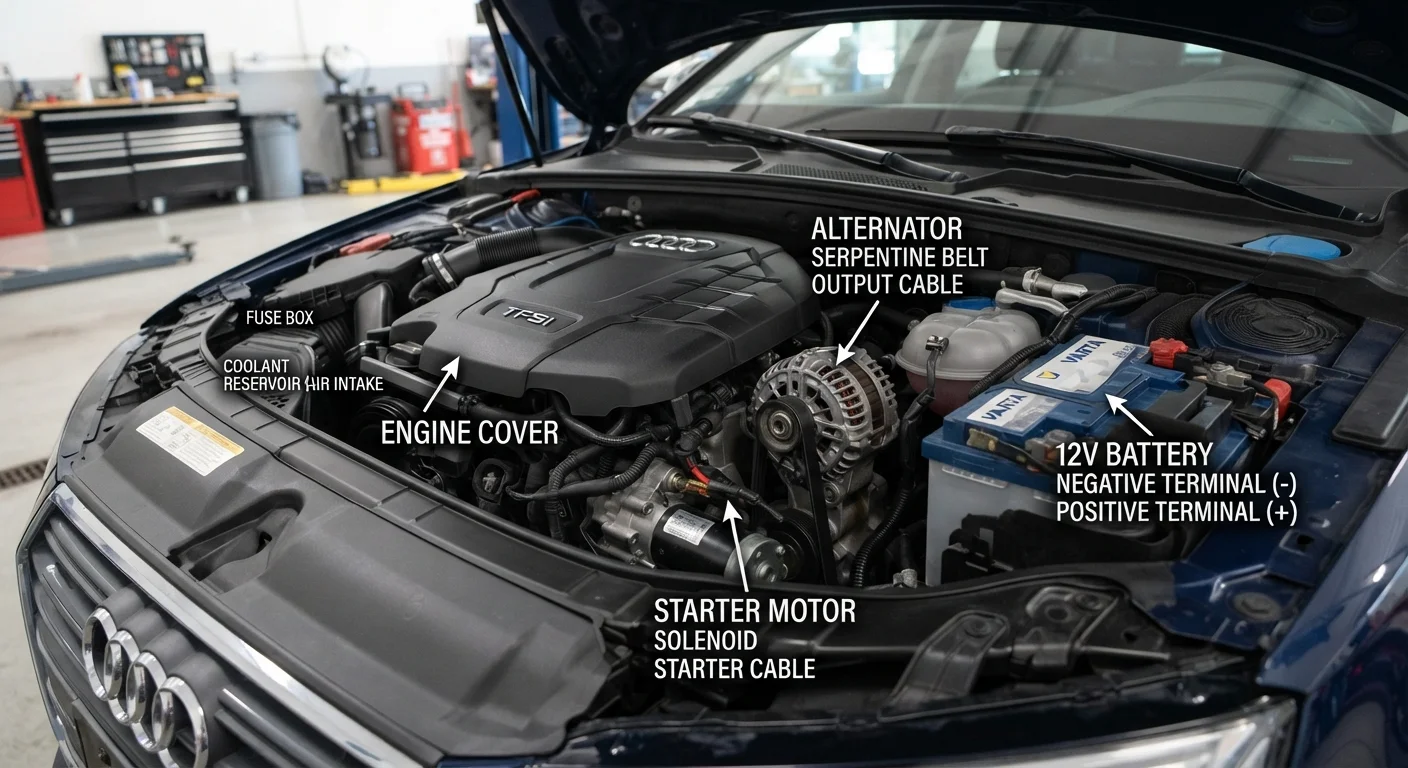
If you notice a faint burning smell after driving but see no visible fluid leak, check for oil seeping onto the exhaust manifold - a common high-mileage issue that's easy to miss during a quick visual inspection.
Valve cover gaskets and cam seals can develop minor weeps that don't drip to the ground but do contact hot exhaust surfaces, indicating a seal that needs attention before it worsens.
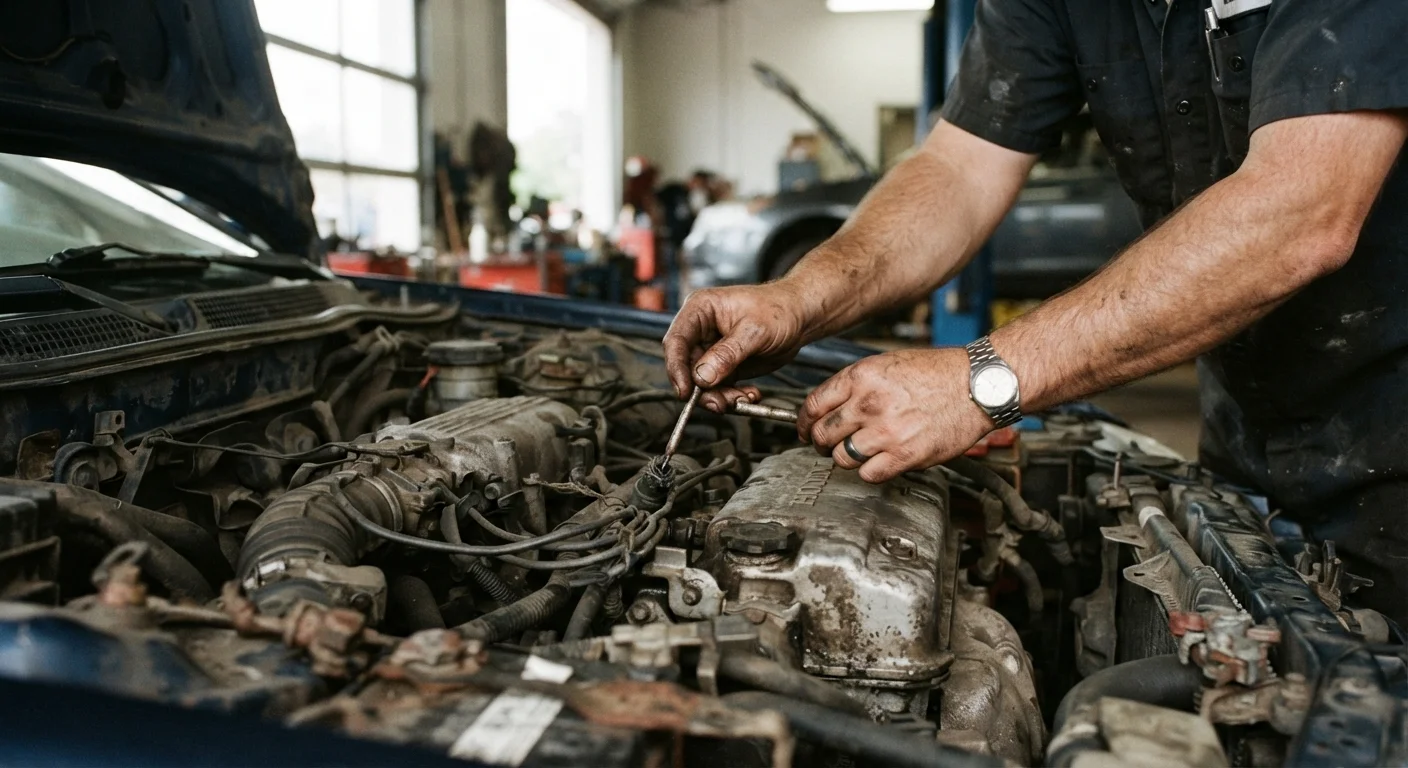
Seals and gaskets deserve equal attention. Look for oil residue or wet spots under the car and around the valve cover, oil pan, and front and rear engine seals. A slow seep is manageable; an active drip warrants a professional evaluation before it becomes a larger failure.
Drivetrain and Suspension Components to Watch
The drivetrain - axles, CV joints, universal joints, and in some vehicles the transfer case - accumulates wear that can be hard to notice until something fails. CV joint boots protect these components from dirt and debris; a cracked or torn boot accelerates wear significantly. Have these inspected during any tire rotation or oil change.
Suspension bushings, ball joints, and tie rod ends also soften and develop play over high mileage. Symptoms include vague steering, uneven tire wear, or a clunking sound over bumps. These components affect vehicle control directly, so ignoring early signs is a false economy.
Don't Ignore Steering or Handling Changes
Any new looseness in the steering, pulling to one side, or unusual tire wear on a high-mileage vehicle should be evaluated by a qualified mechanic promptly. Worn ball joints or tie rod ends can fail suddenly, resulting in a loss of vehicle control. These are not repairs to defer until the next scheduled service.
Wheel bearings are another item that can degrade quietly. A low humming or growling sound that changes with vehicle speed - or shifts when you change lanes - often points to a bearing starting to fail. Left unattended, a failed wheel bearing can compromise steering control.
Cooling System and Belts
Overheating is one of the most destructive things that can happen to a high-mileage engine, and the cooling system is often the culprit. Coolant degrades chemically and loses its corrosion-inhibiting properties - even if the level looks fine. Most manufacturers recommend a full coolant flush every 30,000-50,000 miles or every few years, but this interval may be overdue on a high-mileage vehicle that hasn't had thorough service records.
Inspect radiator hoses for soft spots, cracks, or swelling at the ends. Check the thermostat's behavior - an engine that takes a long time to warm up or runs hot under load may have a thermostat starting to fail.
Timing belts, where applicable, typically carry a manufacturer-specified replacement interval (often between 60,000 and 105,000 miles). If yours has passed that mark without replacement, this is a priority repair - a snapped timing belt can destroy an engine. Timing chains are more durable but are not maintenance-free; listen for rattling on cold starts, which can indicate chain stretch or tensioner wear.
Brakes, Tires, and Safety Systems
Brake pads and rotors wear predictably, but high-mileage vehicles may also show deterioration in brake lines, calipers, and flexible brake hoses. Spongy pedal feel, pulling during braking, or longer stopping distances all warrant immediate inspection. Don't defer brake concerns - this is a safety system, not a convenience item.
Tires on a high-mileage vehicle may be aging as much as wearing. Rubber hardens and cracks over time regardless of tread depth. The sidewall date code (a four-digit number indicating week and year of manufacture) can tell you the tire's age. Most manufacturers consider tires older than six years a replacement candidate, even with usable tread remaining.
For comprehensive pre-drive safety awareness, especially before longer trips, see our pre-trip safety check guide.
Check Tire Age, Not Just Tread Depth
Find the four-digit DOT date code on the tire sidewall - the first two digits are the week, the last two are the year. A tire made in week 24 of 2017 reads '2417.' If your tires are six or more years old, consult a tire professional about replacement even if the tread still looks acceptable.
Building a Maintenance Routine That Holds
Consistency matters more than any individual repair at this stage. A high-mileage vehicle maintained on a predictable schedule will typically outlast one that receives sporadic attention, however thorough.
Start by gathering whatever service records exist. Gaps in the history help you identify what's overdue. Going forward, document every service - date, mileage, what was done, and by whom. Our article on keeping records of vehicle maintenance walks through practical approaches to building this habit.
Pair your recordkeeping with a visual inspection once a month: check fluid levels, look for leaks under the car, listen for new sounds, and note any changes in handling or braking feel. Catching a slow coolant leak or a developing brake squeal early keeps the repair cost manageable. Also be aware of common maintenance habits that shorten a car's lifespan - small oversights compound quickly on older vehicles.
A high-mileage vehicle isn't a liability by default. With focused attention on the systems most vulnerable to age and wear, many cars remain reliable, safe, and economical well past 150,000 miles or more.