
What Each Component Actually Does
Think of the three components as a relay team with clearly assigned legs of the race.
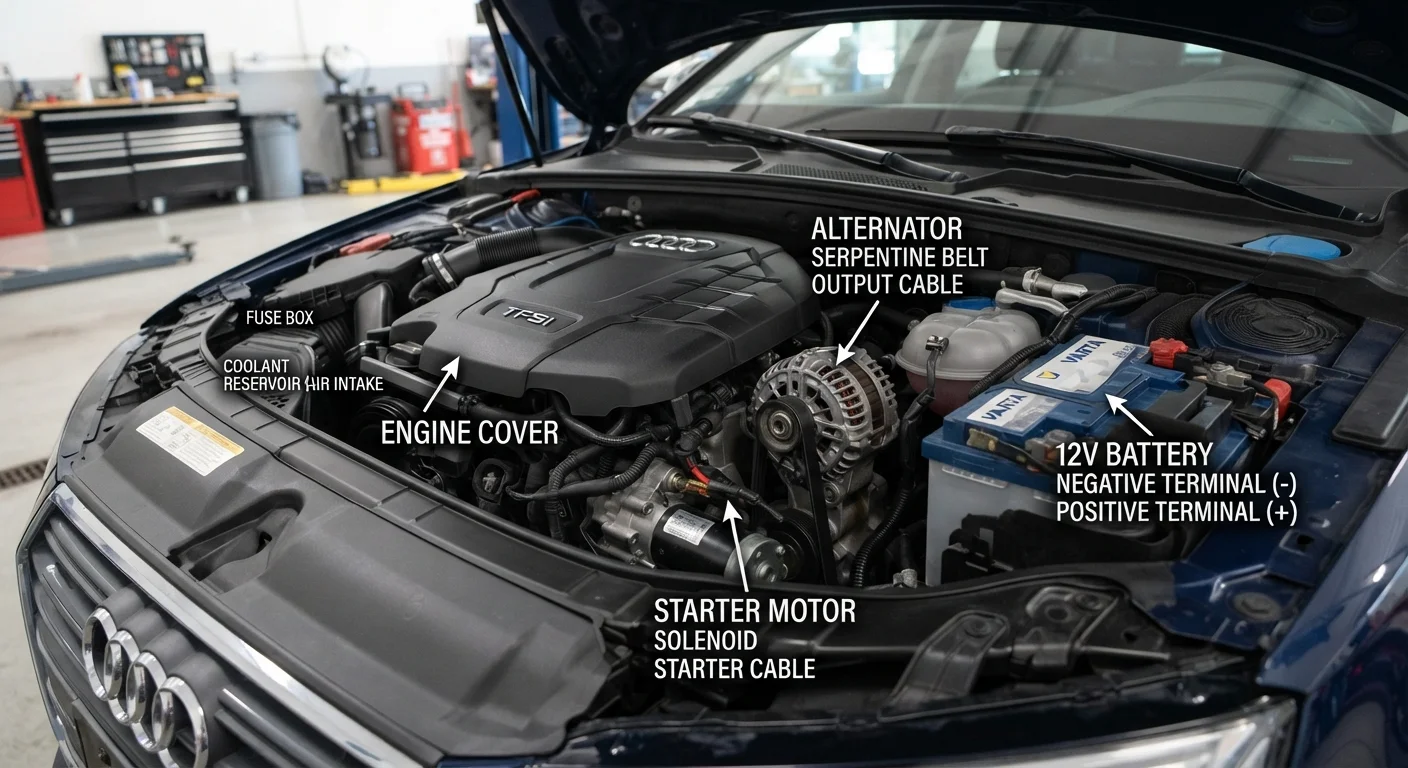
The battery is a rechargeable energy storage unit - typically a 12-volt lead-acid unit. Its primary job is to supply the high burst of electrical current needed to start the engine. It also powers accessories like lights and the radio when the engine is off. The battery doesn't generate power on its own; it stores power delivered by the alternator.
The starter motor is an electric motor bolted to the engine block. When you turn the key or press the start button, the battery sends current to the starter, which engages a small gear (called a pinion) with the engine's flywheel and physically cranks the engine until combustion takes over. Once the engine fires, the starter disengages automatically.
The alternator is driven by a belt connected to the engine. While the engine runs, the alternator generates electricity to recharge the battery and power the vehicle's electrical systems - everything from the fuel injectors to the headlights to the HVAC controls. Without a functioning alternator, the battery drains within minutes of starting the engine.
Modern Vehicles Add Complexity
Many newer vehicles use AGM (absorbent glass mat) batteries rather than traditional flooded lead-acid units. AGM batteries have different charging requirements and often require a battery management system reset when replaced. Using the wrong battery type or skipping the reset can cause charging problems and shorten the replacement battery's life. Check your owner's manual or ask a mechanic before purchasing a replacement.
How to Read the Warning Signs
Each component fails in recognizable ways. Knowing the pattern saves you from guessing - or from replacing parts you don't need.
Battery Symptoms
- Engine cranks slowly, especially in cold weather
- Lights dim noticeably when you start the car
- Battery is more than 4-5 years old
- Car needed a jump-start and hasn't fully recovered
Alternator Symptoms
- Battery warning light illuminates while driving
- Electrical accessories behave erratically (flickering lights, radio cutting out)
- Battery dies repeatedly even after being replaced
- Burning rubber smell near the engine belt area
Starter Symptoms
- Single click or rapid clicking when turning the key, with no engine crank
- Grinding noise during start attempts
- Engine doesn't crank even though battery tests healthy
- Intermittent starting failures - works sometimes, not others
Test Before You Replace
Many auto parts retailers offer free battery and alternator testing while you wait. This simple step takes the guesswork out of diagnosing starting problems and can save you from replacing components unnecessarily. If a component tests within spec, look elsewhere for the fault before spending money.
If you're ever unsure which component is causing problems, a basic electrical system test at an auto parts store or mechanic's shop takes only a few minutes and removes the guesswork entirely.
Why Misdiagnosis Is a Common and Costly Mistake
The battery warning light is a frequent source of confusion. Drivers assume it means the battery needs replacing - and sometimes they're right. But that same light activates when the alternator fails to charge the battery. Installing a new battery into a car with a bad alternator will drain the new battery just as fast.
Similarly, a starter problem can mimic a dead battery if the symptoms are vague. Both result in a car that won't start. The difference is that a battery issue often responds to a jump-start and allows normal driving afterward, while a true starter failure means the engine simply won't crank regardless of charge level.
Before replacing any component, have a technician run a proper load test on the battery and an output test on the alternator. These tests are quick and inexpensive - and they prevent you from spending money on the wrong fix.
3-5 years
Average car battery lifespan
Industry consensus from battery manufacturers and automotive maintenance guidelines places typical battery life in this range under normal use.
~50%
Battery failures occur in hot climates
Battery Council International has noted that heat - not cold - is the primary cause of battery degradation, accelerating chemical breakdown inside the cells.
12 volts
Standard automotive battery voltage
The vast majority of passenger vehicles use a 12-volt lead-acid or AGM battery as the primary starting and accessory power source.
Maintenance Habits That Help
None of these components require frequent servicing, but a few habits extend their useful life considerably.
- Keep battery terminals clean. Corrosion - the white or blue-green residue on battery posts - increases resistance and reduces charging efficiency. A periodic inspection (and cleaning when needed) takes minutes.
- Don't run accessories with the engine off. Sitting with the radio, lights, or climate control running while the engine is off drains the battery without the alternator recharging it. Short or repeated discharge cycles shorten battery life.
- Watch the serpentine belt. The alternator is driven by this belt. If the belt is cracked, glazed, or loose, alternator output suffers. Belt condition is worth checking during routine oil changes.
- Check your owner's manual for battery specs. If you replace the battery yourself, using the correct group size and cold-cranking amp (CCA) rating matters. The owner's manual specifies what your vehicle requires.
For a broader look at what to inspect before a long trip, see our pre-trip safety check - electrical system health is part of that routine. And if you're new to car ownership, the maintenance overview for new drivers covers where electrical components fit alongside other essentials.