
What a Vehicle History Report Actually Contains
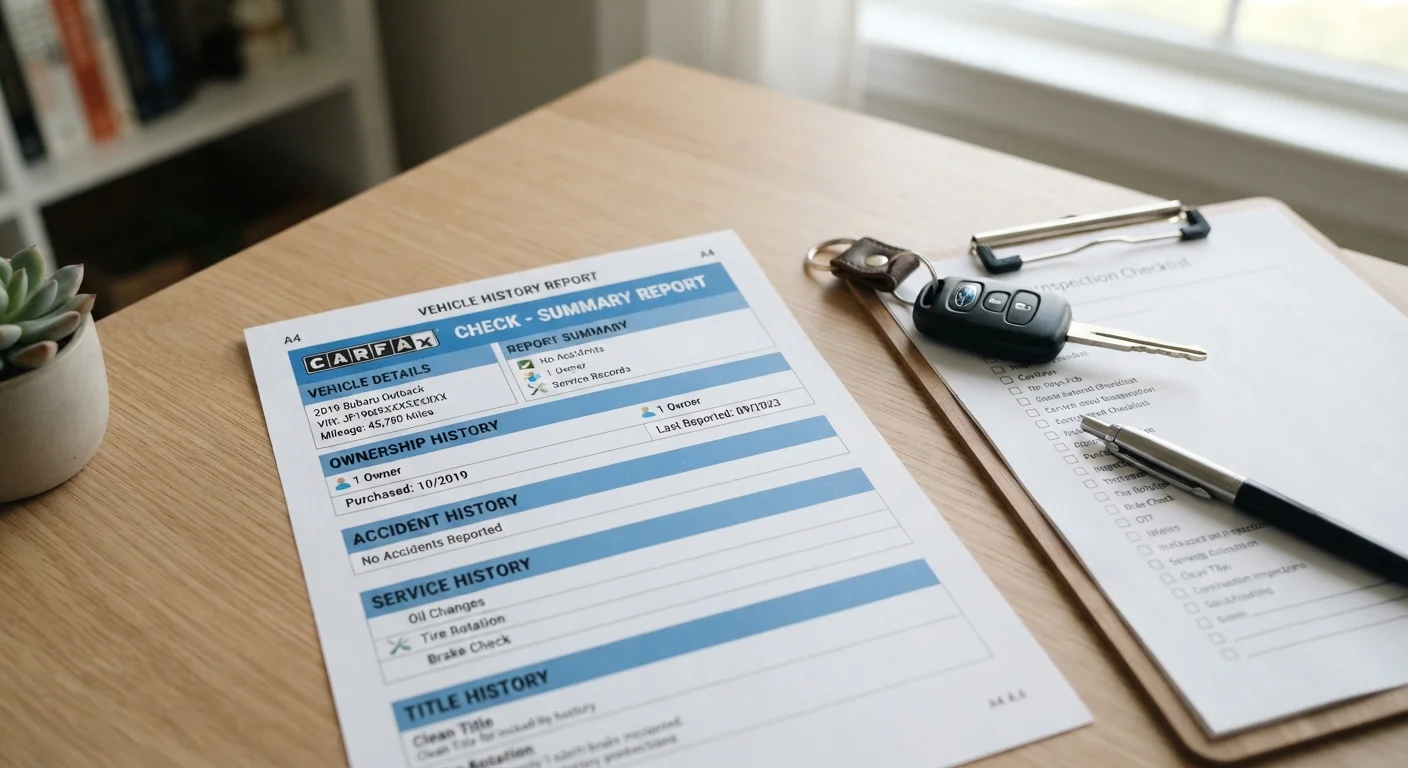
A vehicle history report aggregates data from a network of sources: state DMV records, insurance company claims, auto auction records, law enforcement databases, and participating repair shops. The result is a chronological snapshot of the vehicle's documented life. It is not exhaustive - it only reflects events that were officially reported - but it remains one of the most valuable screening tools available to a used car buyer.
Reports are organized around a few core data categories: title and ownership history, odometer readings, accident and damage disclosures, service records, and in some cases open recall status. Understanding what each section is actually telling you - and what it cannot tell you - is the key skill.
What you will need
For context on how these reports fit into the broader used car evaluation process, see what to check before buying a used car.
A Clean Report Is Not a Guarantee
Vehicle history reports only reflect what has been officially reported to insurers, law enforcement, or repair shops. Unreported accidents, cash-paid repairs, and off-the-books damage will never appear. Always pair your report review with a mechanical inspection from an independent, qualified mechanic before finalizing any used car purchase.
How to Read Each Section Step by Step
Follow these steps in order when reviewing any vehicle history report. Skipping ahead to the accident section without first confirming the VIN and title status is a common mistake that causes buyers to miss foundational problems.
Vehicle Identification Number (VIN)
The 17-character VIN is required to pull any vehicle history report; it appears on the dashboard, door jamb, and title documents.
Vehicle History Report Service
Paid or free report services aggregate title, accident, and ownership data from insurers, DMVs, and repair databases.
Independent Mechanic
A qualified mechanic performs a pre-purchase inspection to verify the physical condition of the vehicle against what the report shows.
Verify the VIN Matches Across All Documents
Before reading anything else, confirm the VIN on the report matches the VIN physically on the vehicle and on the title. Check the dashboard plate (visible through the windshield), the driver-side door jamb sticker, and any paperwork the seller provides. A mismatch - even a single digit - is an immediate red flag indicating a possible title wash or stolen vehicle situation.
Review the Title History and Check for Brands
The title history section records every state the vehicle has been titled in and flags any title brands - official designations that permanently follow a vehicle. The most consequential brands are:
- Salvage: The vehicle was declared a total loss by an insurer, typically due to severe damage or theft recovery.
- Rebuilt/Reconstructed: A salvage vehicle was repaired and re-inspected. Structural integrity can still be compromised.
- Flood/Water Damage: Water intrusion causes long-term electrical and corrosion problems that are often difficult to detect.
- Lemon Law Buyback: The manufacturer repurchased the vehicle under state lemon law protections due to defects.
Any of these brands substantially changes the vehicle's risk profile and resale value. Approach them with significant caution.
Examine the Odometer Readings
Reports pull odometer readings from title transfers, state inspections, and service records. Review them in chronological order. Mileage should increase consistently over time. Any reading that is lower than a prior entry indicates a potential rollback. Also watch for large unexplained gaps - a vehicle that jumps 60,000 miles between two title transfers with no service records in between warrants explanation.
Parse the Accident and Damage Records
Not all reported accidents are equal. The report typically notes the reported severity and the area of the vehicle affected. Evaluate each entry against these considerations:
- Minor/cosmetic damage (bumper scuffs, door dings): Lower concern if properly repaired.
- Moderate damage (front or rear impact without airbag deployment): Warrants a close inspection of frame rails and crumple zones.
- Severe damage or airbag deployment: High concern. Structural repairs and airbag replacements must be done correctly or they compromise safety systems.
- Undercarriage or flood damage: Treat as serious regardless of reported severity.
For a broader checklist of what to evaluate on any used vehicle, see what to check before buying a used car.
Review Ownership History and Usage Type
The number of previous owners matters less than how and where the vehicle was used. The report typically identifies whether the vehicle was registered as a personal vehicle, rental fleet, commercial fleet, or lease return. Fleet and rental vehicles often accumulate high mileage quickly and may have seen deferred maintenance. Multiple owners in a short period can indicate recurring problems that prompted quick resale. A single owner with a long, documented service history is generally more favorable.
Check for Open Recalls
Some vehicle history reports include open safety recall information. A recall means the manufacturer has identified a defect and is obligated to repair it at no cost to the owner - but only if the repair has actually been performed. If the report shows open recalls, verify through the National Highway Traffic Safety Administration (NHTSA) database using the VIN to confirm current status. An open recall on a safety-critical system (brakes, steering, airbags) should be resolved before the vehicle is driven.
Cross-Reference the Report With the Window Sticker
When reviewing accident and service records, compare report dates against the vehicle's registration and service interval history. Gaps longer than two years with no recorded service - especially on high-mileage vehicles - often indicate deferred maintenance or an owner who never used trackable repair facilities. See our guide to keeping vehicle maintenance records for context on what a healthy service history looks like.
Odometer Rollback Is Still a Real Threat
If the report shows mileage at any point that is higher than the current odometer reading, walk away. Inconsistent mileage entries across service records, title transfers, or inspection records are a strong indicator of tampering and should be treated as disqualifying.