
The Patchwork of State Laws
Distracted driving laws in the US are not uniform - they're set at the state level, which means what's legal in one state may cost you a fine the moment you cross a border. Understanding the framework helps you stay compliant wherever you drive.
| States with handheld bans | Majority of US states (National Conference of State Legislatures) |
| Texting bans | All 50 states + DC (Governors Highway Safety Association) |
| Teen cellphone restrictions | All phone use banned in most GDL programs (Insurance Institute for Highway Safety) |
| Minimum fine (first offense) | Varies by state - often $25-$200+ (State DMV records) |
| Primary enforcement states | Majority of states with handheld bans (Governors Highway Safety Association) |
Most states fall into one of three categories: handheld bans (prohibiting any handheld phone use while driving), texting-only bans (restricting texting but permitting handheld calls), and laws that apply differently based on driver age or license type. As of the most recent legislative cycles, the majority of states have enacted some form of handheld restriction, but the scope and penalties differ considerably.
Teen drivers face stricter rules almost universally. Most states with Graduated Driver Licensing programs prohibit all cellphone use - including hands-free - for drivers under 18 or those with a learner's permit. See how GDL works in our overview of graduated licensing.
What 'Distracted Driving' Typically Covers
Despite variation between states, most distracted driving statutes target a common set of behaviors. Knowing what they typically address helps drivers understand the intent of the laws, not just the letter.
Primary enforcement
A law that allows police to stop and cite a driver solely for the prohibited behavior, without needing any other traffic violation as a reason for the stop.
Secondary enforcement
A law that permits citation for a violation only after the driver has been stopped for a separate, primary offense.
Handheld ban
A law that prohibits physically holding a mobile device while operating a vehicle, regardless of the task being performed on the device.
Hands-free use
Operating a device through voice commands, Bluetooth, or a mounted cradle without touching or holding the phone - generally permitted under most state handheld bans.
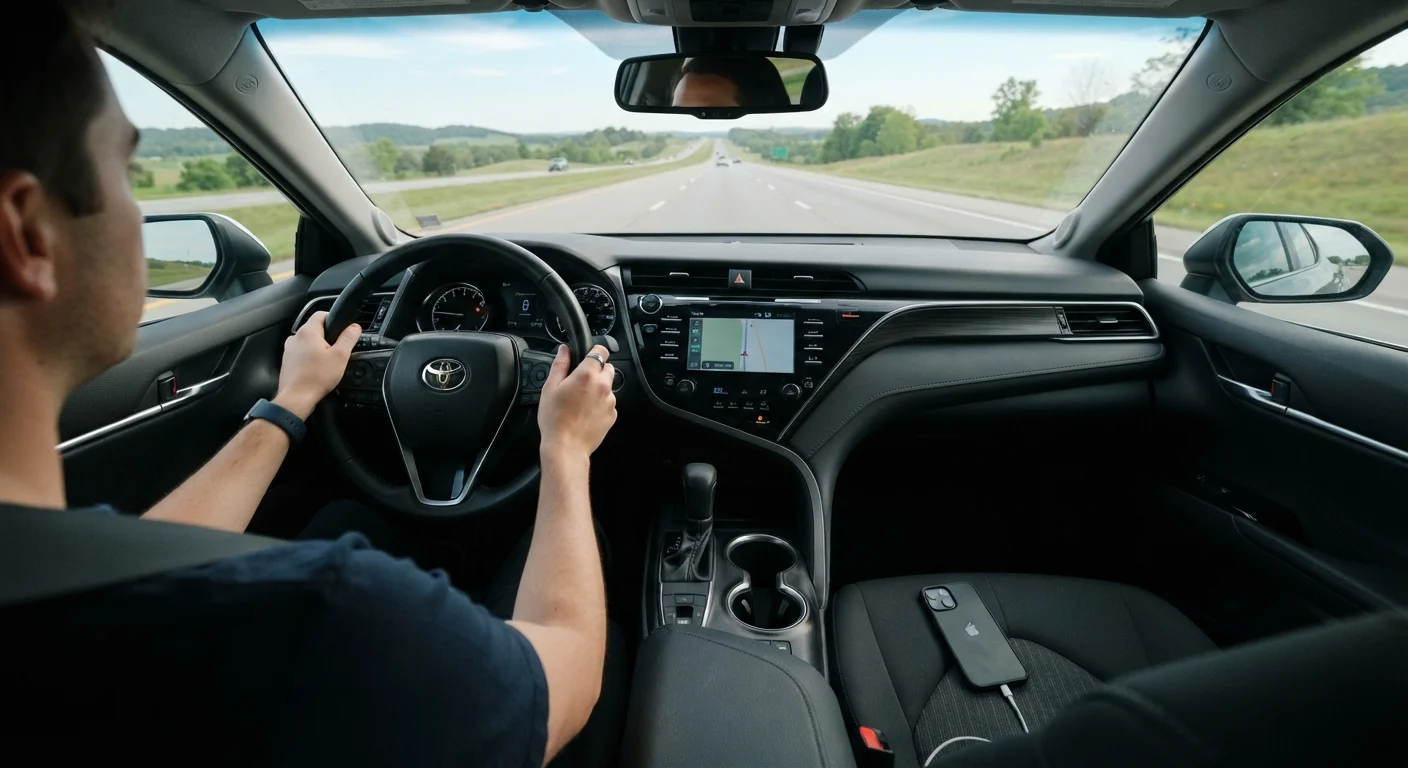
- Handheld phone use: Holding a phone to make calls, browse, or navigate while the vehicle is in motion. Many state laws now include stops at traffic lights within the definition of "driving."
- Texting and messaging: Composing, reading, or sending any written message, including emails and social media posts. This is the most widely banned behavior across all states.
- Video and streaming: Watching video content on any device while operating a vehicle. Most hands-free laws still prohibit this even when the phone is mounted.
- Other manual distractions: Some broader state statutes cover eating, grooming, or any activity that takes the driver's attention from the road - though enforcement of these provisions is more discretionary.
Hands-free use (voice commands, Bluetooth calls, mounted navigation) is generally permitted under most state laws, though rules vary on how devices must be positioned and whether the driver may interact with them manually.
How Enforcement Works
Distracted driving laws are typically classified as either primary or secondary enforcement offenses, and the distinction matters practically.
Primary vs. Secondary Enforcement - Why It Matters
If you're in a primary enforcement state, an officer doesn't need to observe speeding or another violation to pull you over for phone use - the phone use alone is sufficient. This is an important distinction for drivers who assume they can avoid a ticket as long as they're otherwise obeying traffic laws. Check whether your state uses primary or secondary enforcement through your state's DMV website.
Under primary enforcement, an officer can pull you over solely for observing you using a handheld device - no other traffic violation is needed. Under secondary enforcement, the officer must have another reason to stop you first; the phone violation becomes an add-on charge. Primary enforcement is generally considered more effective as a deterrent and is now the standard in most states with handheld bans.
Fines vary widely - from under $50 for a first offense in some states to several hundred dollars, with escalating penalties for repeat violations. Some states also add points to a driver's record, which can affect insurance rates. Crashes caused by distracted driving can trigger additional charges, including reckless driving in serious cases.
Because laws are updated regularly through state legislatures, always verify current rules with your state's Department of Motor Vehicles or official government website before assuming what applies to you.