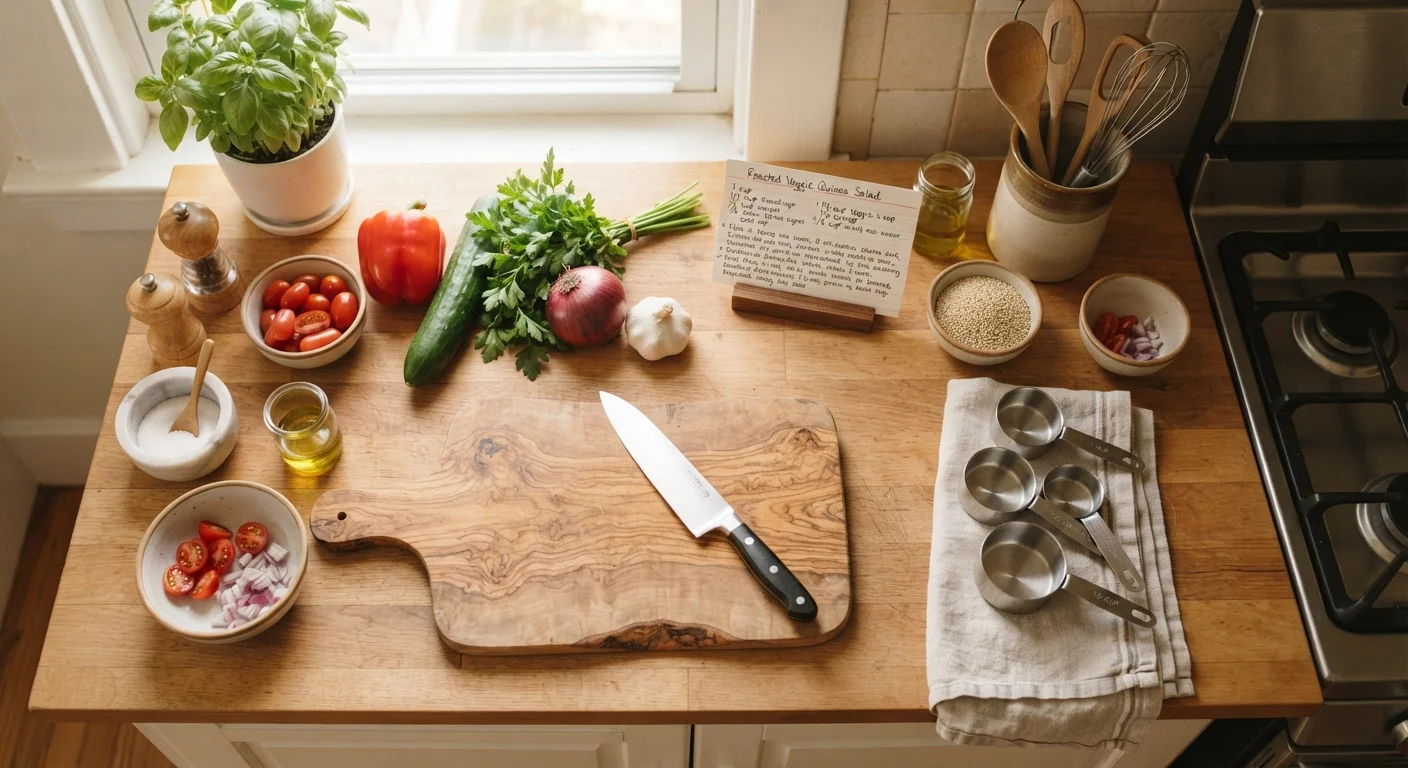

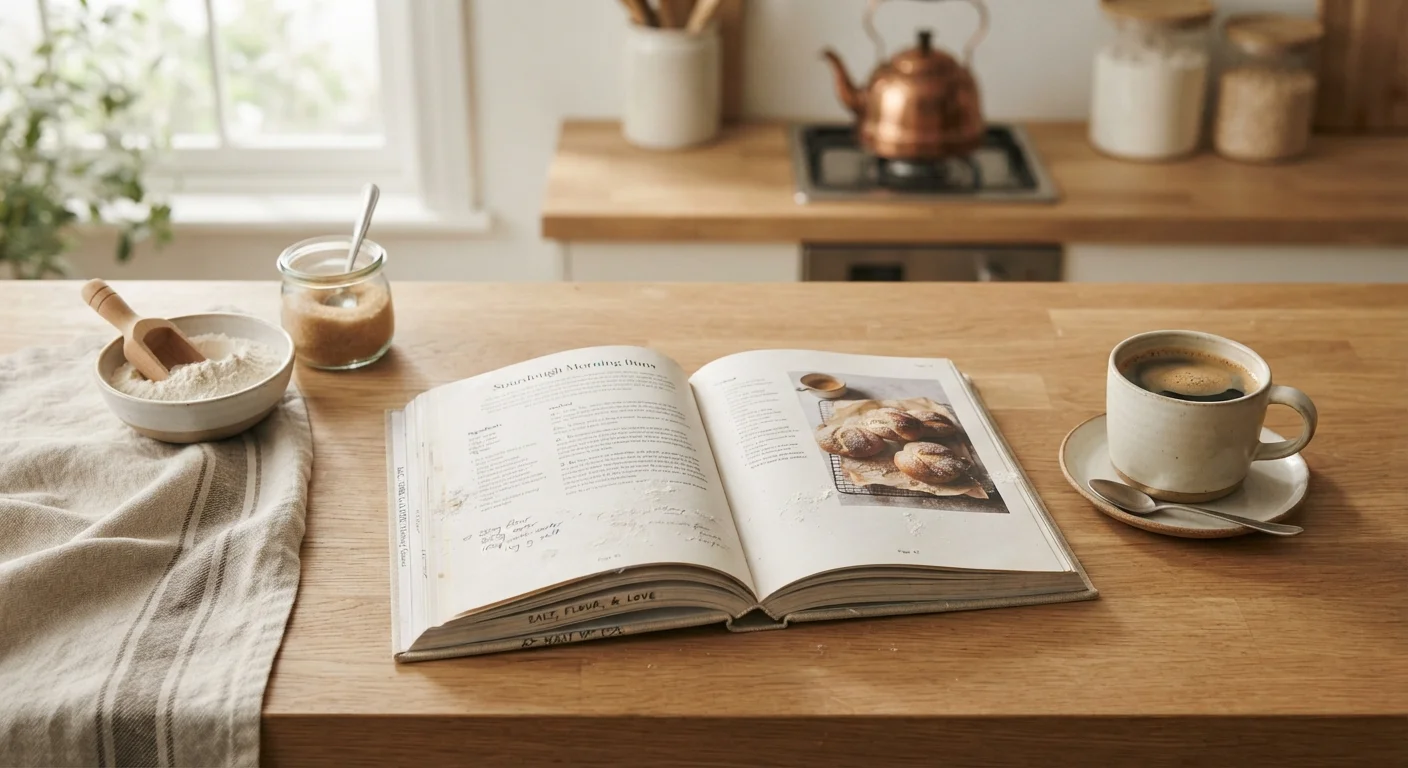
Why a Pre-Cook Read Actually Matters
Most cooking mistakes don't happen at the stove - they happen before the burner is ever turned on. Jumping into a recipe without reading it fully is like starting a road trip without checking the route: you'll eventually hit a turn you weren't prepared for.
A recipe is a compressed sequence of decisions. When you skim it on the fly, you miss dependencies - the butter that needs to be at room temperature, the dough that needs an hour to chill, the sauce that has to simmer while you prep everything else. Those aren't footnotes; they're load-bearing details.
This is also true at the technique level. If you encounter a term like "chiffonade" or "deglaze" mid-cook without knowing what it means, you'll either pause and lose momentum or guess and risk ruining the dish. Our guide to foundational knife skills is a good companion resource for those moments when a cutting technique appears in a recipe and you're not quite sure what it involves.
The good news: a focused 5-10 minute read-through before you start eliminates nearly all of this. It converts the recipe from a set of instructions you react to into a plan you already understand.
Treat the Read-Through as Step Zero
Professional cooks refer to a recipe pre-read as part of their prep, not separate from it. Building this habit as a home cook puts you ahead of most frustrating kitchen experiences before the first ingredient is touched. Even with a recipe you've made before, a quick re-read catches details that memory smooths over.
How to Read a Recipe Before You Start
Follow these steps every time you cook from a new recipe - or any recipe you haven't made recently. The habit builds quickly and pays off immediately.
Read the recipe from start to finish - once, uninterrupted
Don't skim the ingredient list and jump to step one. Read the entire recipe, including any headnotes, as a single continuous document. Your goal is comprehension, not memorization. You're building a mental picture of the whole dish before any individual task begins.
Flag every time-sensitive or passive step
Look for steps that happen without your active involvement: marinating, chilling, resting, proofing, soaking. These often need to begin long before the "active" cooking starts. If the recipe requires a 30-minute rest, that's 30 minutes you need to build into your timeline - not discover at the end.
Check every ingredient for prep requirements
Ingredients aren't always ready-to-use as listed. "2 eggs" might mean room-temperature eggs - which need 20-30 minutes out of the fridge. "1 cup flour, sifted" means sifting happens before measuring. Go through the full ingredient list and confirm you know the state each item needs to be in when it enters the dish.
Identify every piece of equipment required
A recipe that calls for a stand mixer, a Dutch oven, or a candy thermometer will fail - or force improvisation - if you discover that mid-cook. Scan for equipment as you read. If you don't own something listed, decide now whether a substitute is workable or whether you need to choose a different dish.
Spot any technique you don't already know
If a step involves a method you haven't done before - folding egg whites, tempering chocolate, making a beurre blanc - look it up before you begin. Watching a short video or reading a clear description takes two minutes and prevents a costly mistake later. Our guide to cooking techniques worth learning covers many of the methods that appear most frequently in recipes.
Map out your sequence and any parallel tasks
Many recipes have tasks that can or must happen at the same time - a sauce reducing while vegetables are being prepped, or pasta boiling while a pan sauce comes together. Identify these overlaps during your read-through so you can sequence your prep work intelligently rather than scrambling to catch up. See our prep work habits guide for a deeper look at how to organize your workflow before the heat goes on.
Once you've worked through this process a few times, it becomes second nature. The read-through stops feeling like extra work and starts feeling like the actual start of cooking. For a broader checklist of what to do in those final minutes before you cook, see our pre-meal checklist for home kitchens.
What to Do When a Recipe Has Gaps
Not every recipe is written equally well. Some skip assumed steps, use vague timing language like "cook until done," or leave out equipment requirements entirely. When your read-through surfaces these gaps, treat them as flags to resolve before you start - not problems to solve mid-cook.
If a technique is unclear, look it up. If a timing cue seems ambiguous, note it and have a plan for what you'll look for visually or by texture. If an ingredient quantity seems off (a tablespoon of salt, for instance, in a small-batch dish), trust your instincts and verify against a secondary source.
Recipes that require confident improvisation are a different skill set - one covered in depth in our piece on building flavor without a recipe. But for most home cooks most of the time, a well-read recipe is enough to cook calmly and successfully.
Vague Timing Can Ruin a Dish
Phrases like "cook until fragrant" or "bake until golden" are guides, not guarantees. During your read-through, identify any step where the timing language is imprecise and decide in advance what visual or textural cue you'll look for. Relying on the clock alone for these steps is one of the most common causes of overcooked food - a problem explored in our piece on avoiding overcooked vegetables.