
Choosing and Holding Your Knife
You don't need a full knife block to cook well. A single, quality 8-inch chef's knife is the workhorse of nearly every kitchen task - from breaking down vegetables to slicing proteins. What matters far more than the number of knives you own is how you hold the one in your hand.
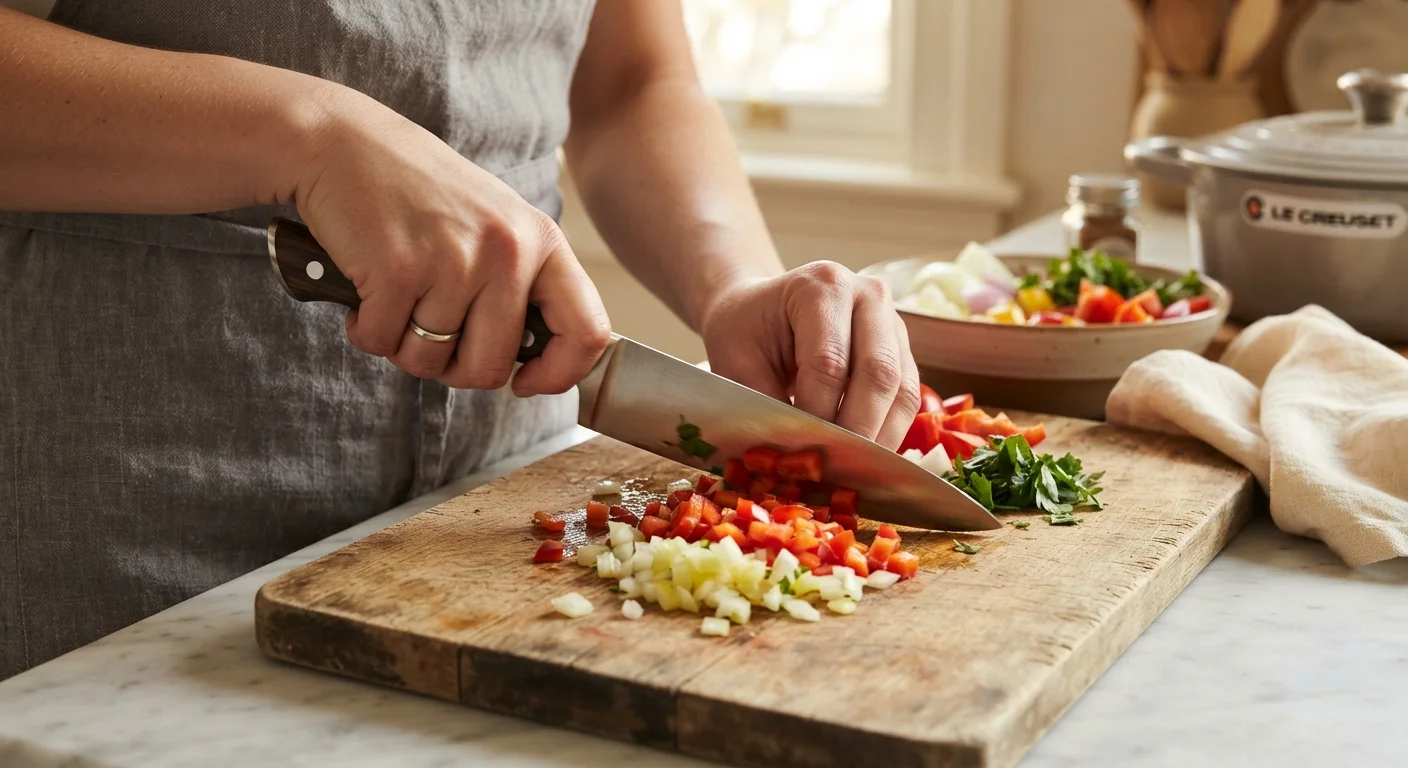
The pinch grip is the foundation. Instead of wrapping your entire hand around the handle, pinch the base of the blade between your thumb and the side of your bent index finger, then curl your remaining fingers around the handle. This positions the blade as a direct extension of your arm, giving you precise control and reducing fatigue over longer prep sessions.
Pinch grip
A knife-holding technique where you pinch the base of the blade between your thumb and bent index finger, with remaining fingers wrapped around the handle for maximum control.
Claw hand
A hand position used when holding food to be cut - fingertips curled under so knuckles face the blade, keeping fingers safely out of the knife's path.
Honing
A quick maintenance step using a honing steel that realigns the blade's edge without removing metal - done before each cooking session.
Mise en place
A French culinary term meaning 'everything in its place' - referring to the practice of prepping and organizing all ingredients and tools before cooking begins.
Chiffonade
A cutting technique where stacked leafy herbs or greens are rolled into a cylinder and sliced crosswise into thin, delicate ribbons.
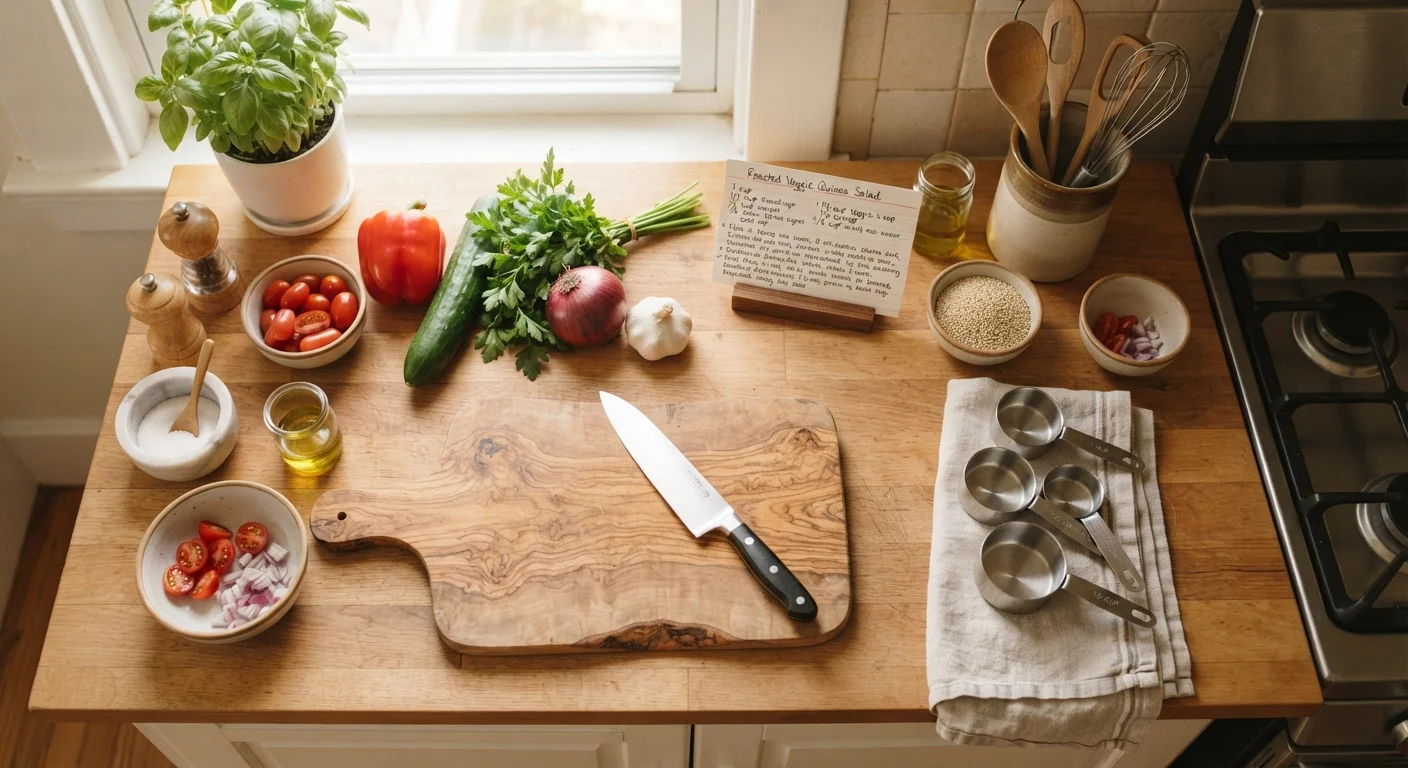
Before you make a single cut, make sure your cutting board isn't sliding. Place a damp towel or a grippy mat underneath it. A board that moves is one of the most overlooked safety hazards in the home kitchen. If you're building your prep habits from the ground up, our pre-meal setup checklist walks through everything to arrange before you start.
The Essential Cuts Every Cook Should Practice
Most recipes call for a handful of specific cuts, and learning each one with intention pays off in almost every meal you make. Here are the four that matter most:
- Slice: A single, smooth stroke through the ingredient. Used for onions, carrots, proteins, and bread. Draw the knife backward through the food rather than pressing straight down.
- Dice: Produces uniform cubes. Start by squaring off your ingredient (like an onion or potato), then cut planks, then strips, then cubes. Small dice (¼ inch), medium dice (½ inch), and large dice (¾ inch) are the common sizes recipes reference.
- Mince: Very fine, irregular chopping - used most often for garlic, ginger, and herbs. Rock the blade tip on the board while moving the heel in an arc over the ingredient, gathering and re-chopping as you go.
- Chiffonade: For leafy herbs or greens like basil and mint. Stack the leaves, roll them into a tight cylinder, and slice across the roll to produce thin ribbons.
Consistent sizing is the point - not speed. Even cuts mean ingredients cook at the same rate. This is exactly the kind of foundational knowledge referenced in techniques worth learning by priority.
Practice on a cheap, forgiving ingredient
Onions are ideal for building knife technique - they're inexpensive, consistent in size, and require slicing, dicing, and mincing at various points in a recipe. Spending ten minutes breaking down several onions with deliberate form will build muscle memory faster than occasional casual chopping.
Safe Habits That Prevent Most Kitchen Injuries
Knife safety is less about being cautious and more about building automatic habits so you never have to think consciously about protecting your fingers.
The claw hand is the most important of these. Curl your fingertips under so your knuckles face the blade. The knife's side then rests against your knuckles as a guide - your fingertips are safely tucked away. Practice this on every cut until it becomes reflexive.
A few other habits worth building:
- Never catch a falling knife. Step back and let it drop.
- When passing a knife to another person, set it on the counter and let them pick it up.
- Keep your blade dry when not actively cutting - wet hands and wet handles reduce grip.
- Cut away from your body when working with rounded produce like potatoes or beets. Create a flat side first by slicing a piece off, then rest the flat side on the board for stability.
Avoid cutting toward your palm
One of the most common beginner injuries happens when a cook cuts a round vegetable that rolls, forcing the blade toward the hand holding the food. Always create a flat side on round produce first. If an ingredient is unstable on the board, it isn't ready to be cut freehand.
Understanding what you're about to cut before you pick up the knife is just as important. Reading the full recipe in advance helps you anticipate how ingredients need to be prepped before cooking starts.
Keeping Your Knife Sharp and Ready
A dull knife is actually more dangerous than a sharp one. It requires more force, is more likely to slip, and produces uneven cuts. Keeping your knife in good condition is part of the skill itself.
Honing should happen before every session. A honing steel (or ceramic rod) realigns the blade's edge without removing material. Hold the steel vertically, tip on a cutting board, and draw the blade down at roughly a 15-to-20-degree angle from heel to tip, alternating sides.
Sharpening removes metal to form a new edge and is typically needed every three to six months for home cooks who cook several times per week. A whetstone gives the most control, while pull-through sharpeners are quicker but less precise. If you're not comfortable sharpening at home, most kitchen supply shops and knife shops offer the service for a small fee.
Store knives on a magnetic strip, in a knife block, or with blade guards - never loose in a drawer where the edge can nick other tools and where reaching in blindly creates risk. With the right habits and a well-maintained blade, knife skills become one of the most satisfying and rewarding foundations in the kitchen. Pair these skills with strong prep work habits and your time at the cutting board will feel noticeably calmer and more efficient.