
What ABV Actually Measures
Alcohol by volume (ABV) is a straightforward percentage: it tells you how much of a drink's total liquid volume is pure ethanol. If a wine bottle is labeled 13% ABV, then 13 mL out of every 100 mL is alcohol. That's it - no conversion needed.
ABV is the global standard for labeling alcoholic beverages because it's consistent, measurable, and easy to compare across drink types. Whether you're looking at a craft beer, a bottle of wine, or a spirit, ABV gives you an apples-to-apples comparison of alcohol content. To understand why different beverages land at different ABV levels, it helps to know how they're made - fermentation and distillation produce very different alcohol concentrations.
5%
Typical ABV of regular US beer
Most standard American lagers and ales fall between 4-6% ABV, according to TTB (Alcohol and Tobacco Tax and Trade Bureau) labeling data.
40%
Standard ABV for most distilled spirits
Most vodkas, whiskeys, gins, and rums sold in the US are bottled at 40% ABV (80 proof), the minimum required for many spirit categories.
14g
Pure alcohol in one US standard drink
As defined by the US Dietary Guidelines for Americans, one standard drink always contains approximately 14 grams of pure ethanol.
Proof: A Historical Holdover That's Still in Use
In the United States, proof is simply ABV multiplied by two. A bourbon labeled 80 proof is 40% ABV. A high-strength rum at 151 proof is 75.5% ABV. The calculation never changes.
The term originated in 18th-century Britain, where distillers would test spirits by soaking gunpowder and trying to ignite it. If it burned, the spirit was "above proof." That method is long gone, but the term stuck - particularly in American spirits marketing, where proof appears prominently on labels.
The UK once used its own proof scale (where 100 proof equaled approximately 57.1% ABV), but Britain transitioned to ABV-only labeling decades ago. When you see proof on a label today in the US, the conversion is always 2:1.
Quick Mental Math for Any Drink
To estimate standard drinks in any pour, use this shortcut: multiply the fluid ounces by the ABV percentage, then divide by 0.6. For example, a 5 oz glass of 12% wine: 5 × 0.12 ÷ 0.6 = 1 standard drink. This works for any beverage type.
Standard Drinks vs. Alcohol Units: Two Systems, One Goal
While ABV tells you the strength of a drink, standard drinks and alcohol units help you measure total alcohol consumed across a session - regardless of what's in your glass.
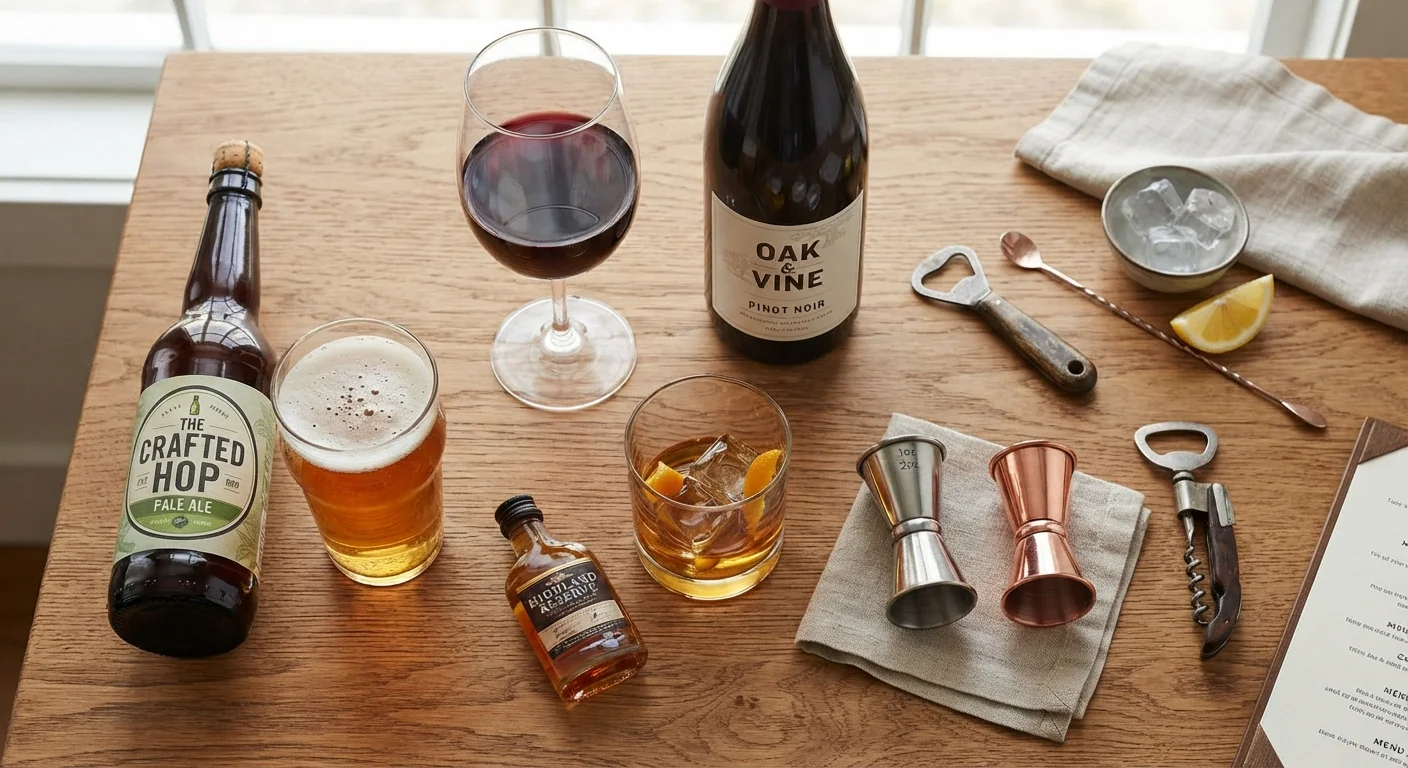
In the United States, one standard drink is defined as containing approximately 14 grams of pure alcohol. The serving sizes that deliver this amount vary by drink type:
- Regular beer (5% ABV): 12 fluid ounces
- Table wine (12% ABV): 5 fluid ounces
- Distilled spirits (40% ABV): 1.5 fluid ounces
The UK uses a different system. One alcohol unit contains 10 mL (8 grams) of pure alcohol - meaningfully less than a US standard drink. UK health guidelines are published in units; US guidelines use standard drinks. They are not interchangeable, so context matters when reading alcohol guidance from different sources.
How to Use These Numbers in Practice
Understanding ABV, proof, and standard drinks lets you make more informed choices when drinking or serving beverages. A few practical points worth knowing:
Calculate alcohol in any pour: Multiply the volume of your drink (in mL) by the ABV percentage, then divide by 100. That gives you the mL of pure alcohol. For grams, multiply mL of alcohol by 0.789 (the density of ethanol).
Don't equate volume with alcohol: A 16 oz glass of 8% ABV craft beer contains significantly more alcohol than a 12 oz pour of a 4.2% light beer - even though the latter is the "standard" serving. Strong craft beers, hard seltzers with varying ABVs, and oversized wine pours can all add up faster than expected.
Read labels on low- and no-alcohol products carefully: Beverages labeled "low alcohol" in the US typically contain 0.5-1.2% ABV. "Non-alcoholic" can still contain trace amounts up to 0.5% ABV by federal standard. These amounts are negligible for most adults but worth noting for those with specific health considerations.
This article is for general informational purposes only. For guidance on alcohol consumption as it relates to your health, consult a qualified healthcare professional.