
What Is Fermentation?
Fermentation is one of the oldest food processes known to humans. At its core, it's a biological reaction: yeast consumes sugars and, in the absence of oxygen, produces ethanol (alcohol) and carbon dioxide as byproducts.
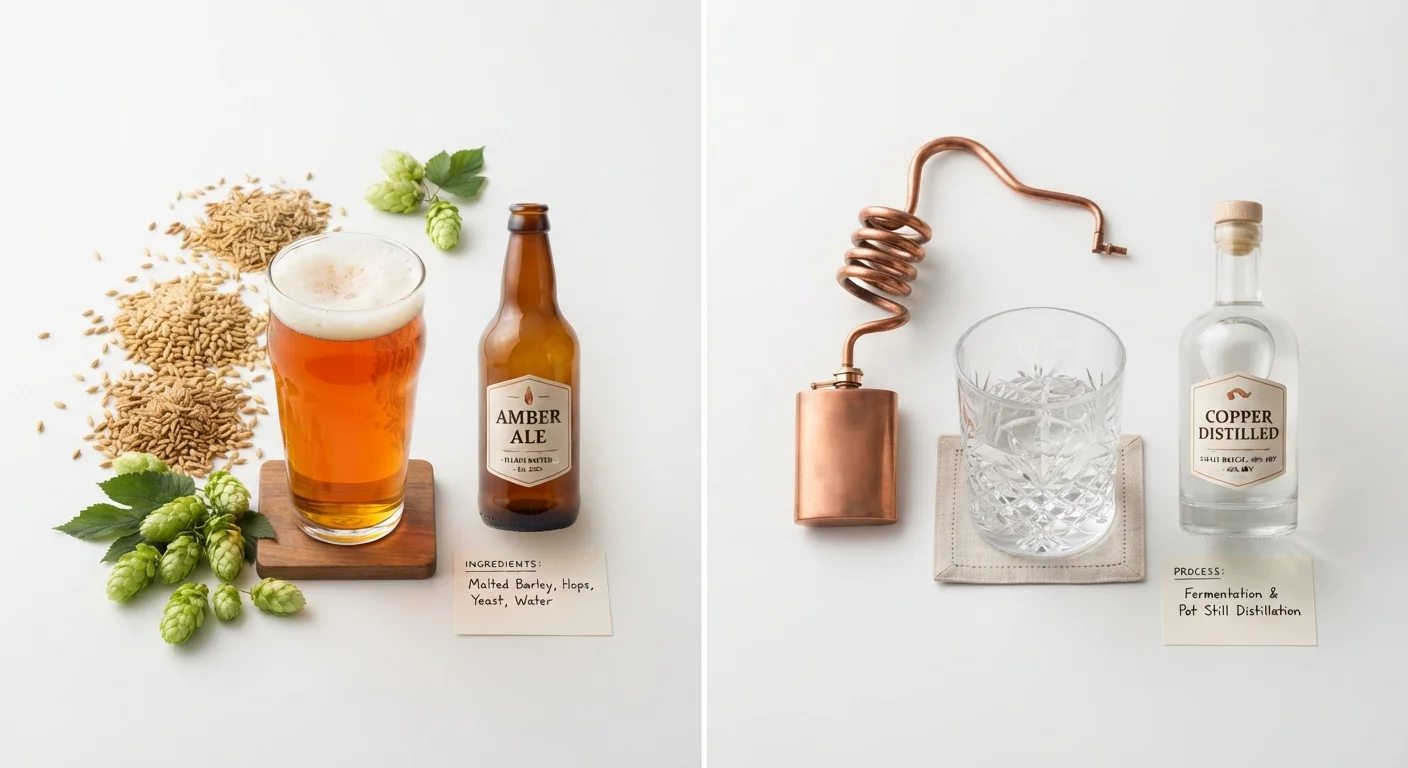
The raw ingredients vary widely. Brewers use malted barley and other grains dissolved in water to create a sugar-rich liquid called wort. Winemakers press grapes or other fruits whose natural sugars are ready for yeast to work on. Cider makers start with apple juice. In each case, the yeast does the heavy lifting.
Temperature, yeast strain, and fermentation time all shape the final flavor. A warm, fast fermentation tends to produce fruity, estery aromas, while a cool, slow fermentation often yields a cleaner, crisper profile. This is why a Belgian ale tastes dramatically different from a German lager, even though both are fermented grain beverages.
Because yeast can only tolerate alcohol up to roughly 12-15% before it becomes inhibited or dies, fermented beverages typically land in that range. Beer is usually 4-8% alcohol by volume (ABV), while wine generally falls between 10-15% ABV. For a fuller breakdown of ABV and what it means in practice, see our plain-language guide to ABV and proof.
What Is Distillation?
Distillation takes a fermented liquid as its starting point and concentrates the alcohol within it. The process relies on a key physical fact: ethanol boils at approximately 173°F (78.4°C), while water boils at 212°F (100°C). By heating a fermented liquid to a temperature between those two points, the alcohol-rich vapor rises first.
That vapor is captured and routed through a cooled tube or coil - called a condenser - where it returns to liquid form. The result is a spirit with a much higher alcohol concentration than the original fermented base.
How Distillers Shape Flavor
During distillation, not all of the output is used. Skilled distillers separate the run into three fractions - heads, hearts, and tails - keeping only the middle "heart" cut for the final spirit. This selection process has a major influence on smoothness and flavor. The specific cut points are often closely guarded craft decisions.
Distillers control flavor through a process called making cuts - separating the initial output (the "heads"), the desirable middle portion (the "heart"), and the final runnings (the "tails"). Only the heart is typically kept for the final product.
The still itself matters too. Pot stills, shaped like a kettle with a long neck, tend to preserve more flavor compounds from the base liquid, which is why pot-stilled Irish whiskeys or single malt Scotches often taste richer and more complex. Column stills (also called continuous stills) produce a purer, more neutral spirit - the foundation for most vodkas and mass-produced gins.
After distillation, many spirits are aged in barrels, which adds color, tannins, and additional layers of flavor through interaction with the wood over months or years.
How the Two Processes Compare
Fermentation and distillation differ in what they produce, how they work, and what the drinker experiences.
| Fermented Drinks | Distilled Spirits | |
|---|---|---|
| Core process | Yeast converts sugar to alcohol | Fermented liquid heated and condensed |
| Typical ABV range | 4-15% | 35-50%+ |
| Common examples | Beer, wine, cider, mead | Whiskey, vodka, rum, gin, tequila |
| Primary flavor sources | Ingredients and yeast activity | Base liquid, distillation, aging, botanicals |
| Production complexity | One main stage | Fermentation plus additional distillation step |
| Typical serving size | 12 oz (beer) / 5 oz (wine) | 1.5 oz (standard spirit pour) |
One important nuance: a distilled spirit always starts as a fermented liquid. Whiskey, for example, begins as a grain-based fermented wash that resembles a low-alcohol beer before it ever reaches the still. Rum starts with fermented sugarcane juice or molasses. Brandy begins with fermented wine. Distillation is an additional step - not a separate path.
This connection is why the raw ingredient still matters in distilled spirits. The grain used in a bourbon influences its flavor even after distillation and aging. The grape variety behind a Cognac leaves its fingerprint in the final spirit.
What This Means for Your Glass
Understanding fermentation and distillation helps you decode what you're drinking in a few practical ways.
- Alcohol content: If a drink is fermented only (beer, wine, hard cider), expect lower ABV. If it has been distilled (whiskey, rum, vodka, gin, tequila), expect substantially higher ABV - typically 35-50% or more.
- Calorie density: Because distilled spirits concentrate alcohol, they tend to be more calorie-dense per ounce than beer or wine, though serving sizes are typically much smaller.
- Flavor sources: In fermented drinks, most flavor comes from the raw ingredient and yeast activity. In distilled spirits, the distillation process, barrel aging, and any added botanicals (as in gin) also shape the taste significantly.
- Mixability: Distilled spirits form the base of most cocktails precisely because their higher alcohol content can carry dilution from ice, juices, or mixers without disappearing. Fermented beverages are rarely used as cocktail bases for the same reason.
If you're curious about what else is in your glass beyond the alcohol itself - carbonation, sweeteners, and additives - our breakdown of sparkling water, club soda, tonic, and seltzer is a useful companion read for understanding mixers.
This article is for general informational purposes only. Alcohol consumption carries health risks; please drink responsibly and consult a healthcare professional with personal health questions.