
Why Storage Conditions Actually Matter
Wine is a living product. The compounds that give it flavor, aroma, and structure continue to evolve after bottling - and the environment around the bottle influences whether that evolution goes in a positive or negative direction. Poor storage doesn't just mean a wine tastes slightly off; it can mean a bottle you paid good money for is genuinely undrinkable before you open it.
The four main factors are temperature, light exposure, position, and humidity. Getting these reasonably right - even without a purpose-built cellar - goes a long way toward keeping wine in good shape between purchase and glass.
55°F
Classic recommended wine storage temperature
Wine educators and storage specialists commonly cite 55°F (13°C) as the traditional cellar benchmark, though a range of 50-65°F is broadly acceptable for most wines.
50-70%
Ideal relative humidity range for wine storage
Humidity in this range helps keep natural corks from drying out while avoiding the mold risk that comes with excessively damp conditions.
Temperature: Stability Is the Real Goal
Wine storage professionals often cite 55°F (about 13°C) as the ideal cellar temperature, but that precise figure matters less for most home drinkers than consistency. Frequent temperature swings - a bottle cycling from cool to warm and back - cause the liquid inside to expand and contract, which can push wine past the cork and introduce oxidation.
In practice, a space that stays between roughly 50°F and 65°F (10-18°C) without dramatic daily swings will serve you well. A kitchen counter near the stove, a spot above the refrigerator, or a shelf beside a sunny window are all poor choices. Interior closets, basements, or even a dedicated corner of a room away from heat sources tend to be more stable.
Don't Rely on Your Kitchen for Storage
Kitchens are among the least stable environments for wine - they experience heat from cooking, light from windows and fixtures, and frequent temperature shifts. Even a dedicated spot in an adjacent hallway or lower-level closet is a significant upgrade. If your only option is the kitchen, the coolest, darkest cabinet away from the oven or refrigerator is your best bet.
Light, Position, and Humidity
Light: UV rays from sunlight - and to a lesser extent fluorescent lighting - can break down phenolic compounds in wine and produce what sommeliers call "light strike," a flat, cardboard-like flavor. Darker glass bottles offer some protection, but the safest approach is simply keeping bottles away from direct light. A closet, a box, or a rack in a low-light area all work well.
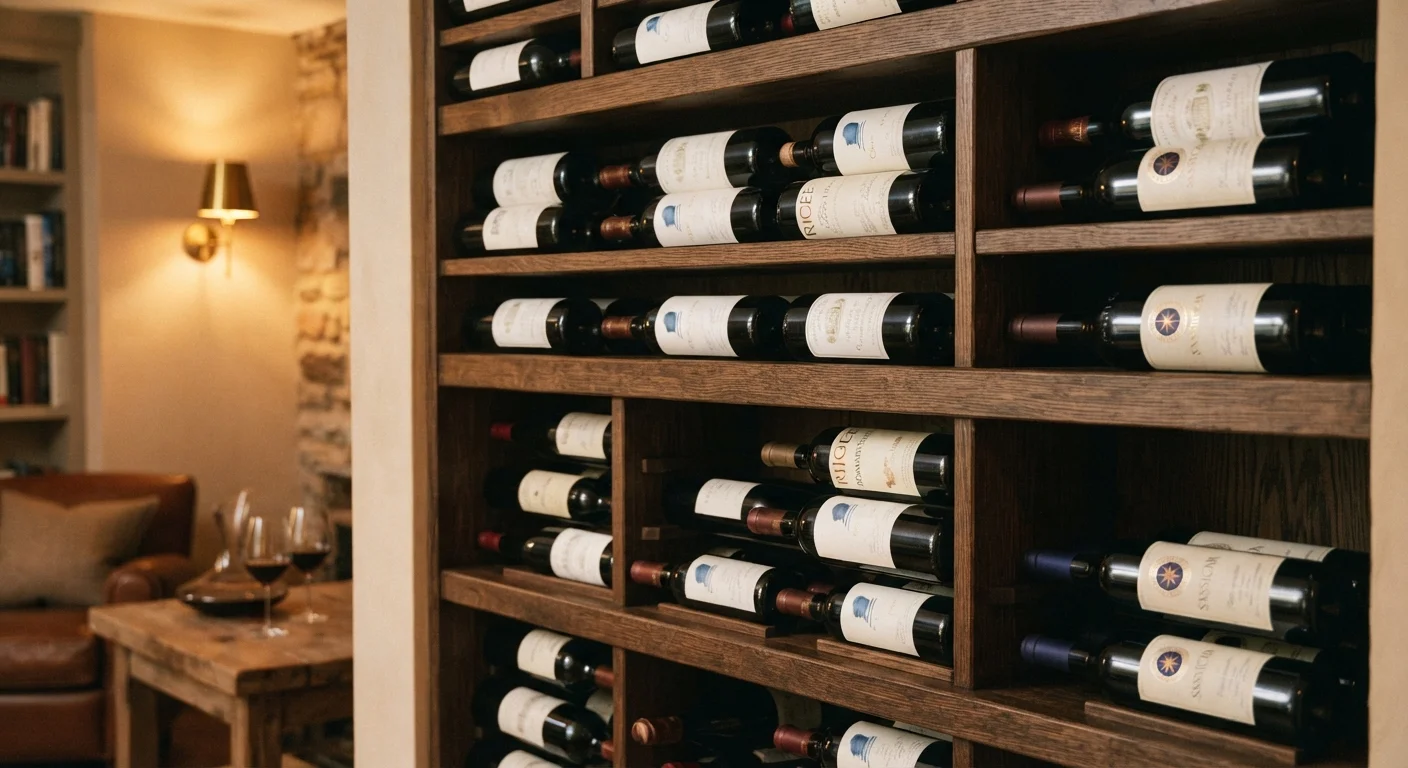
Position: Bottles sealed with natural cork should be stored on their side so the wine stays in contact with the cork, keeping it moist and preventing air from seeping in. Bottles with screw caps or synthetic corks can be stored upright without risk - the seal doesn't depend on moisture.
Humidity: Aim for relative humidity between 50% and 70%. Very dry conditions can dry out natural corks even in a horizontally stored bottle, while excessively damp environments can cause mold on labels or damage cardboard packaging. A small hygrometer (a humidity measuring device, widely available at hardware stores) can help you monitor conditions in your chosen storage spot.
Best Practices for Home Wine Storage
Once you understand the principles, a handful of consistent habits will protect your bottles effectively.
Choose the coolest, most temperature-stable spot in your home for wine storage.
Heat accelerates the chemical reactions in wine that lead to premature aging and off-flavors. Stability prevents the expansion and contraction that compromises the seal.
Store corked bottles horizontally, screw-cap bottles in any orientation.
Horizontal storage keeps natural corks hydrated, preventing them from shrinking and allowing air intrusion. Screw caps and synthetic closures don't share this vulnerability.
Keep wine away from all direct light sources, especially windows and under-cabinet lighting.
UV radiation degrades wine compounds and can cause light strike, permanently altering flavor. Even indirect consistent exposure compounds over weeks and months.
Avoid storing wine near appliances or vents that generate heat or vibration.
Vibration from motors and fans can disturb sediment and is thought to interfere with slow chemical processes in aging wine. Heat from appliances creates localized temperature spikes.
Drink most wines within one to two years of purchase rather than assuming storage improves them.
The vast majority of wines sold in the US are made for near-term consumption. Extended storage without proper conditions is more likely to diminish quality than enhance it.
Quick Actions You Can Take Today
You don't need to overhaul your home to store wine better. A few immediate changes can meaningfully improve how your bottles keep.
If you're also curious about what's inside those bottles, our guide on what natural, organic, and biodynamic wine labels actually mean breaks down the certifications clearly. And if you've ever wondered whether a pricier bottle is worth cellaring, the research on price and wine perception offers some grounding perspective.