

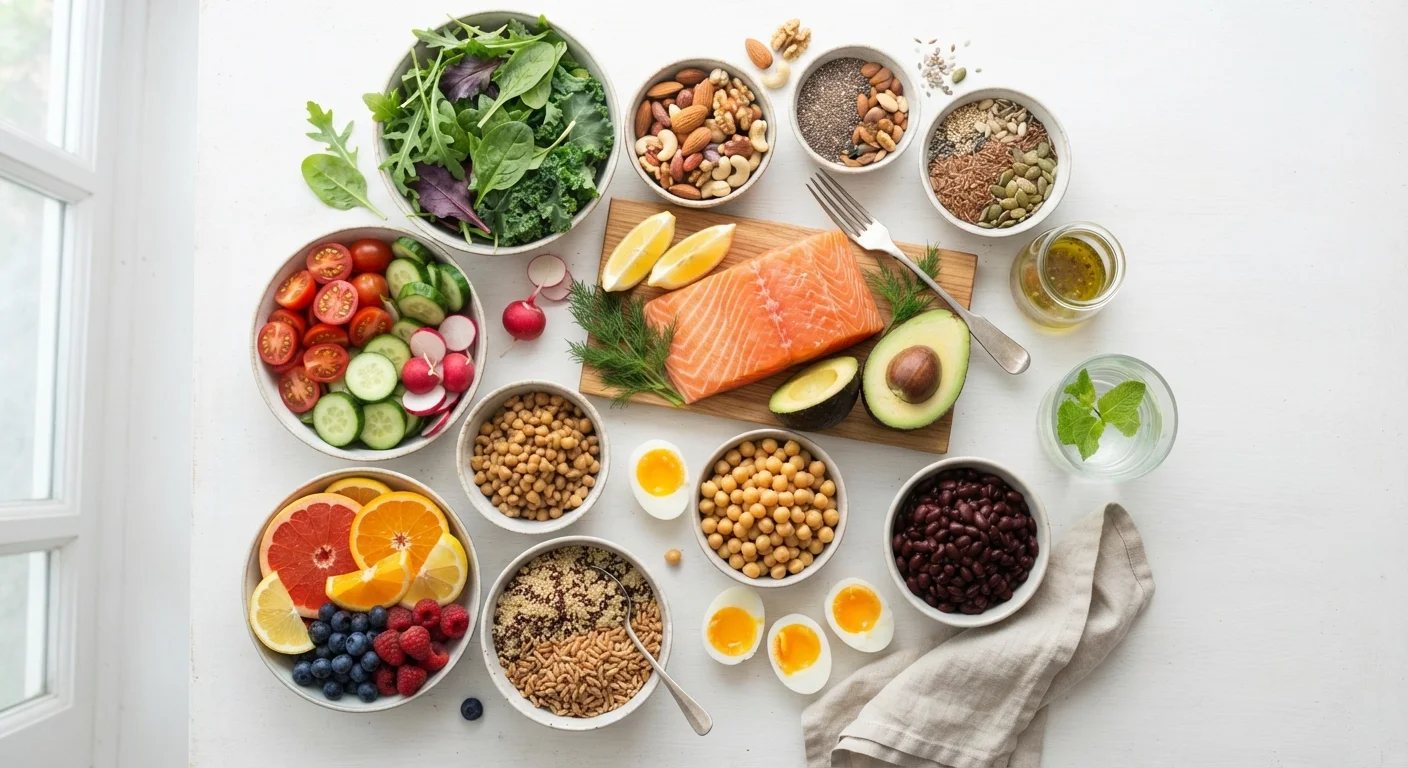
What Are Micronutrients - and Why Do They Matter?
Unlike macronutrients like carbs, protein, and fat, micronutrients - vitamins and minerals - are needed in small amounts, but their impact on health is anything but small. They regulate virtually every process in the body: energy production, immune defense, bone maintenance, nerve signaling, and more.
Vitamins are organic compounds; minerals are inorganic elements absorbed from soil and water through food. Both categories are considered essential, meaning the body cannot synthesize adequate amounts on its own and must obtain them through diet. Falling short - even modestly - can have measurable health consequences over time.
| Total essential vitamins | 13 (4 fat-soluble, 9 water-soluble) (National Institutes of Health, Office of Dietary Supplements) |
| Essential dietary minerals | At least 16 recognized as essential (Institute of Medicine, Dietary Reference Intakes) |
| Most common global deficiency | Iron deficiency (World Health Organization) |
| Vitamin most linked to sun exposure | Vitamin D (National Institutes of Health, Office of Dietary Supplements) |
| Nutrient critical in early pregnancy | Folate (Vitamin B9) (CDC, Folic Acid Recommendations) |
| Vitamin found only in animal foods | Vitamin B12 (naturally occurring form) (National Institutes of Health, Office of Dietary Supplements) |
Fat-Soluble Vitamins: A, D, E, and K
Fat-soluble vitamins are stored in fatty tissue and the liver, so they don't need to be consumed daily - but they can accumulate to excess if over-supplemented.
- Vitamin A - Supports vision (especially night vision), immune function, and skin integrity. Found in liver, dairy, eggs, and as beta-carotene in orange and leafy vegetables. Deficiency is a leading cause of preventable blindness globally.
- Vitamin D - Promotes calcium absorption for bone health and plays a role in immune regulation. Synthesized in the skin upon sun exposure; dietary sources include fatty fish and fortified foods. Deficiency is common, particularly in northern latitudes and among older adults.
- Vitamin E - Acts as an antioxidant, protecting cell membranes. Found in nuts, seeds, and vegetable oils. Isolated deficiency is rare in healthy adults.
- Vitamin K - Essential for blood clotting and bone metabolism. K1 is found in leafy greens; K2 in fermented foods and some animal products.
Micronutrient
A vitamin or mineral required by the body in relatively small quantities to support normal physiological function. Unlike macronutrients, micronutrients provide no calories but are essential for health.
Fat-soluble vitamin
A vitamin that dissolves in fat and is stored in body tissue. Vitamins A, D, E, and K are fat-soluble, meaning they can accumulate to excess if taken in very high amounts.
Water-soluble vitamin
A vitamin that dissolves in water and is not stored in significant quantities. Most B vitamins and vitamin C are water-soluble; excess is generally excreted in urine.
Trace mineral
A mineral the body requires in very small amounts - typically less than 100 mg per day. Iron, zinc, selenium, and iodine are examples. Despite the small quantities needed, deficiencies can be clinically significant.
Deficiency
A condition in which the body does not have enough of a specific nutrient to support normal function. Deficiencies can develop gradually and may cause a range of symptoms depending on which nutrient is lacking.
Bioavailability
The proportion of a nutrient that the body actually absorbs and uses from food or a supplement. Factors such as food preparation, gut health, and the presence of other nutrients can all affect bioavailability.
Water-Soluble Vitamins: The B Complex and Vitamin C
Water-soluble vitamins are not stored in large quantities - excess is typically excreted - so regular dietary intake is important.
- Vitamin C - Supports collagen synthesis, immune function, and iron absorption. Found in citrus, bell peppers, and broccoli. Severe deficiency leads to scurvy, now rare in developed countries.
- Folate (B9) - Critical for DNA synthesis and cell division, especially during early pregnancy. Found in leafy greens, legumes, and fortified grains. Inadequate intake during pregnancy is linked to neural tube defects.
- Vitamin B12 - Necessary for nerve function and red blood cell formation. Found almost exclusively in animal products; vegans and older adults are at higher risk of deficiency. Deficiency can cause neurological damage if left unaddressed.
- Other B vitamins (B1/thiamine, B2/riboflavin, B3/niacin, B5, B6, B7/biotin) play roles in energy metabolism, enzyme function, and neurotransmitter production. Most are widely available across a varied diet.
For guidance on reading vitamin content on food packaging, see how nutrition labels display daily values.
Essential Minerals: From Calcium to Zinc
Minerals fall into two groups: macrominerals (needed in larger amounts, such as calcium and magnesium) and trace minerals (needed in smaller amounts, such as iron and zinc).
~2 billion
People affected by iron deficiency worldwide
According to the World Health Organization, iron deficiency is the most prevalent nutritional deficiency globally.
40%
U.S. adults with insufficient vitamin D
NHANES data suggest a substantial portion of American adults have vitamin D levels below recommended thresholds, particularly in winter months.
95%
Americans falling short on potassium
The 2020-2025 Dietary Guidelines for Americans identified potassium as a nutrient of public health concern due to widespread under-consumption.
- Calcium - The most abundant mineral in the body, critical for bone and tooth structure, muscle contraction, and nerve transmission. Found in dairy, fortified plant milks, and leafy greens like kale.
- Iron - Carries oxygen in the blood via hemoglobin. Heme iron (from meat and fish) is more readily absorbed than non-heme iron (from plants). Deficiency is the most common nutritional deficiency worldwide, particularly among women of reproductive age.
- Magnesium - Involved in over 300 enzymatic reactions, including energy production and muscle relaxation. Found in nuts, seeds, legumes, and whole grains.
- Zinc - Supports immune function, wound healing, and taste perception. Found in shellfish (especially oysters), meat, seeds, and legumes.
- Potassium - Regulates fluid balance and blood pressure. Found in bananas, potatoes, beans, and leafy greens.
- Selenium and iodine - Selenium acts as an antioxidant and supports thyroid function; iodine is required for thyroid hormone synthesis. Iodized salt and seafood are key sources.
Nutrient needs also shift with age - something covered in depth in our guide on how nutritional requirements change across adulthood.
Getting Enough: Food First, Supplements as a Safety Net
Nutrition researchers broadly agree that obtaining micronutrients from whole foods is preferable to supplementation for most healthy adults. Whole foods deliver nutrients alongside fiber, phytonutrients, and other compounds that influence how those nutrients are absorbed and used. This is discussed in our overview of the role macronutrients play alongside micronutrients.
Supplements may be appropriate in specific circumstances - pregnancy (folate and iron), veganism (B12), limited sun exposure (vitamin D), or diagnosed deficiencies - but supplementing without a clinical reason can occasionally cause harm, particularly with fat-soluble vitamins that accumulate in tissue.
When to Talk to a Healthcare Provider
Blood tests can detect deficiencies in key nutrients such as iron, vitamin D, B12, and folate before symptoms become severe. If you follow a restrictive diet, are pregnant, or have a chronic health condition, ask your doctor or registered dietitian whether micronutrient testing or supplementation is appropriate for your situation. Do not self-diagnose or self-prescribe supplements based on symptoms alone.
This article is for general informational purposes only and does not constitute medical or dietary advice. If you are concerned about a nutritional deficiency or considering supplementation, consult a registered dietitian or qualified healthcare provider.