

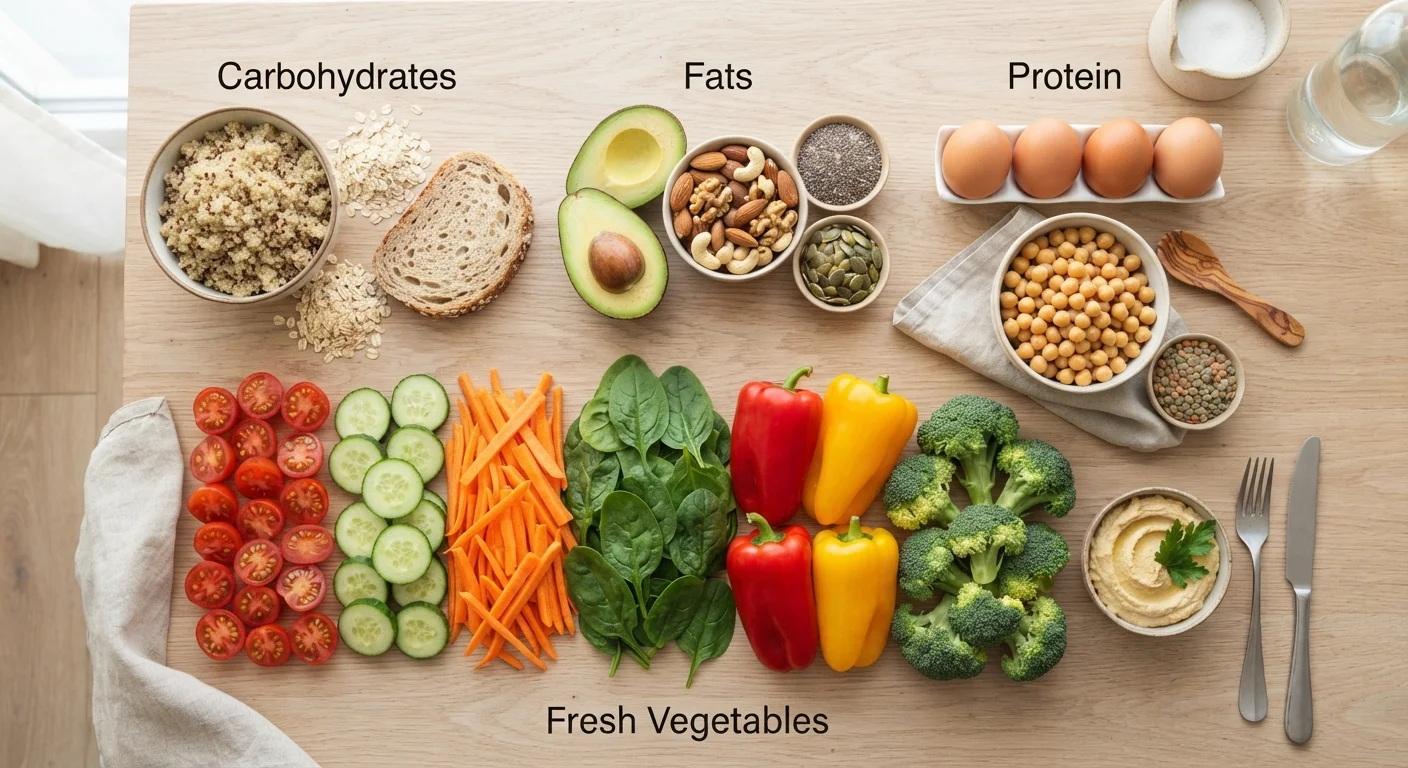
What Is a Macronutrient?
The word macronutrient simply means a nutrient your body needs in relatively large amounts to function day to day. There are three classic macronutrients - carbohydrates, protein, and fat - and fiber is often discussed alongside them because it is technically a type of carbohydrate with its own distinct set of effects. Together, these four make up the bulk of what you eat and provide the energy your body runs on.
If you want to go deeper on how each macro works inside the body, see What Macronutrients Actually Do in Your Body. This guide focuses on plain-language definitions, food sources, and practical takeaways you can use at the grocery store or the dinner table.
| Calories per gram - Carbs | 4 kcal/g (USDA Dietary Guidelines) |
| Calories per gram - Protein | 4 kcal/g (USDA Dietary Guidelines) |
| Calories per gram - Fat | 9 kcal/g (USDA Dietary Guidelines) |
| Recommended daily fiber (adults) | 25-38 g/day (Dietary Guidelines for Americans) |
| Essential amino acids | 9 (National Institutes of Health) |
| Average US fiber intake | ~15 g/day (Dietary Guidelines for Americans, 2020-2025) |
Carbohydrates: Your Body's Preferred Fuel
Carbohydrates are sugars and starches that your body breaks down into glucose - the primary energy source for your brain, muscles, and organs. They provide 4 calories per gram. Simple carbs (like table sugar and white bread) digest quickly, producing a fast rise in blood sugar. Complex carbs (like oats, sweet potatoes, and whole grains) digest more slowly and provide steadier energy.
Not all carbs are equal. Whole-food carbohydrate sources tend to come paired with fiber, vitamins, and minerals. Highly processed carbs are often stripped of those benefits. A useful rule of thumb: the closer to its natural form a carb-containing food is, the more nutritionally complete it tends to be.
Common sources: bread, rice, pasta, potatoes, fruit, legumes, dairy.
Protein: Builder and Maintainer
Protein is made up of amino acids - the building blocks your body uses to grow and repair muscle, produce enzymes and hormones, and support immune function. Like carbs, protein delivers 4 calories per gram. Of the 20 amino acids the body uses, nine are essential, meaning your body cannot make them; they must come from food.
Animal proteins (meat, poultry, fish, eggs, dairy) generally contain all nine essential amino acids and are called complete proteins. Most plant proteins are incomplete, but eating a variety of plant foods throughout the day - beans and rice, for example - provides all the essential amino acids your body needs.
Common sources: chicken, fish, eggs, Greek yogurt, tofu, lentils, beans, nuts, seeds.
Macronutrient
A nutrient required by the body in large quantities to provide energy and support essential functions. The three main macronutrients are carbohydrates, protein, and fat.
Essential amino acid
An amino acid that the body cannot produce on its own and must obtain through food. There are nine essential amino acids.
Soluble fiber
A type of fiber that dissolves in water and forms a gel-like substance in the digestive tract, helping to slow digestion and support blood sugar and cholesterol balance.
Unsaturated fat
A type of dietary fat found in foods like olive oil, nuts, and fish. It remains liquid at room temperature and is generally associated with cardiovascular health when consumed as part of a balanced diet.
Complete protein
A protein source that contains all nine essential amino acids in adequate amounts. Most animal-based foods are complete proteins.
Complex carbohydrate
A type of carbohydrate made of longer sugar chains that digest more slowly than simple carbs, providing more sustained energy. Whole grains, legumes, and vegetables are common sources.
Fat: More Than Just Calories
Dietary fat has a higher energy density than carbs or protein - it provides 9 calories per gram - but that doesn't make it something to avoid. Fat is essential for absorbing fat-soluble vitamins (A, D, E, and K), producing hormones, protecting organs, and maintaining healthy cell membranes.
Unsaturated fats (found in olive oil, avocados, nuts, and fatty fish) are generally associated with heart health. Saturated fats (found in butter, red meat, and coconut oil) are fine in moderate amounts for most people, though dietary guidelines generally recommend keeping them limited. Trans fats, largely eliminated from the US food supply through regulation, are the type to avoid.
Common sources: olive oil, nuts, seeds, avocado, salmon, eggs, full-fat dairy.
Fiber: The Carb That Works Differently
Fiber is a type of carbohydrate that the body cannot digest - and that's the point. Soluble fiber dissolves in water to form a gel, which slows digestion and can help support healthy cholesterol and blood sugar levels. Insoluble fiber adds bulk to stool and supports regular digestion.
Most Americans don't get enough fiber. Dietary guidelines suggest around 25-38 grams per day for adults, but average intake is closer to 15 grams. Increasing fiber gradually and drinking plenty of water helps your digestive system adjust comfortably.
Common sources: vegetables, fruit, whole grains, beans, lentils, oats, nuts, seeds.
When you start reading food labels, you'll notice fiber listed under total carbohydrates. For a full walkthrough of what labels show and don't show, see Nutrition Labels Explained or Reading a Nutrition Label Without Getting Confused.
This article provides general nutrition information for educational purposes only and is not a substitute for personalized advice from a registered dietitian or qualified healthcare provider.