

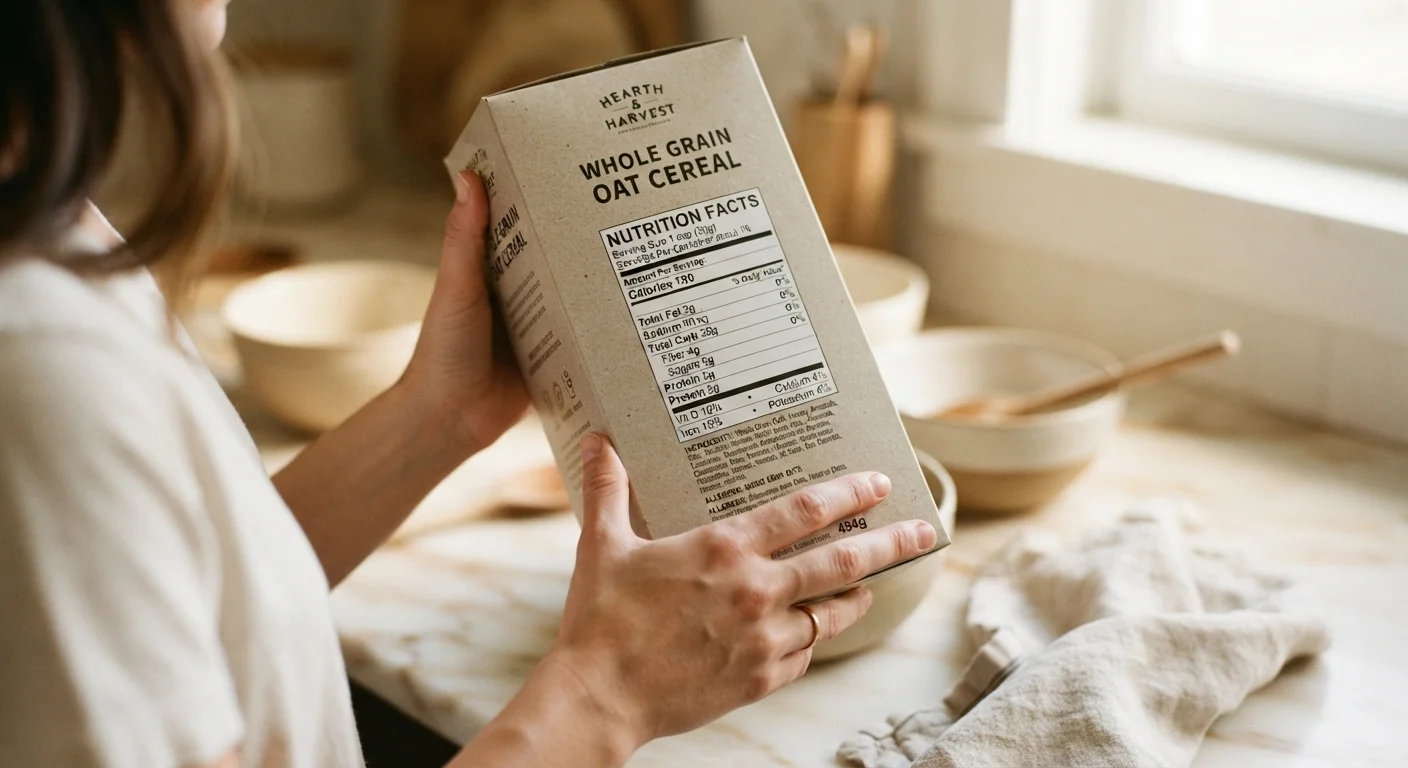
Start Here: Serving Size and Calories
The very first thing to check on any Nutrition Facts label is the serving size - because every other number on the panel flows from it. Serving sizes are standardized by the FDA and reflect how much people typically consume of a food, not necessarily how much you should eat.
A bag of chips listing a serving size of 1 oz (about 28g) might seem modest until you realize the bag holds three servings. If you eat the whole bag, you triple every figure on the label - calories, sodium, fat, and all.
Calories appear prominently in large type directly beneath the serving size. This number reflects the energy one serving provides from all macronutrients combined. For context on how calories relate to what's in your food, it helps to also look at where those calories are coming from - fat, carbohydrates, or protein.
Check Both Servings Per Container and Serving Size
Before reading any other number, note how many servings the package contains. A container with 2.5 servings means a casual single-sitting portion could easily equal 2 or more servings. This one step prevents the most common label-reading mistake.
For more on how portion perception can quietly skew your intake, see why our sense of normal serving sizes has shifted.
Decoding % Daily Value
% Daily Value (%DV) is one of the most useful - and most misunderstood - parts of the label. It tells you what percentage of a daily recommended amount one serving contributes, based on a 2,000-calorie reference diet.
A simple rule of thumb: 5% DV or less is considered low for a nutrient; 20% DV or more is considered high. This makes it easy to quickly spot, say, a soup that delivers 40% of your daily sodium in one bowl.
%DV applies to both nutrients you may want to limit - saturated fat, sodium, and added sugars - and nutrients you want to get enough of, like fiber, vitamin D, calcium, iron, and potassium. These latter nutrients appear near the bottom of the panel because research consistently shows many Americans fall short on them.
~90%
Americans who exceed sodium daily recommendations
According to the CDC, the vast majority of US adults consume more sodium than the 2,300 mg daily limit - making the sodium %DV on labels a particularly useful check.
17 teaspoons
Average daily added sugar intake for US adults
The CDC estimates average added sugar consumption in the US is roughly 17 teaspoons per day, well above the recommended limit of about 12 teaspoons for a 2,000-calorie diet.
95%
Americans falling short on dietary fiber
Research published in the American Journal of Lifestyle Medicine found that roughly 95% of Americans do not meet recommended daily fiber intake - one reason fiber is highlighted on the updated label.
For a closer look at why fiber is singled out, explore why fiber is the nutrient most Americans under-eat.
Total Sugars vs. Added Sugars - and Why It Matters
One of the most meaningful updates to the modern Nutrition Facts label was the addition of a separate line for added sugars, indented beneath total sugars. Understanding the difference changes how you read a label.
Total sugars capture everything: naturally occurring sugars in fruit, dairy, and vegetables, plus any sugars added during processing. Added sugars are only what manufacturers put in - things like high-fructose corn syrup, cane sugar, honey, or maple syrup used in production.
Dietary guidance from the U.S. Department of Agriculture and the Department of Health and Human Services recommends limiting added sugars to less than 10% of daily calories. A plain yogurt and a flavored yogurt might have the same total sugar line if the flavored one uses sweetened fruit, but their added sugar lines will diverge sharply.
“The addition of added sugars to the Nutrition Facts label is one of the most significant updates in decades - it finally gives consumers a direct way to distinguish between sugars that naturally occur in food and those that were put there by a manufacturer.”
— Frank Hu, Professor of Nutrition and Epidemiology, Harvard T.H. Chan School of Public Health
To understand where added sugars appear across your grocery cart, see where added sugar hides and what the labels mean.
The Ingredient List: What the Label Doesn't Shout
The Nutrition Facts panel has a companion that many shoppers overlook: the ingredient list. Ingredients must be listed in descending order by weight - meaning the first ingredient makes up the largest proportion of the product.
If whole wheat flour appears first in a bread and sugar appears third, that tells you something meaningful. If the first three items are all forms of added sugar under different names - such as corn syrup, dextrose, and fructose - that's also revealing, even if no single ingredient appears dominant.
The ingredient list is also where you'll find information the Nutrition Facts panel doesn't quantify directly, such as the type of oils used, the presence of artificial colors or preservatives, and whether a product is made with whole grains versus refined ones. For a deeper look at what grain processing removes, see what changes when you process a grain.
Labels Have Limits - Context Still Counts
Nutrition labels are designed for packaged foods and won't appear on fresh produce, most meats at a butcher counter, or foods prepared in-store. They also can't tell you about phytonutrients, antioxidants, or overall dietary pattern - all of which matter for long-term health. Use the label as one useful input, not the whole picture.
For practical strategies on using all of this label knowledge at the store, grocery shopping with nutrition in mind offers a step-by-step approach.
This article is for informational purposes only and does not constitute medical or dietary advice. Consult a registered dietitian or qualified healthcare provider for guidance tailored to your individual health needs.