

Why Eating Patterns Matter More Than Individual Foods
Nutrition science has largely moved away from studying single nutrients in isolation and toward examining overall dietary patterns - the combination and context of foods consumed over time. This shift reflects a more realistic picture of how diet affects health. People don't eat antioxidants; they eat meals.
Major institutions including the American Heart Association and the World Health Organization recognize that sustained dietary patterns, rather than individual superfoods or supplements, are the strongest dietary predictors of long-term health outcomes. For readers new to thinking about nutrition, our practical starting point guide covers the foundational concepts worth understanding first.
What the evidence consistently shows is that the most protective eating patterns converge on a recognizable set of features: an emphasis on vegetables, fruits, whole grains, legumes, and healthy fats, alongside limited red meat, added sugars, and ultra-processed foods. The differences between named diets often lie in emphasis, not structure.
The Mediterranean Diet: Decades of Evidence
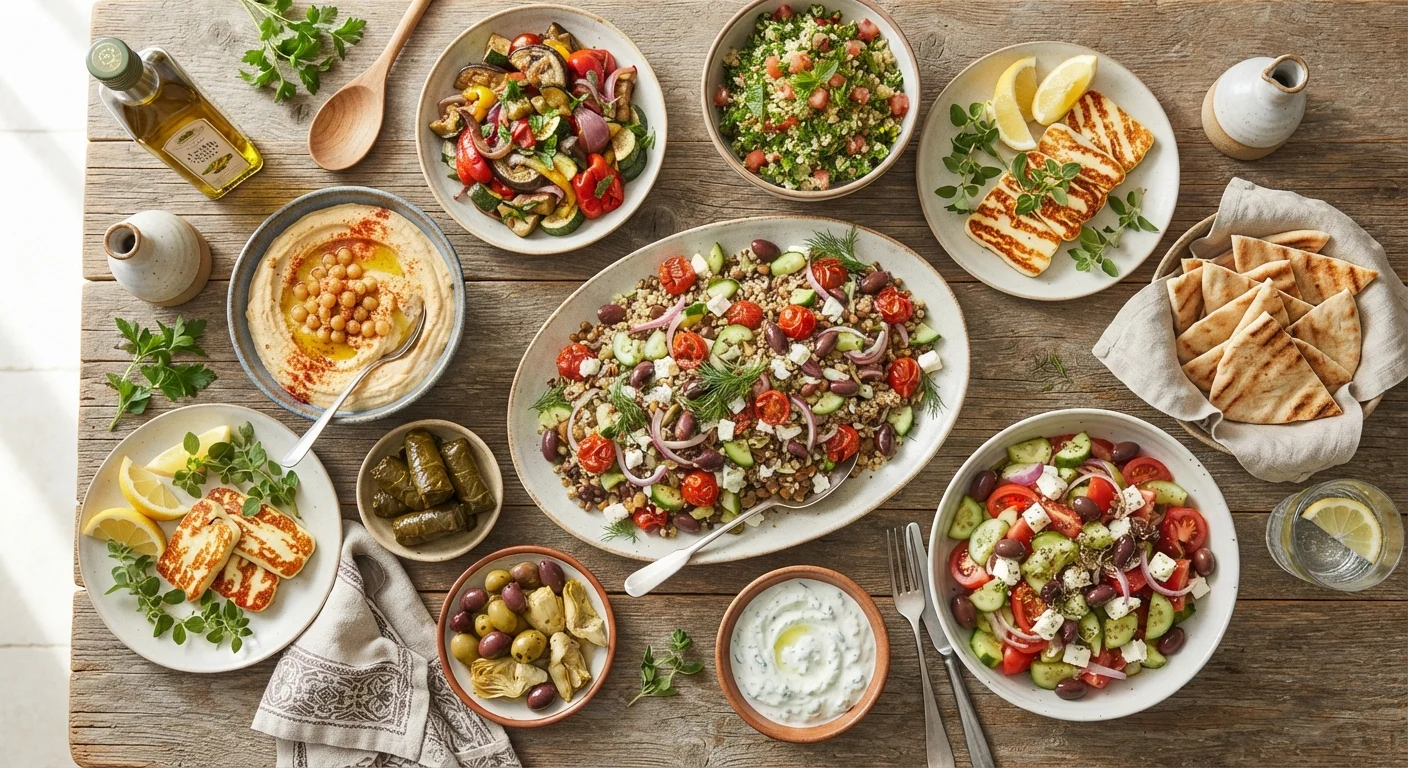
The Mediterranean diet is among the most extensively studied eating patterns in nutrition research. It draws from the traditional food habits of countries bordering the Mediterranean Sea and is characterized by high consumption of olive oil, vegetables, fruits, legumes, whole grains, fish, and moderate intake of dairy and wine, with limited red meat.
The landmark PREDIMED trial - a large randomized controlled trial conducted in Spain - found that participants assigned to a Mediterranean diet supplemented with extra-virgin olive oil or nuts had a significantly lower risk of major cardiovascular events compared to a low-fat control group. Observational studies in various populations have replicated associations with reduced all-cause mortality, lower incidence of type 2 diabetes, and slower cognitive decline.
Understanding why the Mediterranean diet may be protective involves the interplay of fats. For a deeper look at how dietary fat types are evaluated by researchers, see our article on saturated versus unsaturated fat.
30%
Reduced major cardiovascular events
The PREDIMED trial found a roughly 30% lower rate of major cardiovascular events among Mediterranean diet participants compared to the low-fat control group.
11 mmHg
Average systolic blood pressure reduction
Clinical trials of the DASH diet have shown reductions in systolic blood pressure of approximately 11 mmHg in people with hypertension, according to research published in the New England Journal of Medicine.
53%
Lower risk of Alzheimer's with high MIND adherence
An observational study published in Alzheimer's & Dementia found that strong adherence to the MIND diet was associated with a significantly lower risk of Alzheimer's disease, though causality has not been established.
DASH, MIND, and Other Clinically Studied Patterns
The DASH diet was specifically designed and tested to reduce blood pressure. Clinical trials consistently show it lowers systolic blood pressure, and it has become a standard dietary recommendation for hypertension management. DASH emphasizes vegetables, fruits, low-fat dairy, whole grains, and lean protein while restricting sodium, saturated fat, and added sugars.
The MIND diet - a hybrid of Mediterranean and DASH - was developed to specifically target neurological health. Observational research, including work published in Alzheimer's & Dementia, has associated stronger MIND diet adherence with slower cognitive decline, though randomized trials are still accumulating and the evidence is considered promising rather than conclusive.
Ketogenic diets - very low carbohydrate, high fat - have strong evidence for specific clinical uses, including certain seizure disorders in children, but their long-term cardiovascular and metabolic effects in general populations are less settled. Intermittent fasting protocols show modest effects on weight and metabolic markers in shorter-term studies, but long-term data and comparisons with continuous caloric restriction are still emerging.
| Mediterranean | DASH | MIND | Ketogenic | Plant-Based | |
|---|---|---|---|---|---|
| Primary evidence base | Cardiovascular outcomes, mortality | Blood pressure reduction | Cognitive decline | Seizures, short-term weight loss | Chronic disease prevention |
| Strength of evidence | Very strong (RCTs + observational) | Strong (multiple RCTs) | Promising (observational) | Strong for specific conditions | Moderate to strong (large cohorts) |
| Fat emphasis | Olive oil, unsaturated fats | Low saturated fat | Olive oil, limited saturated fat | Very high fat overall | Varies; typically low saturated fat |
| Carbohydrate approach | Whole grains, moderate | Whole grains, moderate | Whole grains, limited refined | Very low carbohydrate | Whole grains and legumes |
| Animal products | Fish, poultry, moderate dairy | Lean protein, low-fat dairy | Poultry, fish limited | Often high meat/dairy | Minimal to none |
| Practical sustainability | High | High | High | Challenging long-term | Variable by subtype |
Plant-Based Patterns: Broad Spectrum, Variable Evidence
Plant-based eating encompasses a wide range of approaches, from fully vegan diets to flexitarian patterns that simply shift the balance toward plant foods. The research base here is large but also complicated by the diversity within the category - a diet of whole plants looks very different from one heavy in processed meat substitutes and refined grains.
Large cohort studies, including data from the Adventist Health Studies, suggest well-constructed plant-forward diets are associated with lower rates of heart disease, type 2 diabetes, and some cancers. However, poorly planned plant-based diets can be deficient in vitamin B12, iron, omega-3 fatty acids, and zinc - risks that are real and worth acknowledging. Our comparison of plant-based versus omnivore eating explores this evidence in more detail.
Focus on the Pattern, Not the Label
Rather than committing strictly to a named diet, consider identifying the shared principles across the most evidence-backed approaches: more vegetables, more legumes, more whole grains, and less ultra-processed food. Small, consistent shifts toward these principles tend to be more sustainable than wholesale dietary overhauls. A registered dietitian can help you adapt these principles to your individual preferences, cultural background, and health goals.
It's also worth distinguishing dietary patterns from dietary mythology. Many popular claims about specific foods and diets lack the evidence base they are presented with. Our article on nutrition myths that refuse to die addresses several of the most persistent misconceptions.
What the Patterns Share - and What That Tells Us
Across the Mediterranean, DASH, MIND, and plant-based approaches, a consistent set of features emerges: whole foods over processed ones, plant diversity at the center of the plate, and modest portions of animal products where they appear at all. This convergence suggests that the underlying dietary principles - rather than the specific named diet - may be what's doing the work.
Adherence is also a critical variable. Research on why crash diets tend to backfire underscores that sustainability matters more than short-term dietary perfection. A moderately healthy eating pattern maintained over years will generally outperform an optimal-looking diet followed erratically.
Individual factors - including genetics, gut microbiome composition, existing health conditions, cultural food traditions, and practical food access - mean that responses to any dietary pattern will vary. The research presented here is general health information, not a prescription for your specific situation. Consult a registered dietitian or your healthcare provider before making significant dietary changes, particularly if you have a chronic health condition.
This article is for informational and educational purposes only and does not constitute medical or dietary advice. Always consult a qualified healthcare professional for guidance tailored to your individual health needs.