

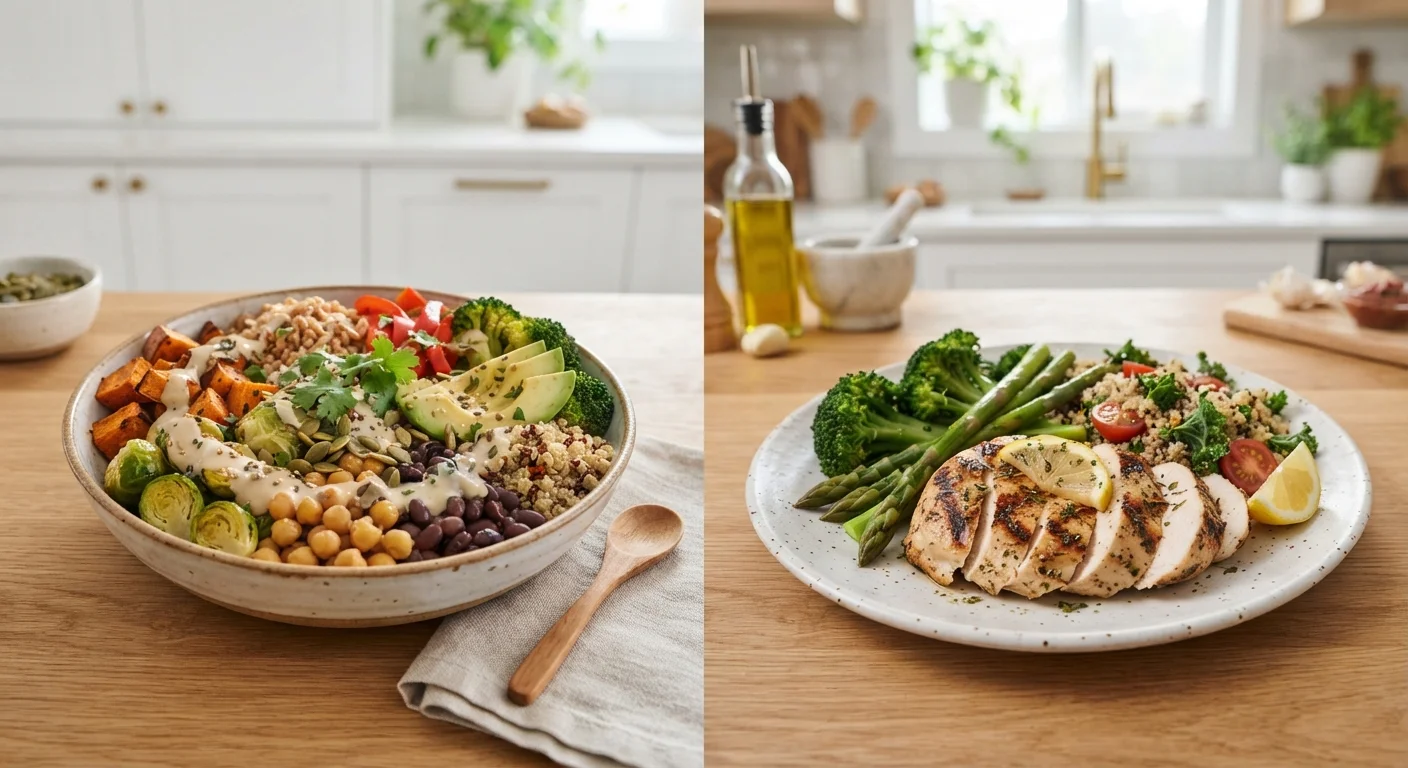
How These Two Patterns Are Defined
For the purposes of this comparison, plant-based eating refers to diets where the majority of calories come from vegetables, fruits, legumes, whole grains, nuts, and seeds - ranging from fully vegan (no animal products) to predominantly plant-forward with minimal animal foods. A traditional omnivore diet includes regular consumption of meat, poultry, fish, dairy, and eggs alongside plant foods, reflecting how most Americans currently eat.
These are not monolithic categories. A plant-based eater consuming heavily processed meat substitutes and refined grains isn't eating the same diet as someone building meals around lentils, leafy greens, and whole grains. The same quality spectrum applies to omnivore diets. That nuance matters enormously when evaluating what the research shows. For a deeper grounding in the basics, see our introduction to balanced eating.
What the Research Finds on Chronic Disease Risk
Large-scale observational studies - including analyses from the Adventist Health Studies and data compiled in systematic reviews published in journals like JAMA Internal Medicine - consistently associate plant-predominant diets with lower rates of cardiovascular disease, type 2 diabetes, hypertension, and certain cancers. These associations hold after adjusting for confounders like smoking, exercise, and BMI.
~25%
Lower cardiovascular disease risk
A large meta-analysis in the Journal of the American Heart Association found vegetarian and vegan diets associated with roughly 25% lower ischemic heart disease risk compared to meat-eating diets.
~23%
Reduced type 2 diabetes risk
Research published in PLOS Medicine found plant-based dietary patterns associated with approximately 23% lower risk of developing type 2 diabetes compared to less plant-focused diets.
Omnivore diets are not uniformly associated with worse outcomes. The Mediterranean diet, for example, includes fish, poultry, and dairy alongside abundant vegetables, legumes, and olive oil - and it's among the most evidence-backed eating patterns for heart health. The evidence behind popular eating patterns like Mediterranean and DASH shows that no single dietary label predicts health as reliably as overall diet quality does.
Where plant-based eating gains a consistent edge is in saturated fat intake and fiber consumption - both strongly tied to cardiovascular outcomes. Understanding how saturated and unsaturated fats affect health adds important context here.
Nutritional Strengths and Gaps in Each Pattern
Every eating pattern has inherent nutritional trade-offs. Knowing where gaps tend to occur helps you address them proactively.
| Plant-Based Diet | Traditional Omnivore Diet | |
|---|---|---|
| Fiber intake | Typically high | Often below recommended levels |
| Saturated fat | Generally lower | Varies; often higher |
| Vitamin B12 | Requires supplementation or fortified foods | Readily available from animal sources |
| Protein completeness | Needs variety to cover all amino acids | Easily met with animal proteins |
| Heme iron | Absent; non-heme iron less bioavailable | Present in red meat and poultry |
| Phytonutrient density | Generally high | Depends on plant food intake |
| Chronic disease risk association | Consistently linked to lower risk | Varies widely by diet quality |
| Dietary flexibility | Requires more meal planning | Easier in most social contexts |
Plant-based eaters need to pay particular attention to vitamin B12 (found almost exclusively in animal foods), heme iron, long-chain omega-3 fatty acids (EPA and DHA), zinc, iodine, and calcium. Many of these can be addressed through fortified foods or supplementation - but they require deliberate planning. The comparison of animal and plant protein sources covers protein completeness and digestibility in detail.
Omnivore diets, on the other hand, frequently fall short on fiber, potassium, and phytonutrients - particularly when meals rely heavily on processed meats or refined grains. Shifting toward whole grains instead of refined grains is one practical step any omnivore can take to close the gap.
Close Nutritional Gaps With Simple Habits
Plant-based eaters can improve iron absorption by pairing non-heme iron sources (like lentils or spinach) with vitamin C-rich foods. Omnivores looking to boost fiber can swap refined grains for whole grains at just one or two meals daily. Small, consistent adjustments tend to produce more lasting nutritional improvements than sweeping dietary overhauls.
Practical Considerations: Flexibility, Cost, and Sustainability
Research on dietary adherence suggests that long-term success depends heavily on how sustainable a pattern feels in daily life. Rigid all-or-nothing rules often lead to abandonment. Most registered dietitians support a plant-forward omnivore approach - building meals around whole plant foods while retaining flexibility with animal products - as a practical and evidence-backed middle ground for most people.
Cost is a real factor. Dried legumes, canned beans, oats, and seasonal produce are among the most affordable nutrient-dense foods available. Lean animal proteins like eggs, canned fish, and plain yogurt are also cost-effective. Neither pattern is inherently expensive when built from whole ingredients rather than specialty packaged products.
For a straightforward framework for building nutritious meals without overcomplicating things, see how to build a balanced plate without counting calories. If you're curious about shifting toward more plant-based meals without a complete dietary overhaul, a realistic starting point for omnivores offers practical guidance.
This article is for general informational and educational purposes only and is not a substitute for personalized nutrition or medical advice. Consult a registered dietitian or qualified healthcare provider before making significant changes to your diet, especially if you have an existing health condition.