
What's Actually Happening When Tomatoes Split
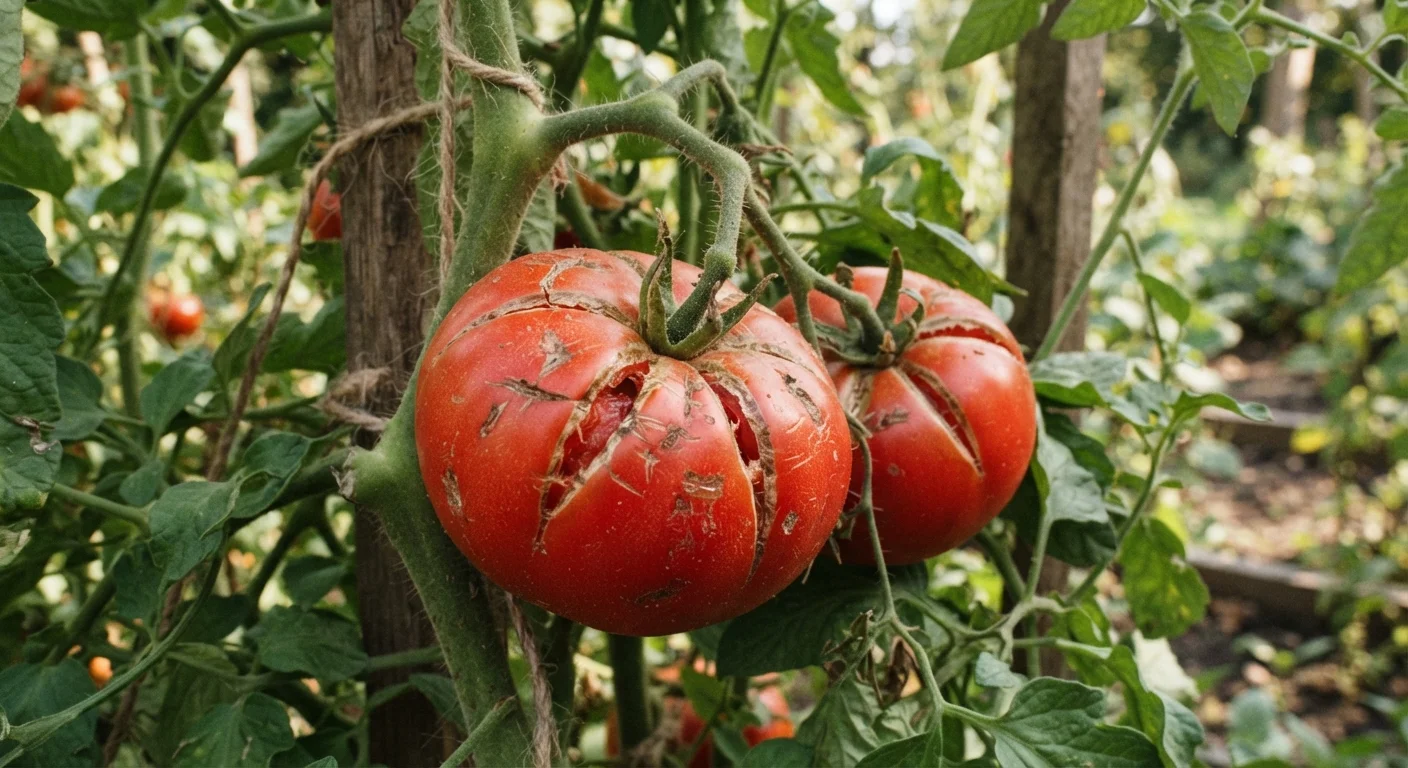
Tomato splitting - also called fruit cracking - happens when the inner flesh of the tomato expands faster than the outer skin can stretch. The skin, unable to keep up, ruptures. This typically appears as either radial cracks (running from the stem downward) or concentric cracks (circling the shoulder of the fruit). Both are signs that something in your watering or soil routine is off.
Understanding the mechanics helps. When tomatoes absorb a sudden large volume of water after a dry spell, the fruit pulp swells rapidly. The skin, which has become slightly toughened and less elastic during the dry period, simply cannot accommodate that sudden expansion. The result is a split that opens the fruit to rot, insects, and fungal infection.
~30%
Home-grown tomatoes lost to cracking
Gardening extension services estimate that fruit cracking and splitting accounts for a significant share of home tomato crop losses each season in humid climates.
1-2 inches
Recommended weekly water depth for tomatoes
University cooperative extension programs generally recommend 1-2 inches of water per week at the root zone, delivered evenly, to minimize stress-related fruit disorders.
The encouraging news: once you understand what drives the problem, most cases are preventable with a few consistent habits.
Common Mistakes That Lead to Splitting
Most splitting issues trace back to a handful of predictable errors. Recognizing yours is the first step to fixing it.
Watering inconsistently - letting soil dry out completely between long, heavy watering sessions.
Why it happens: Many gardeners water reactively, only reaching for the hose when plants look stressed or wilted. This creates the boom-and-bust moisture cycle that directly causes splitting.
Leaving soil bare around tomato plants without any mulch layer.
Why it happens: Mulching is easy to skip, especially early in the season when plants are small. Without mulch, soil dries out unevenly between waterings and absorbs rain rapidly.
Over-fertilizing with high-nitrogen fertilizers during fruiting.
Why it happens: Gardeners sometimes continue a feeding routine designed for leafy growth right through fruit development, pushing rapid, uneven cell expansion inside the fruit.
Ignoring calcium deficiency in the soil, which weakens cell wall structure throughout the fruit.
Why it happens: Calcium deficiency is often invisible until problems like blossom end rot or splitting appear. It can result from low soil calcium or from inconsistent watering that prevents proper calcium uptake even when soil levels are adequate.
Choosing tomato varieties known to have thin or fragile skin in climates with unpredictable rainfall.
Why it happens: Many heirloom varieties prized for flavor tend to have thinner skins that are naturally more susceptible to cracking. Gardeners often choose varieties based on taste alone without considering local conditions.
If you want to dig deeper into how watering habits affect all your garden plants - not just tomatoes - read our guide on watering myths that may be quietly undermining your efforts.
Practical Steps to Keep Your Harvest Intact
Prevention comes down to creating a stable environment for your tomatoes from flowering through harvest.
- Mulch generously: A 2-3 inch layer of organic mulch (straw, shredded leaves, or wood chips) around your tomato plants buffers soil moisture dramatically. It slows evaporation during dry spells and reduces how much water reaches roots after heavy rain.
- Water deeply and consistently: Aim for slow, deep watering at the root zone - roughly 1-2 inches per week depending on heat and soil type - rather than frequent shallow sprinkles. Drip irrigation or soaker hoses are especially effective for delivering even moisture.
- Check soil before watering: Press a finger 2 inches into the soil. If it feels moist, skip the watering session. Reacting to actual soil conditions rather than a fixed schedule prevents the feast-or-famine cycle that causes splitting.
- Harvest early during rainy stretches: If tomatoes are showing color and a period of heavy rain is expected, pick them and let them ripen indoors on a countertop. A tomato at 80% color will finish ripening off the vine with no loss in flavor.
Don't Wait for Fully Ripe Tomatoes in Wet Weather
Leaving tomatoes on the vine through heavy rainfall when they're already showing color is one of the fastest ways to lose them to splitting. Tomatoes harvested at the 'breaker' stage - when they've just started turning color - will ripen fully indoors at room temperature. Never refrigerate unripe tomatoes, as cold temperatures halt the ripening process and degrade flavor.
Choosing crack-resistant tomato varieties is also worth considering if splitting is a recurring problem in your garden. Many modern hybrid varieties have been developed specifically with stronger skin and more uniform fruit development in mind. Check seed catalog descriptions or ask at a local nursery for varieties suited to your region.