
How Your Roof Drainage System Works
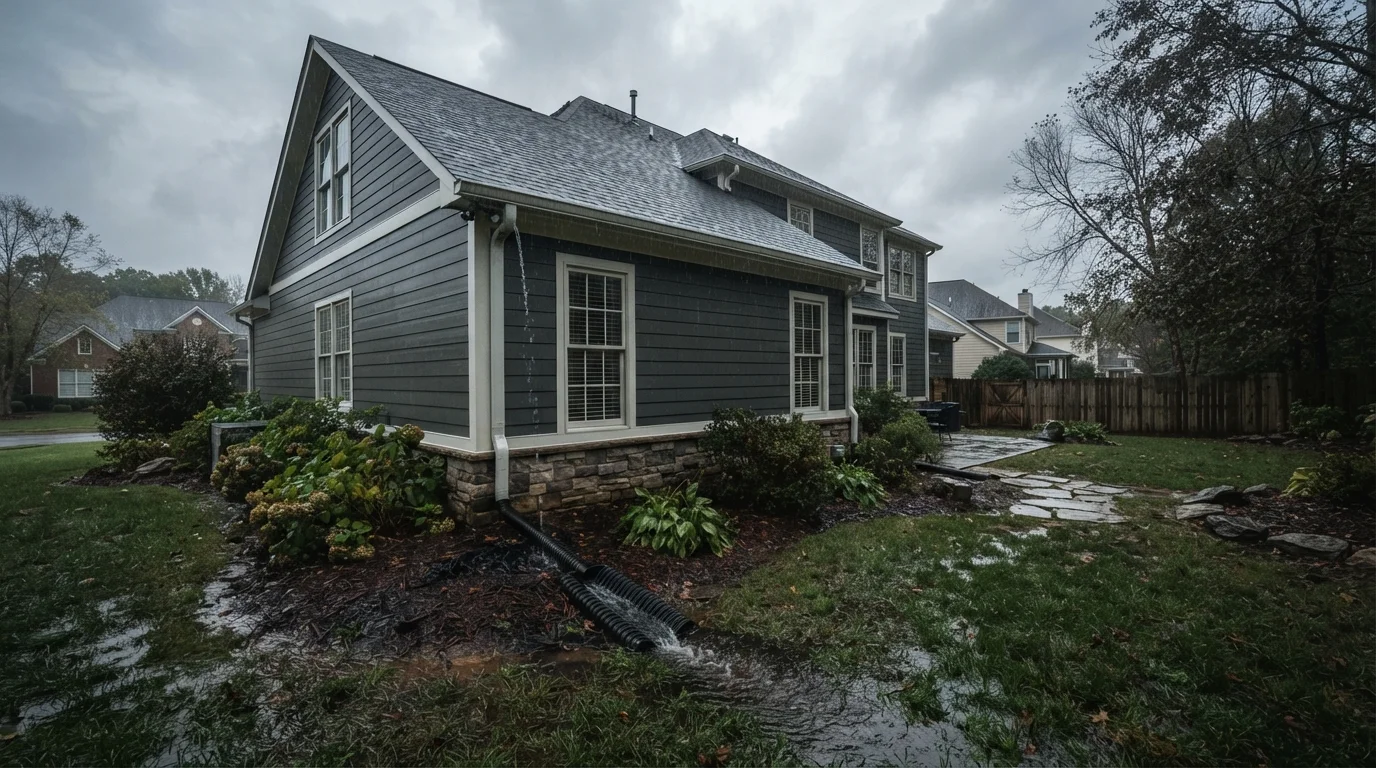
Every time it rains, your roof sheds an enormous volume of water. A 1,500-square-foot roof can shed more than 900 gallons of water per inch of rainfall. Gutters catch that water as it runs off the eaves and channel it toward downspouts - vertical pipes that carry it down to ground level. From there, the water should be directed well away from the house through downspout extensions, splash blocks, or underground drainage systems.
This chain - roof, gutter, downspout, discharge point - is designed to manage a large, concentrated flow of water in a controlled way. When any link in that chain breaks down, the water doesn't simply disappear. It finds the path of least resistance, and that path is often the soil immediately surrounding your foundation.
Not All Rooflines Drain the Same Way
Homes with complex rooflines - multiple valleys, dormers, or varying pitches - shed water unevenly and can concentrate runoff at certain points along the gutter. If you have a more complex roof, pay extra attention to high-volume areas when inspecting your gutters. Our article on common roof misconceptions addresses how roofline details affect water management in ways many homeowners overlook.
What Happens When the System Fails
Gutter and downspout failures fall into a few common categories, each with its own drainage consequence:
- Clogged gutters: Debris buildup causes water to overflow over the front edge of the gutter, spilling directly against the house and saturating foundation soil.
- Improper gutter pitch: Gutters that don't slope correctly toward the downspout pool standing water, which can overflow during heavy rain and add weight stress to the gutter hangers.
- Missing or too-short downspout extensions: Water discharged right at the base of the house is nearly as damaging as no gutters at all - it still saturates the soil near the foundation.
- Disconnected or leaking joints: Seam failures allow water to drip consistently in one spot, creating a localized saturation zone.
The soil around your foundation behaves differently depending on its composition. To understand how soil reacts to water, it helps to know the basics - see our guide to soil types and behavior for more context. Clay-heavy soils, which are common in many US regions, expand when wet and contract when dry. This repeated movement exerts significant lateral pressure on foundation walls and can cause cracking, bowing, and settlement over time.
900+
Gallons shed per inch of rain from a 1,500 sq ft roof
This volume illustrates why gutters and controlled discharge points are essential - roof runoff is far too concentrated to simply absorb into soil around the foundation.
4-6 ft
Minimum recommended downspout discharge distance
Most home construction and drainage guidance recommends water be directed a minimum of 4 to 6 feet from the foundation wall to reduce saturation risk.
¼ inch
Recommended gutter slope per 10 feet of run
This pitch standard is widely referenced in gutter installation guidance to ensure water moves consistently toward the downspout without pooling.
Recognizing Foundation Water Damage Early
Foundation problems caused by poor drainage rarely appear overnight. They develop gradually, and the early warning signs are easy to miss. Catching them before they become structural issues can save homeowners thousands of dollars in repairs. Common indicators include:
- Horizontal or stair-step cracks in foundation walls or masonry
- Efflorescence - chalky white mineral deposits on basement or crawl space walls indicating water movement through concrete
- A damp or musty smell in the basement or crawl space
- Water staining or puddles on basement floors after rain events
- Doors or windows that suddenly stick or become difficult to open, signaling that the frame may be shifting
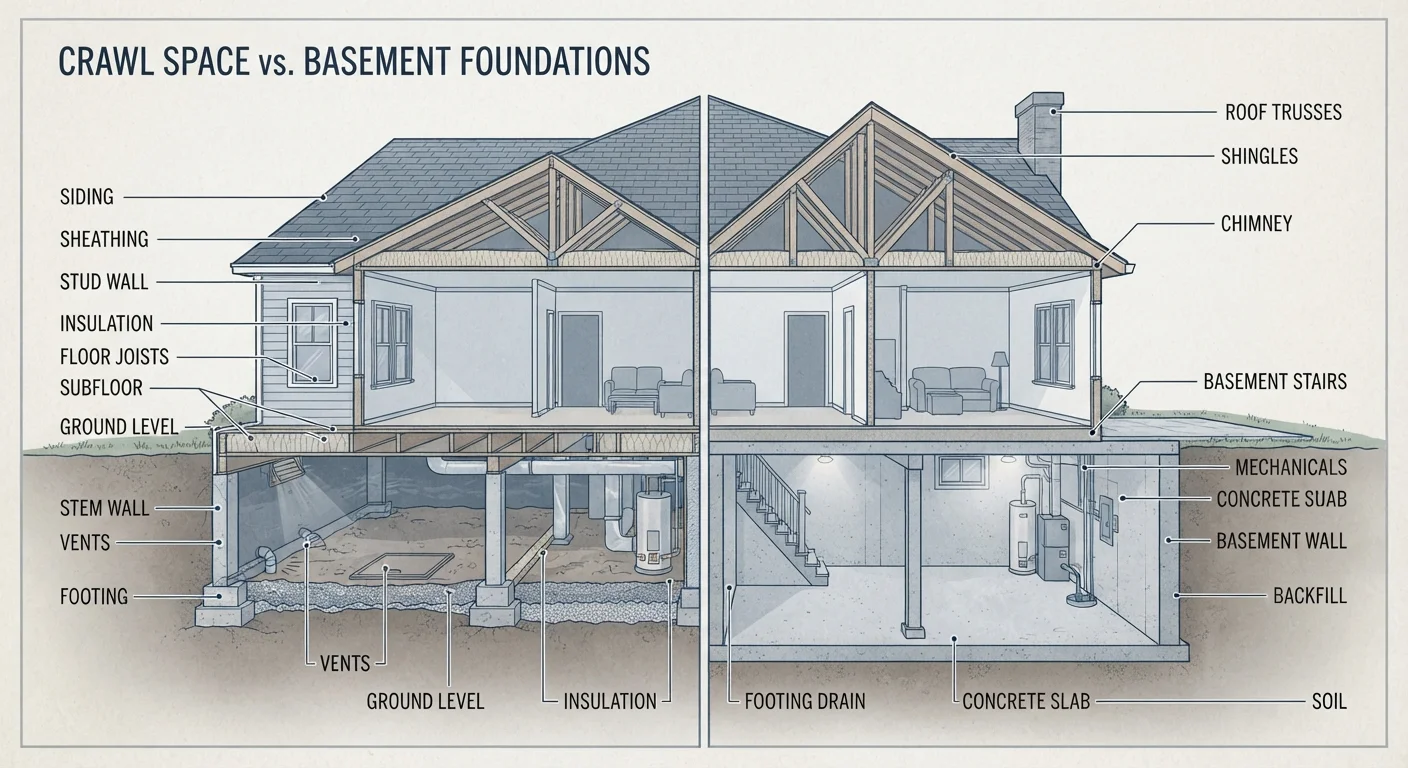
For a broader look at what water intrusion looks like inside your home, our article on identifying hidden water damage covers many of the subtler clues. If you have a crawl space rather than a basement, drainage management takes on a slightly different form - explore how that works in our piece on crawl space vs. basement maintenance.
Practical Steps to Keep Your Drainage System Working
Maintaining your gutter and downspout system is straightforward and doesn't require specialized tools for most homeowners. Here's what to focus on:
- Clean gutters twice a year. Remove leaves, twigs, and debris from all sections, and flush with a garden hose to confirm water flows freely to the downspout.
- Inspect for proper slope. After cleaning, run water through the gutter. If it pools anywhere along the run rather than draining promptly, the hanger may need adjustment to restore the correct pitch.
- Check downspout extensions. Extensions should discharge water at least 4 to 6 feet from the foundation. Splash blocks should be angled away from the house, not toward it.
- Look for leaks and loose joints. Inspect seams and end caps for drips during or after rain. Sealant can address minor leaks; compromised sections may need replacement.
- Evaluate your yard's grading. The soil around your home's base should slope away from the foundation at roughly 6 inches of drop over the first 10 feet. Flat or inward-sloping grading undermines even the best gutter system.
Test Your Downspout Discharge After Heavy Rain
One of the easiest checks is walking your downspout discharge points immediately after a significant rainstorm. Look for pooling within 3 feet of the house, soil erosion at the splash block, or water flowing back toward the foundation. If you see any of these, your discharge point needs attention before the next rain event.
Note that any work involving underground drainage connections or significant regrading near the foundation may warrant a consultation with a licensed contractor or drainage specialist, particularly if your yard shows signs of chronic water problems. Permits or professional evaluation may be required depending on your local codes.