
What Each Product Actually Is
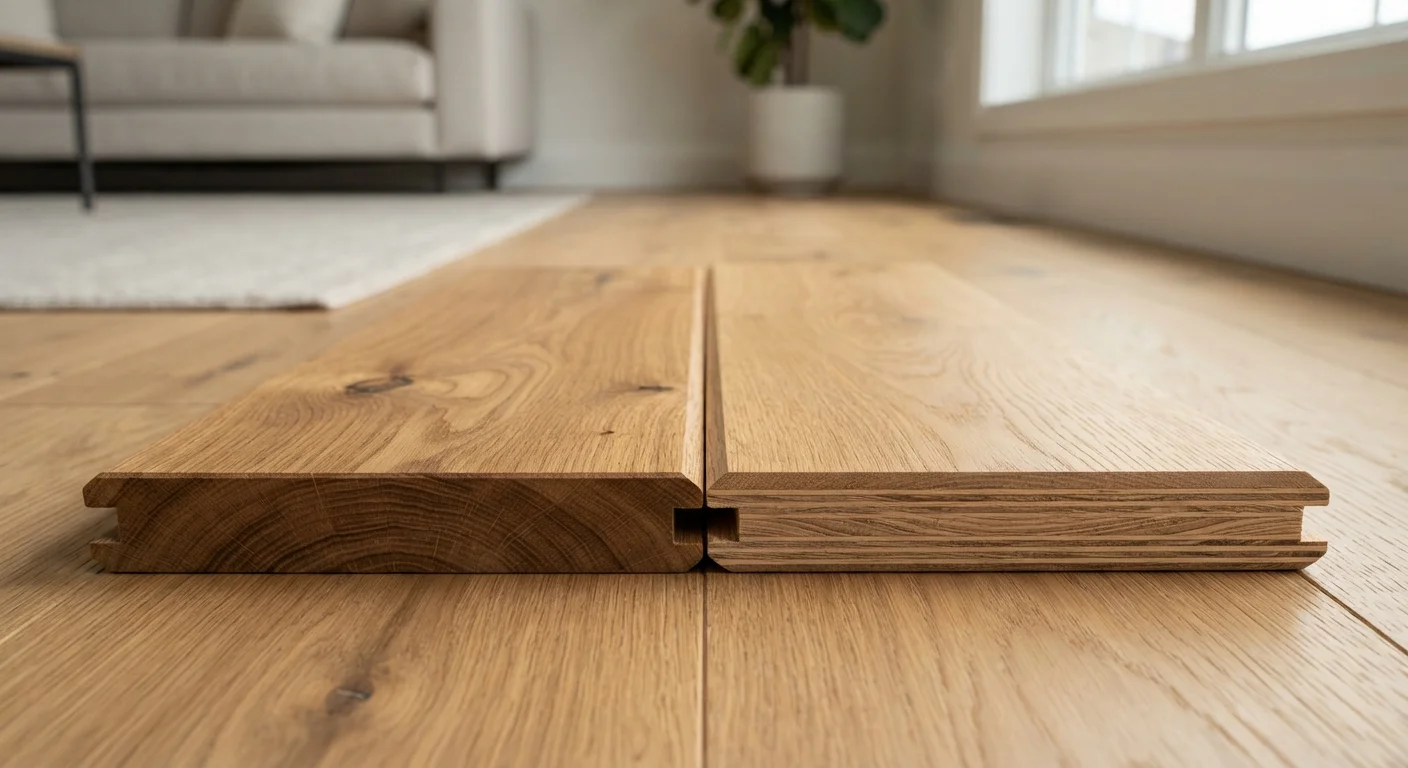
The most important thing to understand about both flooring types is what's beneath the surface. Solid hardwood is exactly what it sounds like: a single piece of wood milled to a uniform thickness, typically 3/4 inch. Every layer, from top to bottom, is the same species - oak, maple, walnut, hickory, and many others.
Engineered hardwood is a manufactured product made by bonding a thin layer of real hardwood veneer (the wear layer) to a core of cross-layered plywood or high-density fiberboard (HDF). The cross-ply construction is key: each layer runs perpendicular to the ones above and below, which dramatically limits how much the board expands and contracts with humidity changes.
Visually, both products are nearly indistinguishable once installed. The difference in behavior shows up over time - especially in response to moisture and subfloor conditions.
| Criterion | Solid Hardwood | Engineered Hardwood |
|---|---|---|
| Construction | Single piece of wood throughout | Real wood veneer over plywood/HDF core |
| Moisture resistance | Low - prone to warping and cupping | Higher - cross-ply core resists movement |
| Installation locations | Above grade only, wood subfloor | Above, on, or below grade; concrete compatible |
| Installation methods | Nail or staple only | Nail, staple, glue, or float |
| Refinishing potential | 4-7+ times over lifetime | 1-3 times (depends on wear layer thickness) |
| Typical plank thickness | 3/4 inch standard | 3/8 to 3/4 inch varies by product |
| Compatible with radiant heat | Limited - manufacturer specific | Generally better suited |
Where Each Type Can - and Cannot - Be Installed
Installation location is one of the clearest deciding factors between these two flooring types.
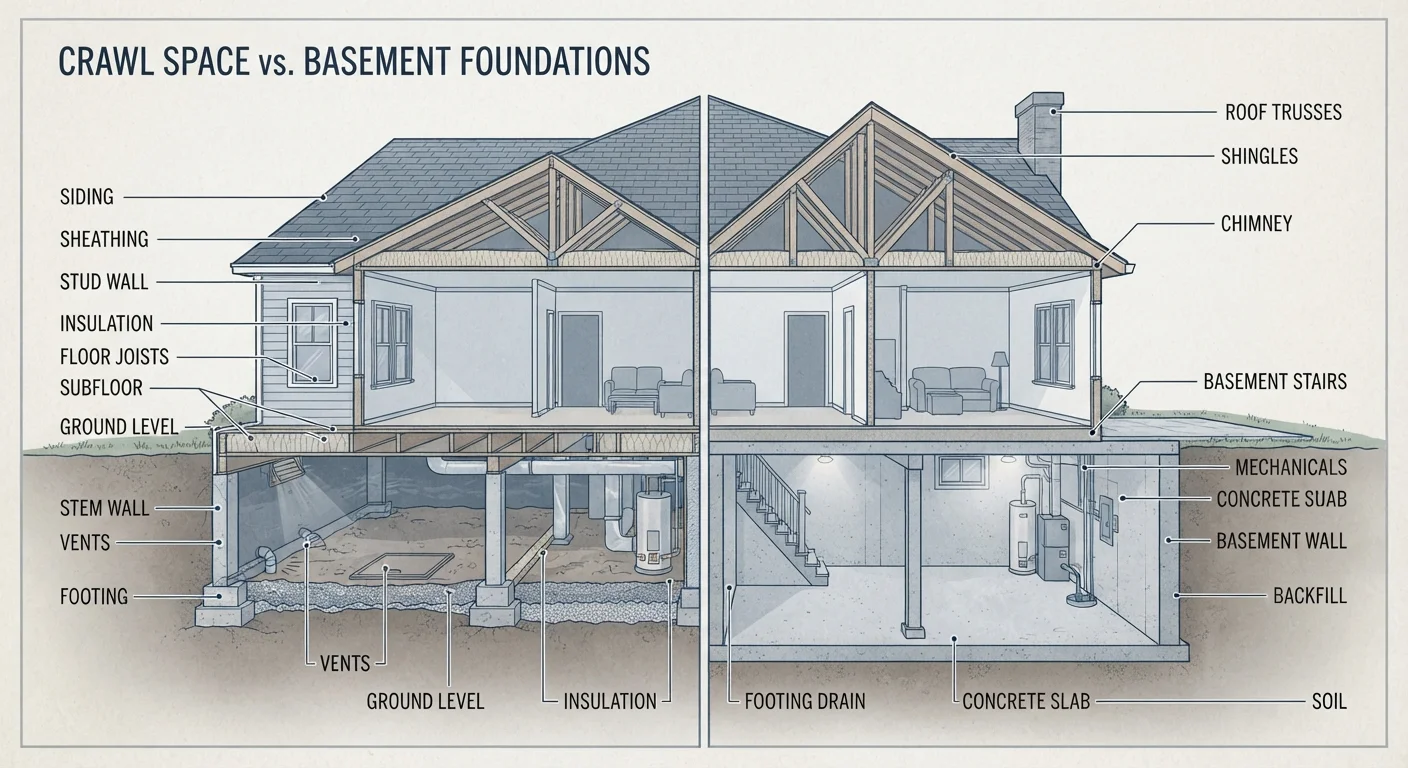
Solid hardwood is best suited to above-grade installations - main floors and upper levels - with wood subfloors. It should not be installed below grade (in basements) or directly over concrete, because ground-level moisture will cause it to swell, cup, or buckle. It also requires a nail or staple installation method, which means a thick, stable wood subfloor is a must.
Engineered hardwood is far more flexible. It can be glued, floated, or stapled down, making it compatible with concrete slabs, radiant heat systems, and basement applications. Its dimensional stability means it tolerates the moisture levels typical of below-grade spaces without the same risk of damage.
3/4"
Standard solid hardwood plank thickness
This consistent thickness is what allows solid hardwood to be sanded and refinished repeatedly over its lifetime.
2mm+
Wear layer thickness for full refinishing
Engineered hardwood with a wear layer of 2mm or more generally supports at least one full sand-and-refinish cycle, according to flooring industry guidelines.
Before committing to either product, always check the manufacturer's installation guidelines and assess your subfloor's moisture levels - a moisture meter is a useful tool for this step.
Durability, Refinishing, and Long-Term Care
Both flooring types are durable, but in different ways. Solid hardwood has the edge in total refinishing potential. Because the entire plank is solid wood, it can be sanded down and refinished repeatedly - often four to seven times over its lifetime - making it a genuinely multigenerational floor when properly maintained.
Engineered hardwood can also be refinished, but the number of times depends on the thickness of its wear layer. A thicker veneer (2mm or more) allows one to three refinishing cycles; thinner veneers may only allow a light screen-and-recoat rather than a full sand. Ask about wear layer thickness when evaluating engineered products.
Humidity Control Matters for Both
Wood flooring of any kind performs best when indoor relative humidity is kept between approximately 35% and 55%. Wide seasonal swings - very dry winters from heating, very humid summers - are a leading cause of gapping, cupping, and other wood floor problems. A whole-home humidifier or dehumidifier can help maintain a stable environment and extend the life of either floor type.
Day-to-day care is similar for both: regular sweeping or dry mopping, prompt attention to spills, humidity control in the home, and felt pads under furniture legs. Neither type responds well to standing water or wet mopping. Just as with exterior surfaces - where material choice shapes long-term maintenance needs, as explored in our guide to maintaining different driveway materials - choosing the right interior flooring for your conditions reduces maintenance headaches significantly.
Cost, Value, and Making the Right Call
Neither flooring type is definitively more expensive - both span a wide price range depending on species, grade, width, and finish quality. In general, solid hardwood commands a premium for wide-plank, exotic species, while engineered hardwood can offer impressive visual quality at a range of price points.
From a home value perspective, both are considered real wood flooring and are viewed positively by buyers. The key is choosing the product that performs correctly in your specific space. A solid hardwood floor installed in the wrong location - a damp basement, for instance - will deteriorate and may actually reduce home value. An engineered floor installed correctly in a challenging environment will hold up far longer and add genuine appeal.
When making your decision, consider these questions: What is your subfloor material and location relative to grade? What are the humidity patterns in your climate and home? How many years do you expect to stay in the home, and how important is the ability to refinish? Answering these honestly will guide you toward the right choice more reliably than any single feature comparison.
This article is for general informational purposes only. Always consult a qualified flooring professional and verify local building codes before beginning any flooring installation project.