
Why Bathrooms Are Especially Prone to Budget Surprises
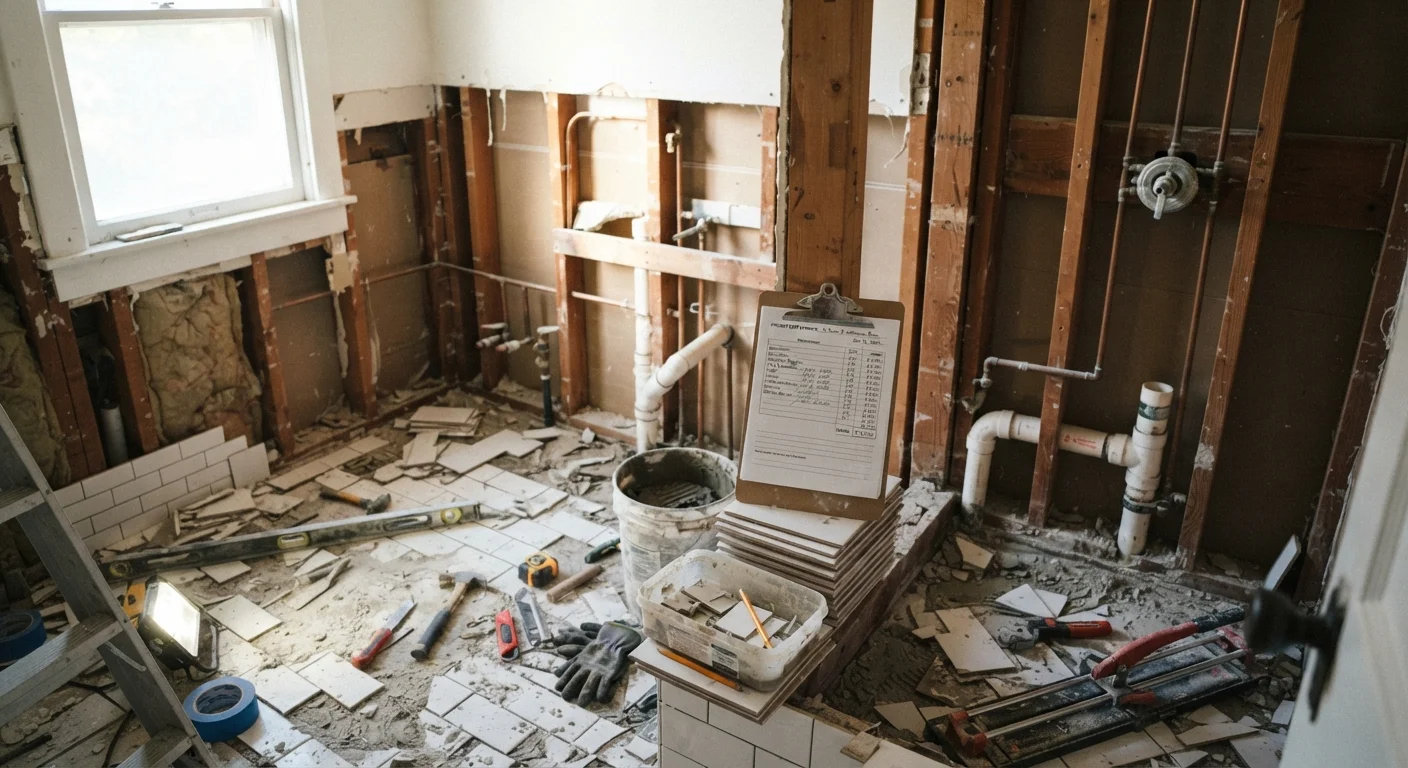
Bathroom renovations consistently rank among the most budget-busting home improvement projects. The reason isn't just that materials are expensive - it's that bathrooms compress plumbing, electrical, waterproofing, tile work, and cabinetry into a small, often moisture-damaged space. Each trade depends on the one before it, meaning one discovery can cascade into a week of extra labor.
Most overruns aren't caused by a single catastrophic event. They accumulate through a series of small, predictable mistakes that homeowners make before the first tile is pulled. Understanding these patterns is the most practical form of budget protection available.
For a broader look at how surprise costs derail financial plans across contexts, see our guide to hidden budget costs.
Skipping a pre-renovation inspection of plumbing and subfloor conditions.
Why it happens: Homeowners focus on the visible upgrade - new tile, a fresh vanity - and assume what's hidden is fine. Inspections feel like an added expense when money is already tight.
Accepting a vague or lump-sum contractor bid.
Why it happens: A single round number feels simple and easy to compare. Many homeowners don't realize that vague bids shift financial risk onto them when scope questions arise.
Adding upgrades and changes once work has already started - commonly called scope creep.
Why it happens: Seeing the space opened up triggers new ideas: a heated floor, a second recessed light, a larger mirror. Each addition seems small in isolation.
Setting no contingency budget or setting one that's too small (under 10%).
Why it happens: Homeowners stretch to afford the renovation as designed, leaving no financial buffer. A 5% contingency sounds responsible but rarely covers real-world surprises.
Ordering materials without confirming lead times and delivery schedules.
Why it happens: Homeowners assume materials ship quickly, especially when ordering from large retailers. Custom or specialty items routinely take far longer than expected.
Underestimating permit and inspection requirements.
Why it happens: Permits seem bureaucratic and unnecessary for a cosmetic update. But any work touching plumbing, electrical, or structural elements typically requires permits in most US jurisdictions.
Building a Budget That Actually Holds
A reliable bathroom budget isn't just a list of materials and labor - it's a structured document that accounts for risk. Start by collecting at least three fully itemized bids, not ballpark figures. An itemized quote breaks out labor by task, lists materials with quantities, and specifies allowances for fixtures. This lets you compare bids accurately and spot where one contractor may be underestimating.
Verbal Agreements Don't Protect Your Budget
Any change to project scope - even a small addition - should be documented as a written change order signed by both you and the contractor before work proceeds. Verbal agreements about add-ons are a frequent source of billing disputes. A short written record stating the work, agreed cost, and timeline impact protects both parties and keeps the overall budget traceable.
Reserve 15-20% of your total project cost as a contingency fund, kept separate from your primary budget. This isn't pessimism - it's standard practice for any renovation that involves opening walls. If the contingency goes unspent, it becomes a bonus. If it gets used, you finish the project without debt.
Finalize every material selection - tile, vanity, fixtures, lighting - before demolition begins. Late changes generate both re-stocking fees and labor rework. It also helps to confirm lead times: some specialty tiles and custom vanities can take six to ten weeks to arrive. A project stalled waiting for materials burns money on carrying costs and postponed contractor schedules.
For practical systems to keep your project moving once work begins, our project management guide covers timeline and contractor relationship strategies that complement sound budgeting. And before committing to high-end upgrades, it's worth reviewing which renovations rarely recoup their cost at resale - some premium choices add comfort without adding value.
Unpermitted Work Creates Future Legal and Financial Risk
Bathroom work that involves moving or adding plumbing, upgrading electrical circuits, or altering ventilation typically requires a permit in most US jurisdictions. Skipping permits to save time or money can result in fines, required demolition, and complications when selling your home. Always verify permit requirements with your local building department before work begins - don't rely solely on a contractor's assurance that permits aren't needed.