
What 'Certified' Actually Means
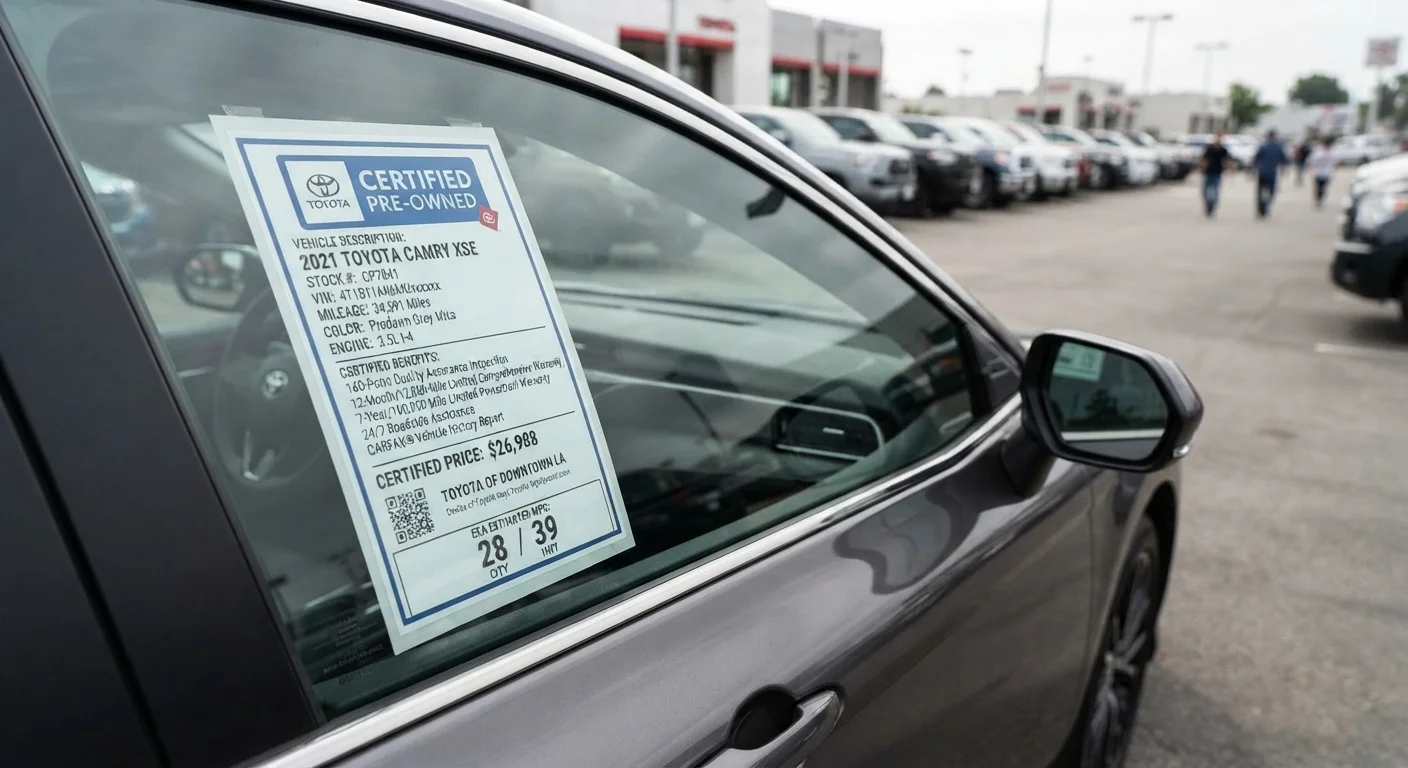
The word certified carries implied authority - but in the used-car market, it has no federal or state-level legal definition. Anyone selling a car can attach a certified label to it. What separates a meaningful CPO program from a marketing label is the specifics behind it.
There are two broad types of CPO programs: manufacturer-backed and independent dealer. Manufacturer programs - run by automakers through their franchised dealerships - tend to have standardized inspection criteria, defined warranty terms, and clear eligibility rules (usually age and mileage caps). Independent programs are set by the dealership itself, with criteria that vary widely and are far less verifiable.
The distinction matters because consumers often assume a CPO badge means the same thing regardless of source. It doesn't. Just as wine labels like 'natural' or 'organic' carry different definitions depending on who's certifying, a CPO label on a vehicle reflects whoever set the standard - not an objective, universal benchmark.
Independent Dealer CPO: Read the Fine Print
Independent dealerships may market vehicles as 'certified' without any manufacturer involvement. These programs are self-defined and can range from comprehensive to essentially cosmetic. Before treating any independent CPO label as equivalent to a manufacturer program, ask for the written certification criteria and warranty terms - and compare them directly.
What Manufacturer CPO Programs Typically Include
Automaker-run CPO programs generally follow a consistent framework, though the details differ by brand. Common elements include:
- Age and mileage limits: Most programs cap eligibility at five to six years old and under 80,000 miles, though limits vary.
- Multi-point inspection: Vehicles must pass a checklist - often 100 to 200+ points - covering mechanical systems, safety features, and cosmetics. Failures must be repaired before certification.
- Extended warranty: Coverage typically extends the powertrain warranty and may include limited bumper-to-bumper coverage for a defined period or mileage.
- Vehicle history report: Most programs require a clean title and no significant accident or flood history.
- Roadside assistance and other perks: Many programs add benefits like roadside assistance, loaner car provisions, or trial satellite radio subscriptions.
These elements are documented and publicly available from each manufacturer - reviewing them before you shop puts you in a stronger position to compare what you're actually getting.
2-3 yrs
Typical CPO powertrain warranty extension
Most major manufacturer CPO programs extend powertrain coverage by two to three years beyond original factory warranty expiration, though terms differ by brand.
100
Minimum inspection points in many programs
Manufacturer CPO inspection checklists commonly range from 100 to over 200 individual points, covering mechanical, safety, and cosmetic criteria.
$1,000-$3,500
Estimated CPO price premium over non-certified
Industry observers generally estimate CPO vehicles command a premium in this range over comparable non-certified used vehicles, though the actual gap varies by make, model, and market conditions.
Where CPO Programs Fall Short
Even well-structured CPO programs have gaps worth understanding. Inspection checklists focus on systems that are testable at the time of inspection - they can't predict intermittent faults, catch early-stage component wear, or reveal issues that weren't present on inspection day. A vehicle can pass a 172-point check and still develop a transmission problem two months later.
Warranty coverage also comes with conditions. Deductibles, authorized repair facilities, pre-approval requirements for certain repairs, and exclusions for wear items (brakes, tires, belts) are standard. Read the warranty document before signing - not after.
CPO vehicles typically carry a price premium over non-certified equivalents. That premium is sometimes justified; sometimes it reflects marketing more than added value. Comparing CPO and non-CPO versions of the same vehicle, then pricing the cost of an extended warranty separately, can help you judge whether the premium makes financial sense in a given case.
For a broader view of where used-car buying caution pays off, see what to check before buying a used car.
Get an Independent Inspection Regardless
Even for a manufacturer-backed CPO vehicle, a pre-purchase inspection by an independent, qualified mechanic is money well spent - typically $100 to $200. CPO inspections are performed by technicians employed by the seller; an outside inspection adds a neutral perspective that can surface issues or confirm the vehicle's condition with no conflict of interest.
How to Evaluate Any CPO Offer
Before accepting a CPO vehicle's certification at face value, request and review the following:
- The actual inspection checklist - not a summary, the full list of items checked and passed/failed results.
- The warranty contract - coverage term, mileage limit, deductible, exclusions, and which facilities can do warranty work.
- The vehicle history report - verify title status, accident history, and number of prior owners independently using the VIN.
- Whether coverage transfers - if you sell the car, can the warranty follow it? Transferable coverage can add resale value.
Even after reviewing all of these, consider paying for an independent pre-purchase inspection by a qualified mechanic who has no stake in the sale. CPO or not, this step protects you in ways no checklist can. If a seller resists this request, treat that resistance as a signal worth noting.
If you're still weighing whether a CPO vehicle fits your situation better than buying new, comparing new vs. used trade-offs can help frame that decision more concretely. And if a dealer is pitching add-ons alongside the CPO package, it's worth knowing which dealer extras tend not to deliver real value.