
What Happens in the Finance Office
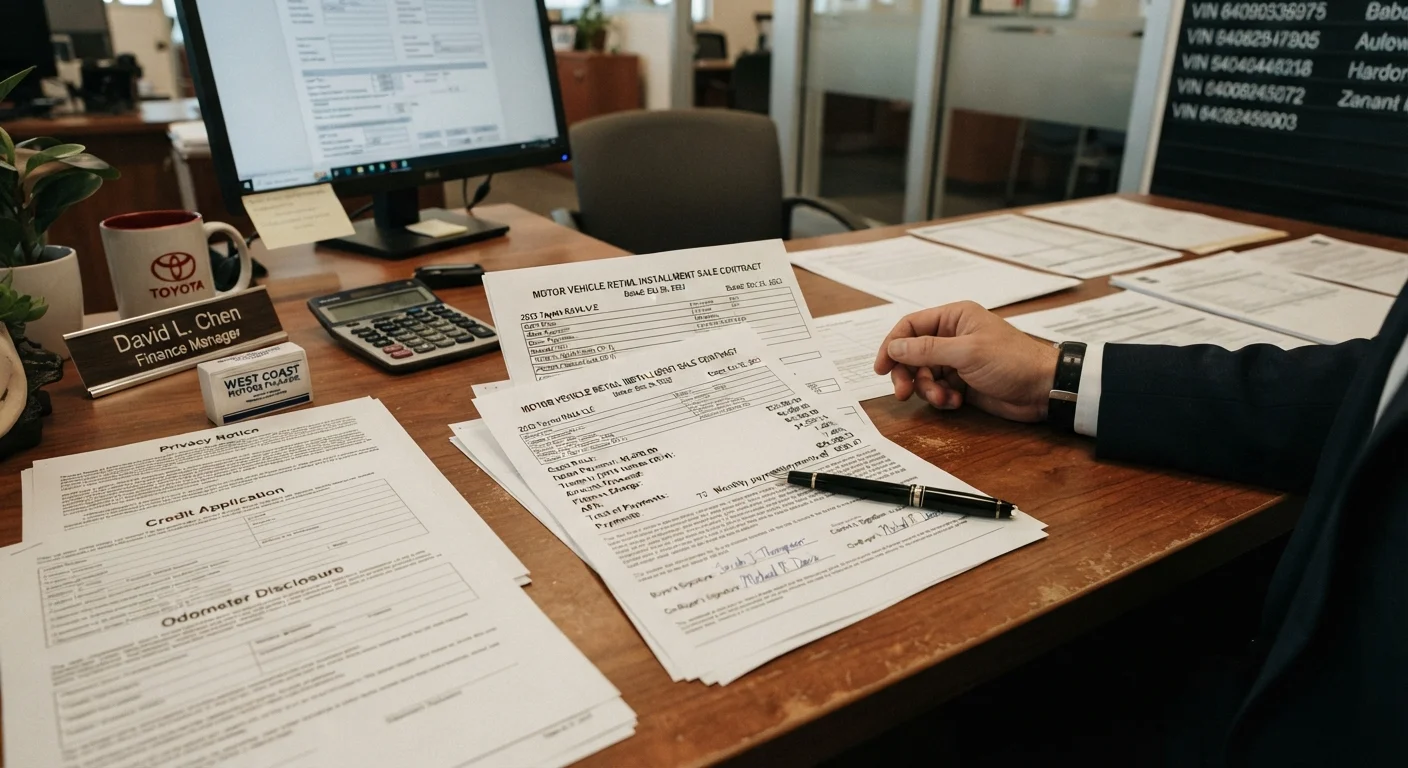
You've agreed on a vehicle price and feel good about the deal. Then you move to the finance office, and a second round of selling begins. This is where dealers present a menu of add-on products - some packaged as essential protection, others framed as small monthly bumps to your payment. Spread across a 60- or 72-month loan, a few hundred dollars in extras can seem trivial. Add them up, and you've easily added $1,500 to $3,000 or more to the total cost of your vehicle.
Not every add-on is a waste of money. A few serve a genuine purpose under the right circumstances. But many are marked up significantly from their actual cost, and some duplicate protection you may already have through your insurer or credit card. Understanding the full out-of-pocket cost of buying a car starts with knowing which line items are worth keeping and which are worth crossing out.
Paint Protection Film or Sealant
Dealers frequently offer paint sealant or polymer coating as a must-have finish protector, often priced between $200 and $600. The reality is that modern factory paint is durable, and a quality wax or ceramic coating applied by a reputable detailer typically costs less and performs at least as well. Paint protection film - a physical clear bra applied to high-impact areas - is a different product and can offer genuine value, but the dealer's markup is usually steep. If you want film, get quotes from independent installers before agreeing to the dealer's price.
Modern factory paint is durable - dealer sealant rarely justifies the markup over an independent detailer.
Fabric and Carpet Protection
This add-on is usually a scotchguard-style spray treatment applied to the interior, priced anywhere from $150 to $400 at the dealership. Consumer-grade fabric protector sprays are widely available and can be applied yourself for under $20. Unless you're buying a vehicle and genuinely cannot or will not maintain it yourself, this is one of the easier items to decline. Check the vehicle when you take delivery - some dealers pre-apply it and bill automatically, so verify what's already on the sticker.
Fabric protector sprays cost under $20 at any auto parts store - the dealer markup is significant.
VIN Etching
VIN etching - engraving the vehicle identification number onto windows as a theft deterrent - is sometimes presented as a security necessity. Historically, insurers offered small discounts for etched vehicles, but those discounts are narrow and not universally offered. DIY etching kits are available for roughly $20 to $30. Dealers commonly charge $200 to $400 for the same result. If the dealer has already done it before you arrived, the cost is often negotiable or waivable - it's worth asking directly.
DIY VIN etching kits cost around $20; dealers routinely charge ten times that for the same result.
Extended Warranties (Vehicle Service Contracts)
Extended warranties - technically called vehicle service contracts - are one of the higher-margin products in the finance office. They vary widely in coverage, exclusions, deductibles, and the repair shops you're allowed to use. Some buyers benefit from them, particularly on vehicles with historically higher repair costs or when keeping a car well beyond the factory warranty period. But the dealer's offering is rarely the only or cheapest option: third-party providers and some manufacturers offer comparable contracts. If you're interested, don't commit the day you buy - these are typically available for purchase later, before the factory warranty expires.
Extended warranties can have value, but don't commit the day you buy - shop third-party options first.
GAP Insurance
GAP (Guaranteed Asset Protection) insurance covers the difference between what you owe on a loan and what the vehicle is actually worth if it's totaled or stolen. For buyers putting little money down or financing over long terms, this can be genuinely useful - depreciation outpaces loan payoff quickly in early years. The catch is that dealers typically charge $400 to $900 for GAP coverage, while your own auto insurer may offer the same protection for $20 to $40 per year added to your existing policy. Check with your insurer before agreeing to the dealer's version.
GAP insurance through your own auto insurer often costs a fraction of what the dealer charges.
Tire and Wheel Protection
Tire and wheel protection plans cover road hazard damage - think potholes, nails, and curb rash. Whether this is worth it depends on where you drive and the vehicle's wheel size. Large-diameter, low-profile tires are expensive to replace and more vulnerable to road damage, which can make a plan more reasonable. For standard all-season tires on normal wheels, the math usually doesn't work in your favor: the plan premium often approaches or exceeds the cost of a single tire replacement over the coverage period. Read the terms carefully - exclusions, claim limits, and approved repair shops vary.
For low-profile performance tires, wheel protection may pencil out - for standard tires, it usually doesn't.
Key Replacement Programs
Modern vehicle keys - especially smart keys and key fobs - are expensive to replace, sometimes $300 to $600 or more through a dealer. Key replacement programs offered in the finance office typically cost $150 to $350 for a few years of coverage. Before purchasing, check whether your auto insurance, roadside assistance plan, or credit card benefits include lost key coverage. Many comprehensive auto policies and premium credit cards include this at no additional charge. It's also worth getting a spare key made at the time of purchase from a locksmith or third-party automotive retailer, which is usually far cheaper than going back to the dealer later.
Check your auto insurance and credit card benefits - lost key coverage may already be included.
How to Handle the Conversation
The most effective approach is to review the add-on menu before signing anything and ask for each item to be itemized separately. If a product was pre-installed before you arrived, it may still be negotiable - dealers sometimes remove or reduce the charge. For anything you want to keep, ask what the same coverage would cost through a third-party provider or your own insurer.
Ask for the Menu Upfront
Before signing anything in the finance office, ask the finance manager to print a full list of all add-ons with individual prices. This prevents items from being bundled or quietly absorbed into your monthly payment. Taking five minutes to review each line separately gives you a clearer picture of what you're actually agreeing to - and makes it easier to decline specific items without rejecting the whole package.
Going in prepared matters. Knowing what's actually negotiable at a dealership helps you handle the finance office with the same confidence you brought to the vehicle price conversation. And if you're financing through the dealer, compare their rate against your bank or credit union first - dealer financing isn't always the most competitive option. Avoiding common add-on traps is also part of a broader set of car-buying myths that cost shoppers real money.