
Why Night Driving Is More Dangerous Than Most Drivers Realize
Roughly half of all traffic fatalities in the United States occur at night, despite significantly less traffic volume than daytime hours. That disproportionate risk isn't just about reduced visibility - it reflects a cluster of compounding hazards that daylight driving habits simply don't train you to manage.
Many experienced drivers underestimate these risks because they've driven at night hundreds of times without incident. But familiarity isn't the same as safety. As covered in safe habits experienced drivers let slip, confidence can quietly erode the vigilance that keeps drivers safe. The following hazards deserve more attention than most drivers give them.
Overdriving Your Headlights
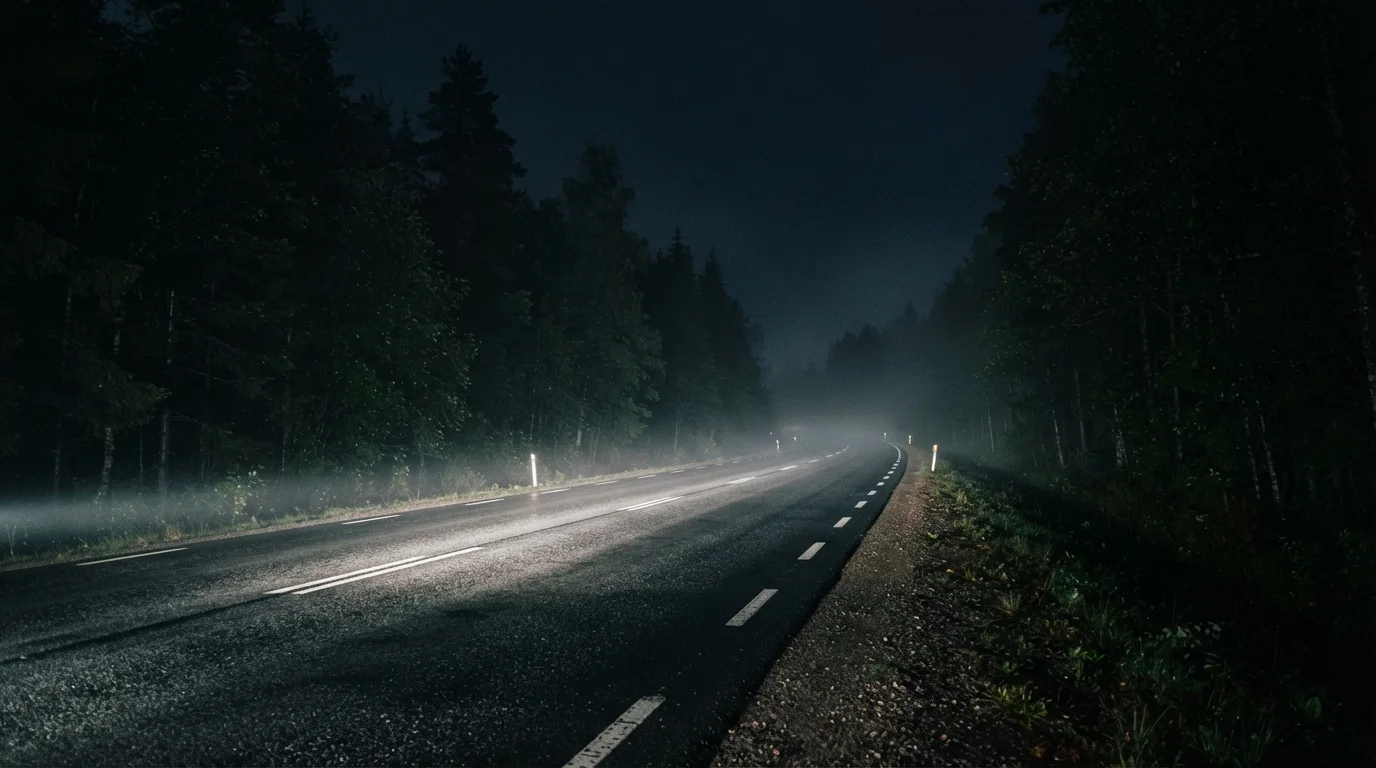
Standard low-beam headlights illuminate roughly 160 to 250 feet ahead, but at 60 mph, a vehicle needs approximately 305 feet to stop. That gap - driving faster than your headlights allow you to safely react - is called overdriving your headlights, and it's one of the most common and least-discussed night-driving errors.
If an obstacle appears at the edge of your light range, you may not have enough distance to stop before reaching it. High beams extend your range significantly on unlit roads, but many drivers underuse them, forgetting to switch when traffic clears.
If you can't stop within your lit range, you're already driving too fast for the conditions.
Degraded Depth Perception and Contrast Sensitivity
The human eye relies on cone cells for color and detail, and rod cells for low-light vision. Rods don't process depth or fine contrast well, so even when you can see the road ahead, your ability to accurately judge distances and the edges of lanes decreases substantially at night.
This is particularly problematic when judging the speed of oncoming vehicles, gauging clearance on narrow roads, or detecting lane markings that are worn or wet. Drivers who wear corrective lenses should ensure their prescription is current and consider anti-reflective coatings, which can reduce glare from oncoming headlights.
Your ability to judge distances and lane edges drops measurably as light levels fall.
Glare from Oncoming Headlights
Modern vehicles increasingly use high-intensity discharge (HID) and LED headlights, which are brighter and whiter than older halogen units. While beneficial for the driver using them, they create significant glare for oncoming traffic - temporarily reducing vision for several seconds after the vehicle passes.
Rather than staring directly at approaching headlights, shift your gaze to the right edge of your lane or the painted fog line. This preserves your night-adapted vision. Also check that your own headlights are properly aimed - misaligned beams blind oncoming drivers and reduce your own forward visibility.
Looking away from oncoming headlights preserves your night vision during the critical approach.
Wildlife on the Road
Deer, elk, and other large animals are far more active at dawn and dusk, and collisions with them account for hundreds of fatalities and over a million insurance claims annually in the US. Animals don't respect traffic patterns, and their eyes reflect headlights - but often only when they're very close.
In areas with known wildlife crossings, treat posted warning signs seriously and reduce speed proactively. If you spot one animal, expect others - deer often move in groups. Braking in a straight line is generally safer than swerving, which can cause a rollover or send you into oncoming traffic.
Spotting one deer near the roadside means others are almost certainly nearby.
Impaired and Fatigued Drivers Sharing the Road
The proportion of impaired drivers on US roads increases substantially during nighttime hours, particularly on weekends. Alcohol and drug impairment affect reaction time, lane tracking, and hazard recognition - making other drivers around you less predictable after dark.
Warning signs of an impaired driver include inconsistent speed, wide lane deviations, driving without headlights, and sudden braking. Maintain extra following distance, avoid pulling alongside suspect vehicles, and if behavior seems seriously erratic, pull over safely and contact authorities rather than trying to pass. This overlaps with the risks around blind spots and erratic nearby traffic.
Erratic nearby drivers are a heightened threat after dark - increase your buffer and stay alert.
Pedestrians and Cyclists Without Adequate Visibility
Pedestrians and cyclists wearing dark clothing at night can be nearly invisible until they're dangerously close. Studies have found that a pedestrian in dark clothing may not be detectable by a driver until well inside the minimum stopping distance at highway speeds.
In urban and suburban areas especially, scan the edges of roads, not just the center. Be particularly cautious near bus stops, crosswalks, and areas adjacent to bars or entertainment venues after midnight. Reducing speed through these zones gives you the reaction time that physics demands.
A pedestrian in dark clothing can be invisible until you're already too close to stop.
Driver Fatigue Compounding Every Other Risk
The body's circadian rhythm creates a natural dip in alertness between roughly midnight and 6 a.m. - even in people who are not sleep-deprived. Fatigue slows reaction time, narrows attention, and impairs decision-making in ways that closely mirror alcohol impairment. Crucially, drivers often misjudge how fatigued they are.
Common warning signs include difficulty maintaining lane position, missing exits or turns you intended to take, and micro-sleeps - brief, involuntary moments of unconsciousness lasting a few seconds. If these occur, stopping is the only safe response. Caffeine can provide a short-term buffer, but it isn't a substitute for rest. See the full breakdown of fatigue and highway hypnosis warning signs for more.
Between midnight and 6 a.m., your body's alertness drops regardless of how rested you feel.
Drive Smarter After Dark
None of these hazards are unavoidable - they're manageable with the right awareness and adjustments. Slow down earlier than you think necessary, keep your windshield clean inside and out, and give yourself more stopping distance than daylight conditions would require. The two-second rule isn't always enough in normal conditions; at night, the margin needs to be even wider.
Check Your Headlights Before Night Trips
Aim and cleanliness matter more than most drivers realize. Dirty headlight lenses can reduce output by up to 80%, and even slightly misaligned beams cut your effective range significantly. Clean lenses regularly and have alignment checked if your lights seem dimmer than expected or you notice complaints from other drivers.
If you frequently drive long stretches after dark, also review the warning signs of highway hypnosis and driver fatigue. Nighttime monotony accelerates the onset of that trance-like state faster than most drivers expect.