
What the Two-Second Rule Actually Tells You
The two-second rule is a simple mental tool: pick a fixed point ahead, watch the vehicle in front pass it, and count two seconds. If you reach that point before finishing the count, you're too close. It's taught in driver's education nationwide because it's easy to apply at any speed.
But here's the catch - it was designed for ideal conditions: dry pavement, good visibility, alert driver, average passenger car. Real-world driving rarely checks all those boxes simultaneously. The two-second rule establishes a floor, not a ceiling. Understanding when to exceed it is what separates a defensive driver from one who's one distraction away from a collision.
For the physics behind why speed makes this calculation much more urgent, see the science of stopping distance.
Common Myths About Following Distance - Corrected
Drivers carry a surprising number of confident but inaccurate beliefs about tailgating and safe following distance. The myth-fact pairs below address the most consequential ones.
Myth
Two seconds of following distance is always safe as long as I'm paying attention.
Fact
Two seconds is a minimum for ideal conditions. Wet roads, high speeds, and heavy vehicles all require significantly more space.
Reaction time alone typically consumes 1.5 seconds before your foot even reaches the brake. In rain or at highway speeds, the remaining half-second of buffer in a two-second gap is dangerously thin. Traffic safety guidance generally recommends three to four seconds as a real-world default for most driving scenarios.
Myth
Tailgating only becomes dangerous at high speeds.
Fact
Rear-end crashes caused by following too closely happen across all speed ranges, including urban and suburban roads.
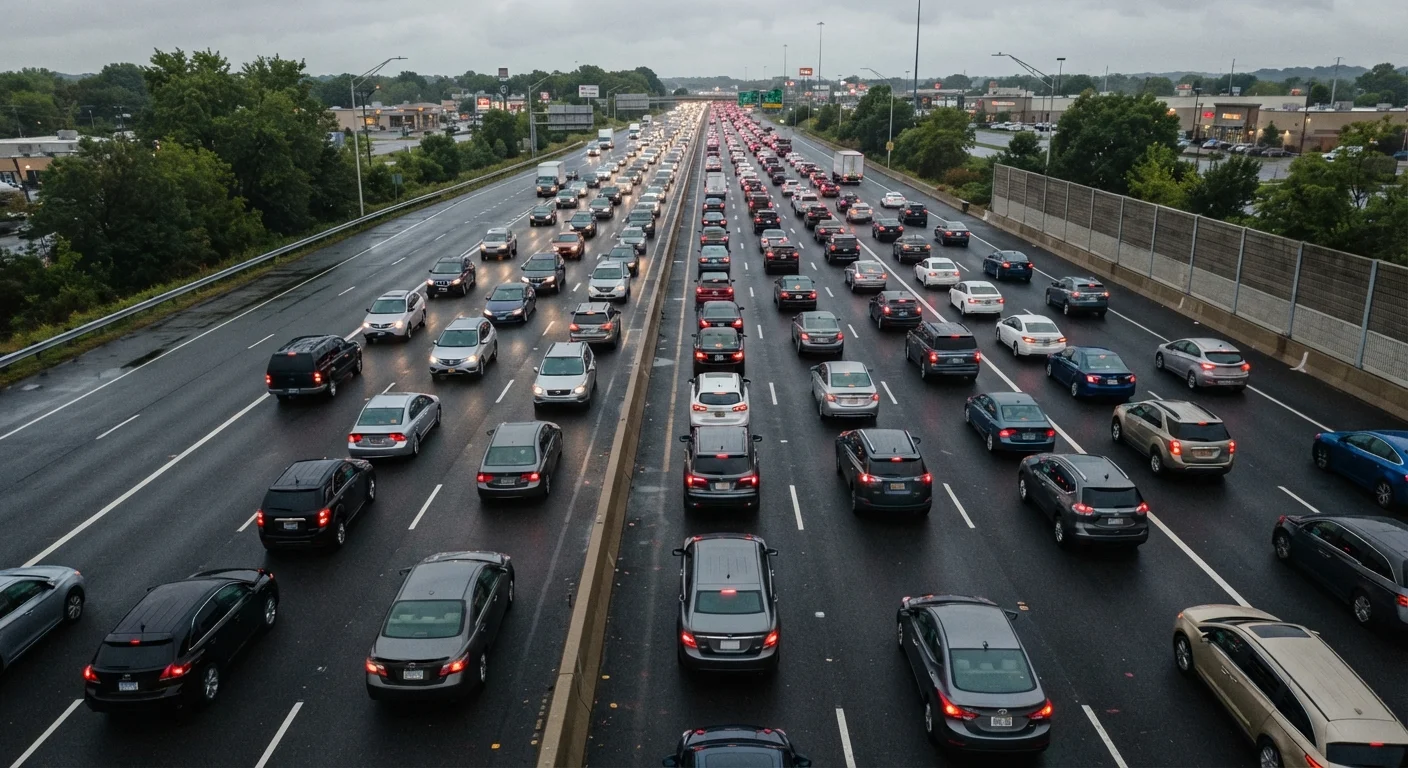
Low-speed crashes still cause whiplash injuries and vehicle damage. At 30 mph, a driver needs roughly 75-90 feet to stop - more than the length of three full-size cars. Following a vehicle at close range in stop-and-go traffic is a consistent cause of minor collisions and a major source of insurance claims.
Myth
My car's automatic emergency braking (AEB) will stop me before I hit anyone.
Fact
AEB systems reduce crash severity and frequency, but they have real-world limits and are not a substitute for adequate following distance.
Automatic emergency braking is a genuine safety advancement, but manufacturer testing occurs under controlled conditions. AEB systems can struggle to detect stationary objects, pedestrians in low light, or vehicles cutting in at close range. Relying on AEB as a reason to follow closely is explicitly discouraged by safety organizations. The system is a backup, not a strategy.
Myth
Leaving a large gap just invites other drivers to cut in front of you.
Fact
Vehicles merging into your gap do not meaningfully increase your crash risk - and the gap naturally re-establishes itself within seconds.
When a vehicle merges into your following distance, your appropriate response is simply to ease off the accelerator and restore the gap. This takes a few seconds and costs no measurable travel time. The alternative - closing the gap aggressively to prevent merges - creates the tailgating conditions that lead to crashes. A larger buffer ahead also smooths your own driving, reducing unnecessary braking and improving fuel efficiency.
Myth
Experienced drivers can safely follow more closely because their reactions are faster.
Fact
Human reaction times vary within a narrow range regardless of driving experience, and expertise does not compress stopping distance.
Experienced drivers are better at anticipating hazards and reading traffic patterns - a genuine advantage. But the physics of braking remain constant: your car still needs the same distance to stop once the brakes are applied. Confidence built from years of close following without incident can reflect favorable conditions rather than a skill-based safety margin. Stopping distance is a function of speed and friction, not driver experience.
When Two Seconds Is Genuinely Not Enough
Several specific conditions demand a larger cushion:
- Wet or icy roads: Stopping distances can double or triple on slick surfaces. A three- to four-second gap is a reasonable starting point in rain; add more on ice or snow.
- Higher speeds: At highway speeds, two seconds of gap translates to roughly 200 feet - adequate in theory, but with almost no margin for error if you're fatigued or briefly distracted.
- Towing or carrying heavy loads: Added weight dramatically increases braking distance. Drivers towing trailers should increase their following distance well beyond the two-second baseline.
- Large vehicles ahead: Following a semi-truck or bus closely blocks your sightlines. More distance restores your ability to read the road ahead and gives you more reaction time if the truck brakes suddenly.
- Night driving: Reduced visibility means hazards appear later. Night driving carries specific risks that daylight habits don't prepare you for - a longer following gap helps compensate.
~29%
Of all US crashes involving rear-end collisions
According to the National Highway Traffic Safety Administration, rear-end crashes represent roughly 29% of all reported crashes - making them the single most common crash type.
3-4 sec
Recommended following distance in adverse conditions
Most US state driver's manuals and traffic safety organizations recommend at least three to four seconds of following distance in wet, foggy, or high-speed conditions.
A practical upgrade: switch to a three-second rule as your default, and extend it further whenever conditions degrade. The time cost is negligible - at 60 mph, the difference between two and four seconds of following distance is only about 176 feet, which adds less than two seconds to any trip.
Tailgating as a Driving Behavior - Not Just a Gap Problem
Following too closely isn't always accidental. Deliberate tailgating - using proximity to pressure a slower driver - is considered aggressive driving in most US states and can carry legal consequences including fines or license points. Beyond the legal risk, it's ineffective: research consistently shows that aggressive following doesn't meaningfully reduce travel time on congested roads, but does significantly raise crash probability for everyone nearby.
If another driver is tailgating you, resist the urge to brake-check them. Instead, signal and move to a different lane when safe, or gradually reduce your speed to increase your own stopping cushion. Your goal is to remove yourself from the situation, not escalate it.
Decision-making under pressure behind the wheel is a recurring theme in crash data. Similar judgment errors show up at intersections - understanding how drivers misjudge yellow lights reveals the same pattern of overconfidence in tight timing windows.
Brake-Checking a Tailgater Is Dangerous
Intentionally braking to punish a following driver creates a real risk of a rear-end collision - one that can injure you, your passengers, and the other driver. In several US states, brake-checking is treated legally as a form of aggressive or reckless driving, regardless of who was tailgating first. The safest response to a tailgater is to create space by changing lanes or gradually reducing your speed.