
What the Dilemma Zone Actually Means
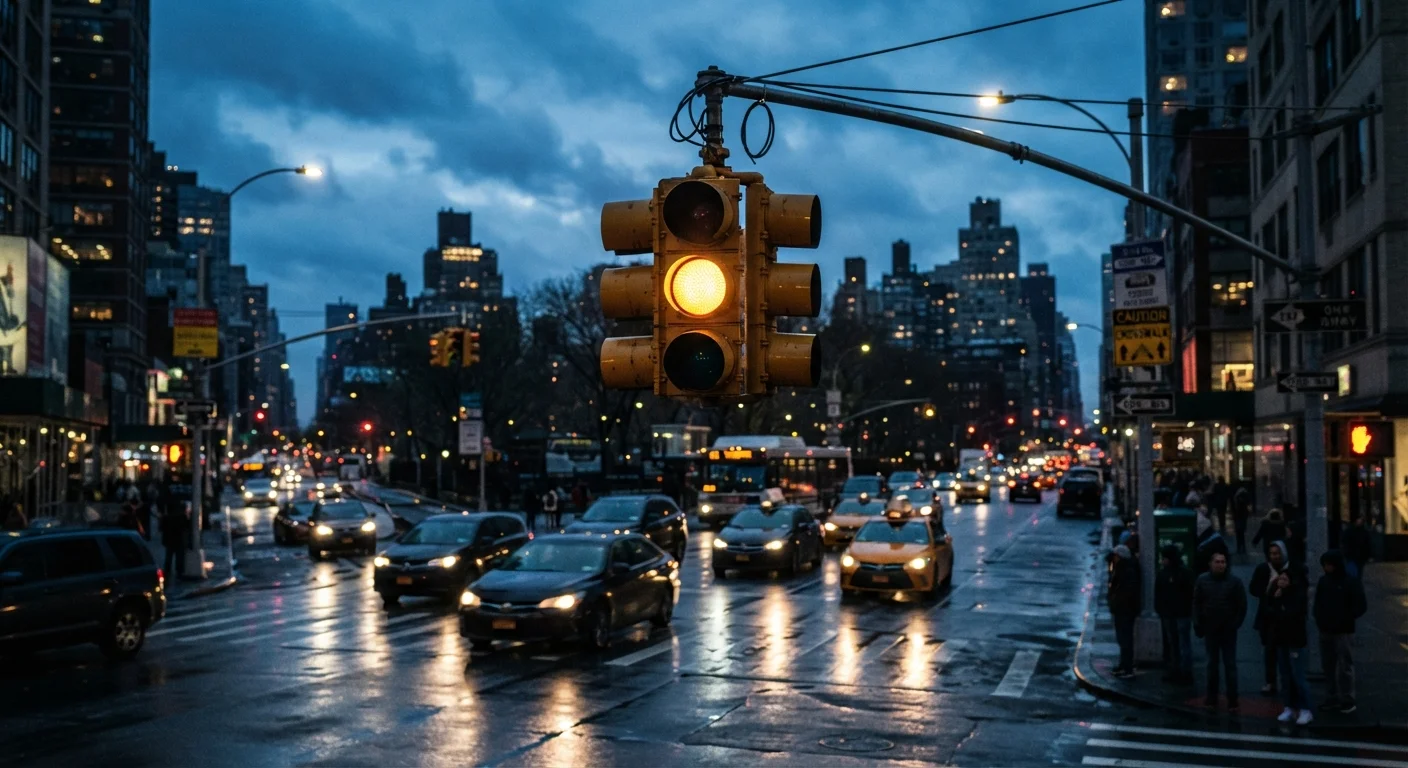
Traffic engineers use the term dilemma zone to describe a stretch of road just before an intersection where a driver, upon seeing the light turn yellow, faces a genuine conflict: stopping may require hard braking, but continuing means risking entry on red. This zone is not a theoretical construct - it is a measurable gap that depends on your speed, the road surface, and your vehicle's stopping capability.
At 45 mph on dry pavement, a typical passenger vehicle needs roughly 150 feet to stop comfortably. Yellow light timing at most U.S. intersections is engineered to give a driver traveling at the posted speed enough time to either clear the intersection or stop before the line - but only if the driver reacts promptly and makes the right call. Drivers who hesitate, accelerate, or misjudge their position end up in the worst possible outcome: entering on red at speed.
Signalized intersections carry higher crash-severity rates than roundabouts, and the dilemma zone is a core reason why. Understanding it changes how you approach every green light - not just yellows.
Common Mistakes Drivers Make at Yellow Lights
Most yellow-light errors come down to habits formed early in driving life and never examined. The mistakes below are the most common - and the most preventable.
Accelerating when the light turns yellow instead of preparing to stop.
Why it happens: Many drivers instinctively treat yellow as a cue to beat the light, especially when they feel close to the intersection. This impulse is reinforced by years of habit and social pressure from vehicles behind them.
Misjudging distance to the stop line and entering the intersection on red.
Why it happens: Drivers often underestimate how far they still are from the stop line, particularly at high-speed approaches or when fatigued. They commit to crossing and enter on red.
Failing to account for wet or slippery pavement when deciding to stop.
Why it happens: Drivers apply the same stopping decision in rain or ice as they do on dry roads, not adjusting for the significantly longer braking distances those conditions require.
Not accounting for the vehicle's loaded weight or trailer when braking.
Why it happens: Drivers who routinely drive a specific vehicle unloaded develop an intuitive feel for stopping distance that no longer applies when carrying passengers, cargo, or towing.
Tailgating through intersections and leaving no margin to stop if the lead car brakes.
Why it happens: Drivers focus on the vehicle ahead rather than the signal itself, assuming the lead vehicle will continue through. When the lead car stops on yellow, the follower has no safe stopping distance.
Yellow Means Prepare to Stop - Not Speed Up
In every U.S. state, yellow (amber) signals legally indicate that drivers should stop if it is safe to do so - not that they have a brief window to accelerate through. Treating yellow as an extension of green is a traffic violation in many jurisdictions and significantly increases crash risk at intersections.
Building Better Intersection Habits
The practical fix starts well before you reach the stop line. Experienced defensive drivers treat every green light as a provisional state - they are already asking: if this turns yellow right now, what do I do? That mental rehearsal, done continuously, eliminates the hesitation that causes poor decisions.
~40%
Of all traffic fatalities occur at or near intersections
According to the Federal Highway Administration, intersections are among the most dangerous locations on U.S. roads, with a significant share of crashes linked to signal-phase violations.
3-5.5 sec
Typical yellow light duration at U.S. intersections
The Institute of Transportation Engineers bases minimum yellow timing on approach speed, but many drivers misjudge how much time they actually have to clear the intersection safely.
Speed management approaching intersections is equally important. Drivers who coast slightly as they near an intersection - rather than maintaining full cruise speed - give themselves more time and distance to respond. This is especially relevant on multi-lane roads where you may not have a clear view of the signal until you are closer than you would like.
The same spatial awareness skills that improve highway merging apply directly to intersection decision-making. Practice reading your environment earlier, and yellow lights become far less stressful.
Rear-End Risk Behind You Matters Too
Stopping abruptly for a yellow light can cause a rear-end collision if the vehicle behind you is following too closely or is inattentive. This is one more reason to maintain adequate following distance and to brake progressively rather than slamming the pedal. See why following distance matters more than most drivers think for context.