
Why Highway Merging Goes Wrong
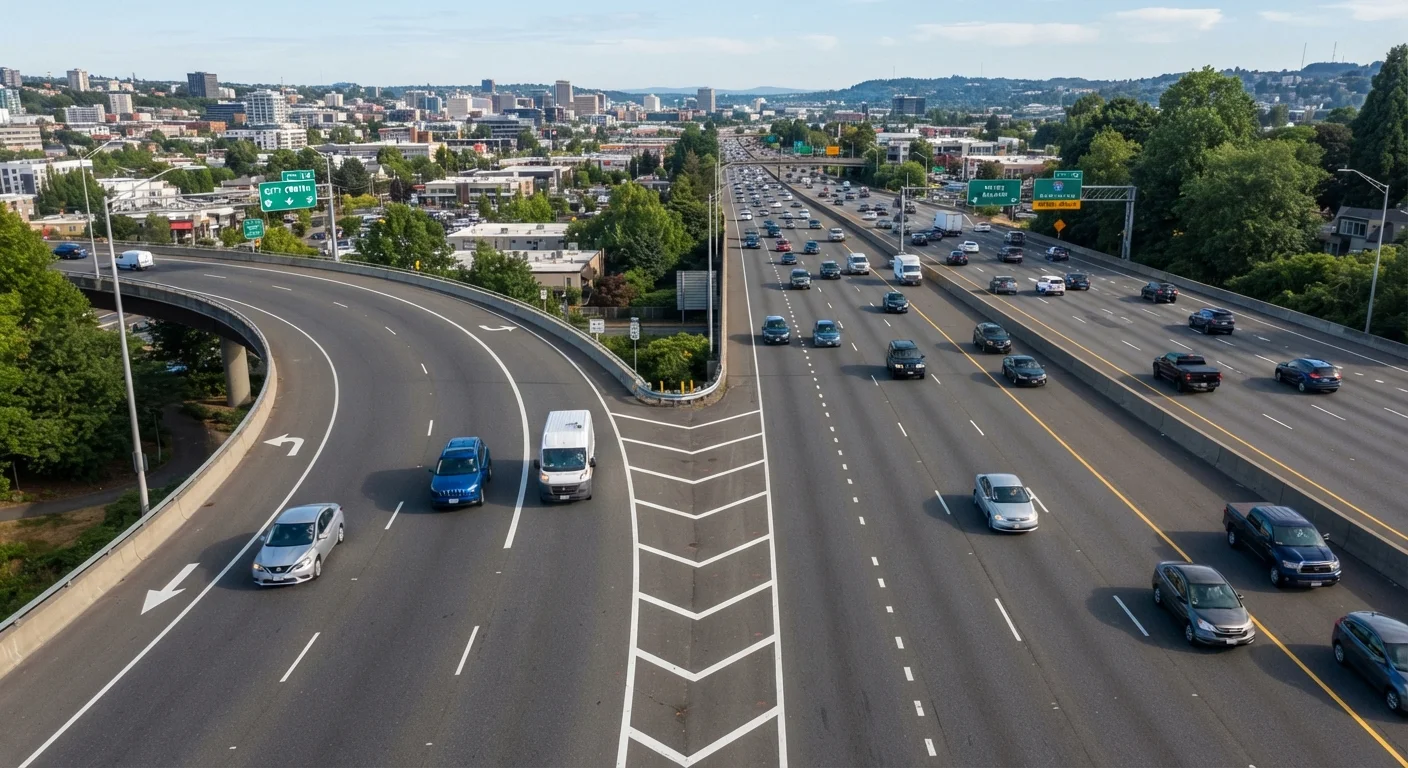
Highway merging is one of the most common sources of near-misses and tension between drivers - and most failures come down to speed and timing, not bad luck. The core problem is a widespread misunderstanding of who has right-of-way. In most US states, merging drivers are legally required to yield to through traffic, but that doesn't mean slowing to a crawl or stopping. It means finding and using a gap safely at speed.
Two failure patterns dominate. The first is the under-speed merge: a driver enters the highway significantly slower than traffic, forcing vehicles behind them to brake hard. The second is the panic stop - a driver reaches the end of the ramp without a clear gap and stops entirely, becoming a stationary obstacle in a high-speed environment. Both situations are largely preventable with correct technique and earlier awareness.
New and inexperienced drivers are most vulnerable, but complacency among veterans is also a real factor. If you're building foundational skills, what new drivers need to know covers highway entry fundamentals. And if you've been driving for years, habits experienced drivers let slip is worth a read.
Short On-Ramps Demand Extra Planning
Some urban on-ramps are dangerously short, giving you very little distance to reach highway speed. On these ramps, start accelerating immediately after the curve and identify your gap even earlier than usual. If traffic is dense and no gap exists, a brief yield is acceptable - but actively work to re-accelerate rather than waiting passively.
Step-by-Step: How to Merge Correctly
Follow these steps every time you enter a highway. The sequence is repeatable and becomes automatic with practice.
What you will need
Read the on-ramp geometry early
As soon as you enter the on-ramp, note its length, curvature, and any sight-line restrictions. A long, straight ramp gives you time to build speed gradually. A short or curved ramp demands that you begin accelerating sooner and assess the highway earlier. Identifying these constraints before you're committed prevents last-second decisions.
Begin accelerating to match highway speed
The on-ramp is your acceleration zone. Use the entire length of it to build speed to match the flow of highway traffic - typically 55-70 mph depending on the posted limit. A vehicle entering at 30 mph forces everyone behind it to react and creates an unnecessary choke point. Treat the ramp like a runway: you want to be at merge speed before the lane ends.
Activate your turn signal
Signal your intent before you reach the merge point - not at it. Signaling early alerts highway drivers that you plan to enter their lane, giving them time to adjust speed or change lanes voluntarily. This small step meaningfully reduces the chance of a conflict.
Check mirrors and perform a shoulder check
Use your side mirror to confirm traffic positions, then perform a quick shoulder check (glancing toward your left-rear blind spot) to catch any vehicle your mirrors missed. Highway merges are one of the highest-risk blind-spot scenarios - a single vehicle in your blind spot can turn a clean merge into a sideswipe. See our guide to blind spots and mirrors for a deeper look at where your mirrors fall short.
Identify and commit to a gap
Look for a gap in highway traffic that is at least two to three car lengths - more at higher speeds. Once you identify a usable gap, commit to it with a smooth, firm steering input. Hesitation is a significant cause of merge conflicts: drivers who creep toward the lane and then pull back create unpredictability for everyone around them. Merge assertively, not aggressively.
Settle into the lane and match traffic flow
Once fully in the travel lane, accelerate briefly if needed to match surrounding traffic speed, then cancel your signal. Avoid braking immediately after merging - this surprises drivers behind you. Check your mirrors again to confirm your position is stable, and give yourself a moment to orient before changing lanes further left.
Highway Drivers: Give Merging Traffic Room
If you're already on the highway and see a vehicle merging, moving to the center or left lane - when it's safe - removes the conflict entirely. This isn't legally required everywhere, but it reflects good driving practice and reduces friction. Merging is a shared responsibility, not a competition.
Never Stop at the End of an On-Ramp
Coming to a complete stop before merging forces you to accelerate from zero into traffic moving at 60-70 mph - a scenario that dramatically increases rear-end and sideswipe crash risk. Unless a yield sign and a complete traffic standstill leave you no choice, maintain forward momentum throughout the merge. Stopping is rarely the safe option; it usually creates the very hazard you're trying to avoid.
Situational Awareness Before and After the Merge
Effective merging isn't just about the merge moment - it starts earlier and continues after you're in the lane. On the approach road, watch for brake lights on the on-ramp ahead, which signal traffic congestion on the highway. Adjust your following distance on the ramp accordingly.
After the merge, your risk profile shifts. You're now in the right lane - statistically the lane with the highest merge-conflict and debris exposure. Develop situational awareness of both the vehicles behind you and any additional on-ramps ahead that could introduce more merging traffic. Poor visibility conditions compound every one of these risks; night driving hazards is a useful companion read for understanding how darkness changes the equation.
Fatigue also degrades the split-second judgment that merging demands. If you're feeling drowsy, be aware that your reaction time and gap-assessment accuracy are both compromised - a topic covered in depth in highway hypnosis and driver fatigue.